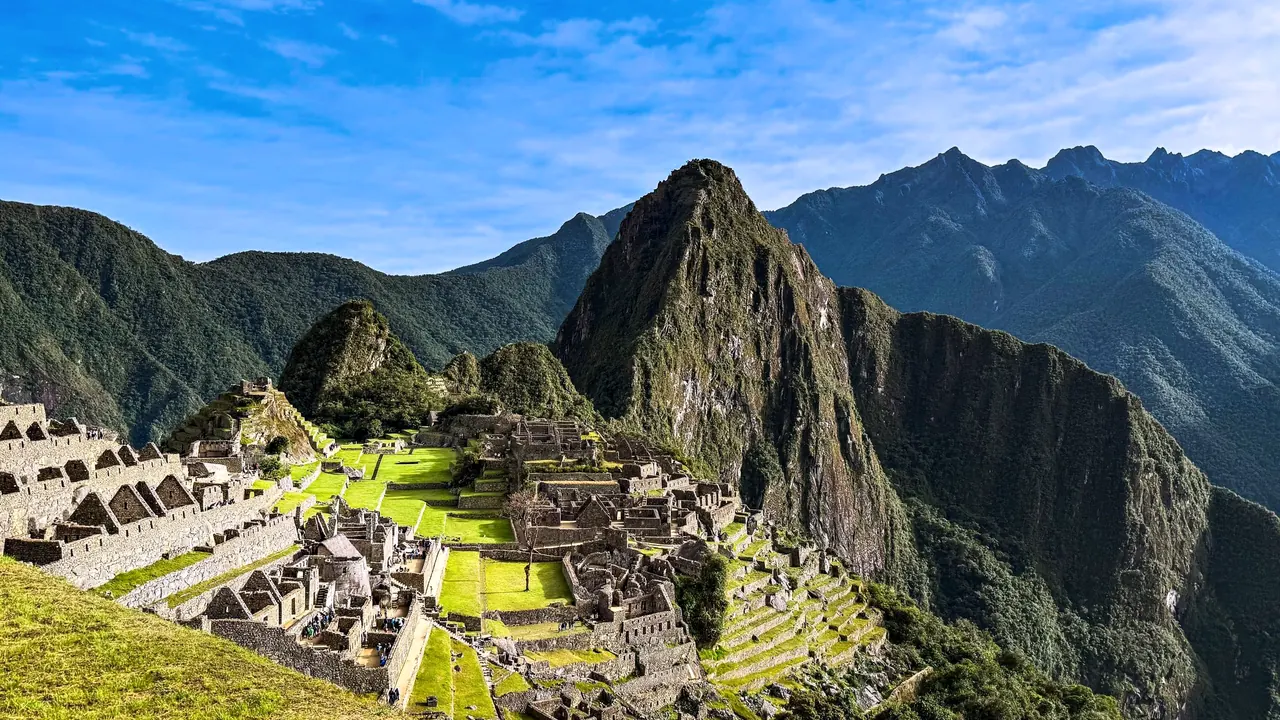
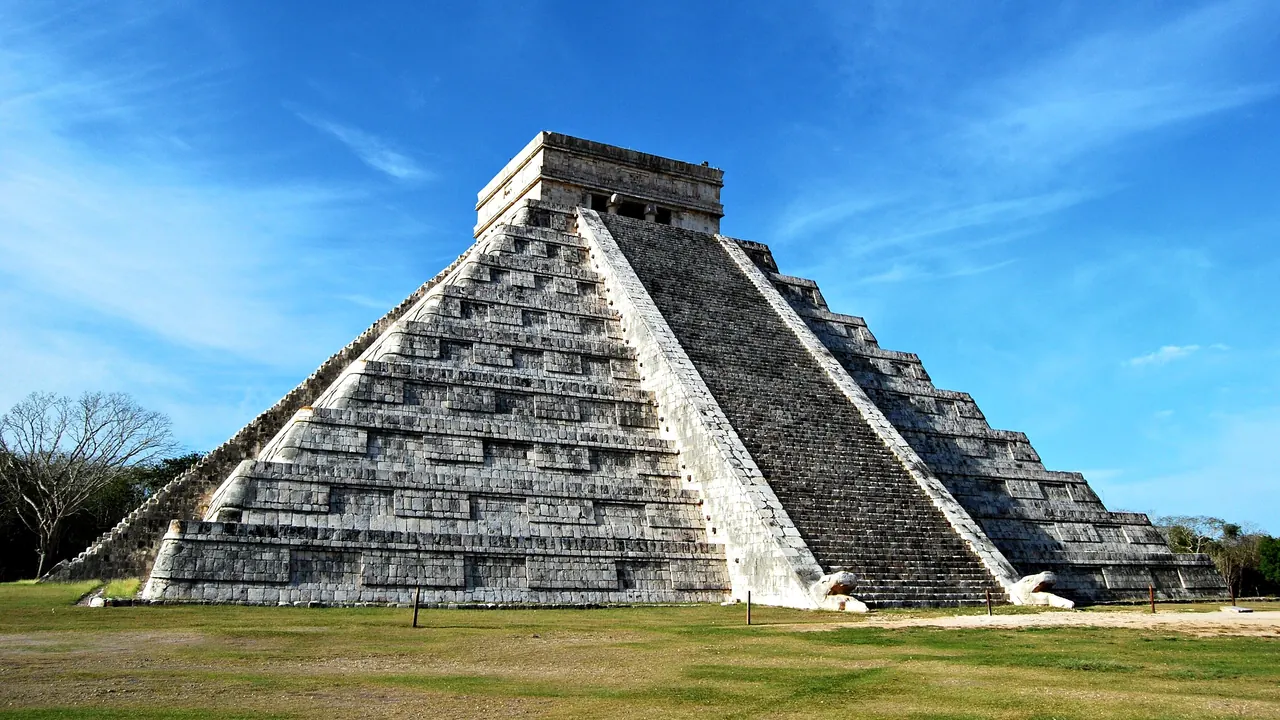
Photos: Peru by WANG Jared, Pexels License; Mexico by Bernard DUPONT from FRANCE, CC BY-SA 2.0, cropped.
Peru or Mexico?
Our verdict in twelve categories, each scored against the same fixed benchmark cities, and the climate month by month, so you can choose for your trip.
Choose Peru for
- nature and the outdoors
Peru is the stronger choice for a trip built around the Andes and wild country: trekking to Machu Picchu, the glacial lakes of the Cordillera Blanca, condors over the Colca Canyon and a river lodge in the Amazon. It suits fit adults and older children who don't mind planning around altitude and long journeys. Along the way they get Lima's cooking and Cusco's Inca stonework.
Choose Mexico for
- beaches
- families
- nightlife
For warm-sea beaches, a family trip or a vacation that mixes ruins with nights out, Mexico is the easier and broader pick. Its Caribbean and Pacific coasts give it the swimming that Peru's cold-current shore lacks, and its resorts and parks are built with children in mind. Mexico City and Oaxaca also add food, music and craft shopping in greater depth.
Scoreboard
Twelve categories on one fixed scale from 0 to 100. The shaded stretch is the gap between the two.
Your match
Pick a travel style or drag the sliders, and both match scores follow your weighting.
Wins on nature and the outdoors with your weighting.
Wins on beaches and families with your weighting.
What matters to you?
Category by category
What the scores mean for a trip.
Beaches & swimming
This is the widest gap between the two. Most of Peru's coast is washed by the cold Humboldt Current, with desert cliffs and grey sand, and the beaches near Lima and Punta Hermosa are mostly where locals go in summer. The only warm swimming is far north, around Mancora, Punta Sal and Zorritos, a separate flight away from Cusco.
Mexico has two warm seas. The Caribbean from Cancun to Tulum has white sand and turquoise water all year, with calmer islands at Cozumel and Holbox. The Pacific offers Puerto Vallarta's sheltered bays, surf at Puerto Escondido and quiet Sea of Cortez coves near La Paz. Seaweed can wash up on parts of the Caribbean shore in the warmer months.
Where in Peru: Mancora, Punta Sal, Zorritos, Punta Hermosa
Where in Mexico: Riviera Maya, Puerto Vallarta and Riviera Nayarit, Oaxaca coast, La Paz
Food & drink
You can plan a trip around eating in either country, but Mexico goes further. Its regional range is wider: taco stands and cantinas in Mexico City, moles and mezcal villages in Oaxaca, mole poblano in Puebla, cochinita pibil in Mérida, and fish tacos and Valle de Guadalupe wines in Baja. Everywhere, street food is at the centre of it.
Peru's cooking is centred on Lima. There, ceviche, Nikkei and chifa show the country's immigrant history, and fine dining draws on ingredients from the coast, the Andes and the jungle. Arequipa's picanterias and the duck and goat dishes around Chiclayo are worth seeking out, but small Andean towns eat more simply.
Where in Peru: Lima, Arequipa, Cusco, Chiclayo
Where in Mexico: Mexico City, Oaxaca, Mérida, Puebla
Culture & sights
Either country could fill a trip with heritage, but the sights are arranged very differently. In Peru they gather around Machu Picchu, one of the world's great sights, and the Inca heartland around it: Cusco's churches built on Inca walls, Sacsayhuaman above the city and the terraces of Pisac and Ollantaytambo. Arequipa's Santa Catalina convent and Chan Chan beside Trujillo are in other regions, long journeys away, so most visitors choose one or two regions.
Mexico's heritage is spread more widely and evenly. The National Museum of Anthropology and Teotihuacan are in and around the capital. Monte Albán, Palenque and Chichén Itzá are further out, and the colonial cities of Guanajuato, Puebla and San Miguel de Allende form a chain across the highlands. Mexico suits a long route through museums and towns, while Peru suits a journey into the Inca world.
Where in Peru: Cusco, Machu Picchu, Arequipa, Trujillo
Where in Mexico: Mexico City, Yucatán peninsula, Oaxaca, Guanajuato and the colonial highlands
Nightlife
Mexico has far more to go out for. Mexico City leads, with mezcal and cocktail bars in Roma and Condesa and clubs that run very late. Guadalajara adds a big student scene, and the coast brings Cancun's huge clubs, Tulum's beach and jungle parties and Puerto Vallarta's gay scene in the Zona Romántica.
In Peru, going out mostly means Barranco and Miraflores in Lima. Cusco's backpacker bars and Mancora's hostel parties are smaller alternatives. Altitude and early starts for treks send many visitors to bed early.
Where in Peru: Lima, Cusco, Mancora
Where in Mexico: Mexico City, Guadalajara, Playa del Carmen and Tulum, Puerto Vallarta
Nature & outdoors
Peru has the stronger hand for the outdoors, mainly because of the Andes. It has treks to Machu Picchu, the glacial lakes and high peaks of the Cordillera Blanca, condors in the Colca Canyon, the altiplano around Lake Titicaca and the rainforest of Tambopata and Manu. Allow a few days to adjust to the altitude.
Mexico's best nature is more often in and on the water. There are cenotes and reef diving in the Yucatán, whale sharks off Holbox and grey whales calving in Baja's lagoons. Inland, it has the Copper Canyon and the rivers of the Huasteca Potosina.
Where in Peru: Cusco and the Sacred Valley, Cordillera Blanca, Tambopata and Manu, Colca Canyon
Where in Mexico: Baja California Sur, Yucatán peninsula, Copper Canyon, Huasteca Potosina
Day trips
Both countries work best from regional bases, and the difference lies in what the days hold. From Cusco, the Sacred Valley fills several days with Pisac, Ollantaytambo, Moray and the Maras salt pans. Puno has the islands of Lake Titicaca and Trujillo has Chan Chan, while Lima has little close by.
Mexico has more bases of the same kind. From Mexico City you can reach Teotihuacan, Puebla and Taxco, and from Mérida the Puuc Maya route and Izamal. Oaxaca has Mitla and the craft villages, and the Bajío towns are close enough to visit one another for the day. Distances are long, so many outings mean a drive or a tour.
Where in Peru: Cusco, Puno, Trujillo, Chiclayo
Where in Mexico: Mexico City, Mérida, Oaxaca, Bajío
Good for families
Mexico is far easier with children. The Riviera Maya has resorts and eco-parks built for them, in warm, calm water. Puerto Vallarta adds whales and turtle releases, and Mexico City has Chapultepec, an interactive children's museum and boat rides at Xochimilco.
Peru suits older, sturdier children, since altitudes above 3,000m can make young ones unwell and there are few attractions made for kids. The lower places work best: Paracas for sea lions, sandboarding at Huacachina and, most memorable of all for school-age children, a lodge in Tambopata.
Where in Peru: Tambopata, Paracas, Lima, Sacred Valley
Where in Mexico: Riviera Maya, Mexico City, Puerto Vallarta
Getting around
Neither is effortless, but Mexico is simpler. Its first-class buses are comfortable and reliable, flights link several cities, drivers have toll highways and Mexico City has a large metro. The beach regions still mean hiring a car, taking colectivos or joining tours.
Peru has no national rail network, domestic flights nearly always go through Lima, and coach journeys in the Andes are long, high and winding. Lima is hard work and most visitors get around it by taxi, although Cusco and Arequipa are easy to walk once you arrive.
Where in Peru: Cusco, Arequipa, Sacred Valley
Where in Mexico: Mexico City, Colonial highlands, Riviera Maya
Shopping & style
Crafts are the heart of shopping in both countries, but Mexico has more of them, and more beyond them. Each region has its own speciality: rugs and black pottery in Oaxaca, Talavera in Puebla, silver in Taxco and Maya textiles in San Cristóbal. Mexico City adds designer boutiques in Roma and Condesa and luxury flagships on Avenida Presidente Masaryk.
Peru's best buys are its Andean textiles, from alpaca and vicuna knitwear to handwoven pieces from cooperatives in Chinchero and the Sacred Valley. Lima's Indian markets gather crafts from every region, but fashion is largely limited to its malls.
Where in Peru: Cusco, Sacred Valley, Lima, Arequipa
Where in Mexico: Mexico City, Oaxaca, San Miguel de Allende, San Cristóbal de las Casas
Affordability
Both are good value in much the same way: set lunches, buses and guesthouses cost little, and prices climb at the famous places. What differs is where the money goes. In Peru it goes on the big experiences: trains and entry for Machu Picchu, a licensed operator for the Inca Trail, Amazon lodges and flights between regions. Arequipa, Puno and Trujillo stay cheap.
In Mexico it goes on the beach. Tulum, Los Cabos and Cancun's hotel zone charge close to Western resort rates, while Oaxaca, Mérida, San Cristóbal and Bacalar keep a colonial or coastal trip modest.
Where in Peru: Arequipa, Puno, Trujillo, Cusco
Where in Mexico: Oaxaca, Mérida, San Cristóbal de las Casas, Oaxaca coast
Live music & performing arts
Mexico has more on stage. In Mexico City, the Palacio de Bellas Artes hosts the Ballet Folklórico, opera and the symphony, and there is mariachi in Plaza Garibaldi and lucha libre in the arenas. Beyond the capital, there is mariachi in Guadalajara, the Cervantino festival in Guanajuato and the Guelaguetza in Oaxaca.
Live culture in Peru is more informal. There are peñas in Barranco with música criolla and Afro-Peruvian music, and dance shows in Cusco restaurants. The real draw is the festivals, Inti Raymi in Cusco and the Candelaria in Puno, if your dates fit.
Where in Peru: Lima, Cusco, Puno
Where in Mexico: Mexico City, Guadalajara, Guanajuato, Oaxaca
Wellness & relaxation
For a restful trip, Mexico is the clear choice. Tulum and Bacalar are built around yoga, spas and the water, and the temazcal sweat lodge is offered from Oaxaca to the Riviera Maya. Thermal pools near San Miguel de Allende and at Tolantongo add an option in the highlands.
Peru's version is simpler. It has scenic public hot springs at Chivay in the Colca Canyon, at Cocalmayo and at the Baños del Inca near Cajamarca, and lodges with yoga and massage in the Sacred Valley. Elsewhere, the long journeys and thin air make a restful trip hard.
Where in Peru: Sacred Valley, Colca Canyon, Cajamarca
Where in Mexico: Tulum and Bacalar, San Miguel de Allende, Oaxaca, Los Cabos
When should you go?
Pick your month, and for a country the place in it. The climate figures are measured averages, not a forecast.
Where in Peru
Where in Mexico
Cusco (Peru) in July
Cancun (Mexico) in July
Daytime high, °C
Rainfall in the month, mm
Where the figures come from
Cusco (Peru)'s station stands 151 m below the city centre, so the centre is likely a little cooler than the figures say.
Cancun (Mexico) has no weather station within reach, so its figures come from a gridded climate model rather than a measured record, and read a broad area rather than one spot.
Temperature and rainfall are climate normals, averaged over the years shown. Cusco (Peru): 1991-2020 normals, Cuzco (3.7 km from centre). Cancun (Mexico): 2001-2020 normals, NASA POWER reanalysis grid, no weather station within 90 km.
In Peru the seasons depend on altitude. In Cusco and the Andes the dry months are May to September, with barely 3mm of rain in June and clear days for trekking and Machu Picchu. From December to March the rain is heavy, around 159mm in January, and the Amazon around Puerto Maldonado is at its wettest then too. Lima hardly gets any rain all year, but it has two seasons. From January to April it is warm and sunny and the sea reaches about 22°C. From June to October it is grey, with very little sun. Arequipa stays mild and dry for most of the year, with only a little rain from January to March.
Mexico's dry season comes in the opposite half of the year. From November to April the highlands around Mexico City and Oaxaca are sunny and dry, and Puerto Vallarta on the Pacific is at its best. In April and May Oaxaca gets uncomfortably hot for walking. From June to September the summer rains reach Mexico City, Oaxaca and Puerto Vallarta, while Los Cabos stays dry apart from some rain in August and September. On the Caribbean, Cancun's wet season runs from June to October and is heaviest in October. The sea there is warm enough to swim all year, at roughly 26°C to 29°C. So a trip between November and April points to Mexico, while May to September is the time for the Peruvian Andes.
Which traveller are you?
On a beach and sun trip, Mexico wins easily. The Riviera Maya's white sand and turquoise water, the island beaches of Isla Mujeres and Holbox and the calm coves near La Paz offer far more than Peru, where warm water is found only around Mancora.
On a family trip with children, Mexico is much the easier choice. It has resorts and eco-parks on the Riviera Maya, gentle bay beaches at Puerto Vallarta and Chapultepec Park in Mexico City. Peru's altitude and long journeys suit only older, sturdy children heading for an Amazon lodge.
For an outdoors trip, Peru has the edge. The Inca Trail and Salkantay trek to Machu Picchu, the Cordillera Blanca above Huaraz, the Colca Canyon and the rainforest of Tambopata and Manu give mountain trekking and wildlife a range that Mexico cannot quite match.
More comparisons
Each shares a side with Peru or Mexico.
 Argentina vs Peru
 Belize vs Mexico
 Bolivia vs Peru
 Brazil vs Mexico
- Brazil vs Peru
 Chile vs Peru
 Colombia vs Mexico
- Colombia vs Peru
 Costa Rica vs Mexico
- Costa Rica vs Peru
 Ecuador vs Peru
 Guatemala vs Mexico
- Guatemala vs Peru
 Hawaii vs Mexico
 Jamaica vs Mexico
 Mexico vs Cuba
 Mexico vs Dominican Republic
 Nepal vs Peru
 Panama vs Mexico
 Puerto Rico vs Mexico
 Punta Cana vs Mexico
 The Bahamas vs Mexico
 United States vs Mexico
Where else could you go?
Set Peru or Mexico against any other country.