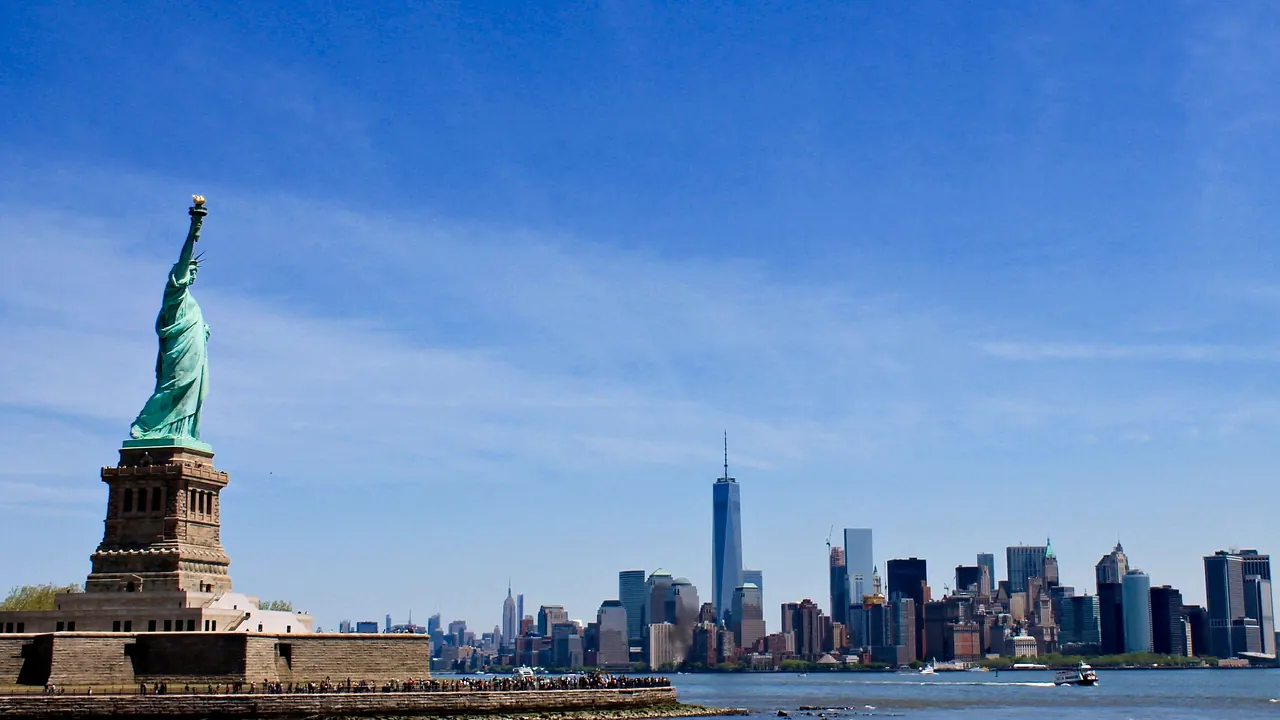
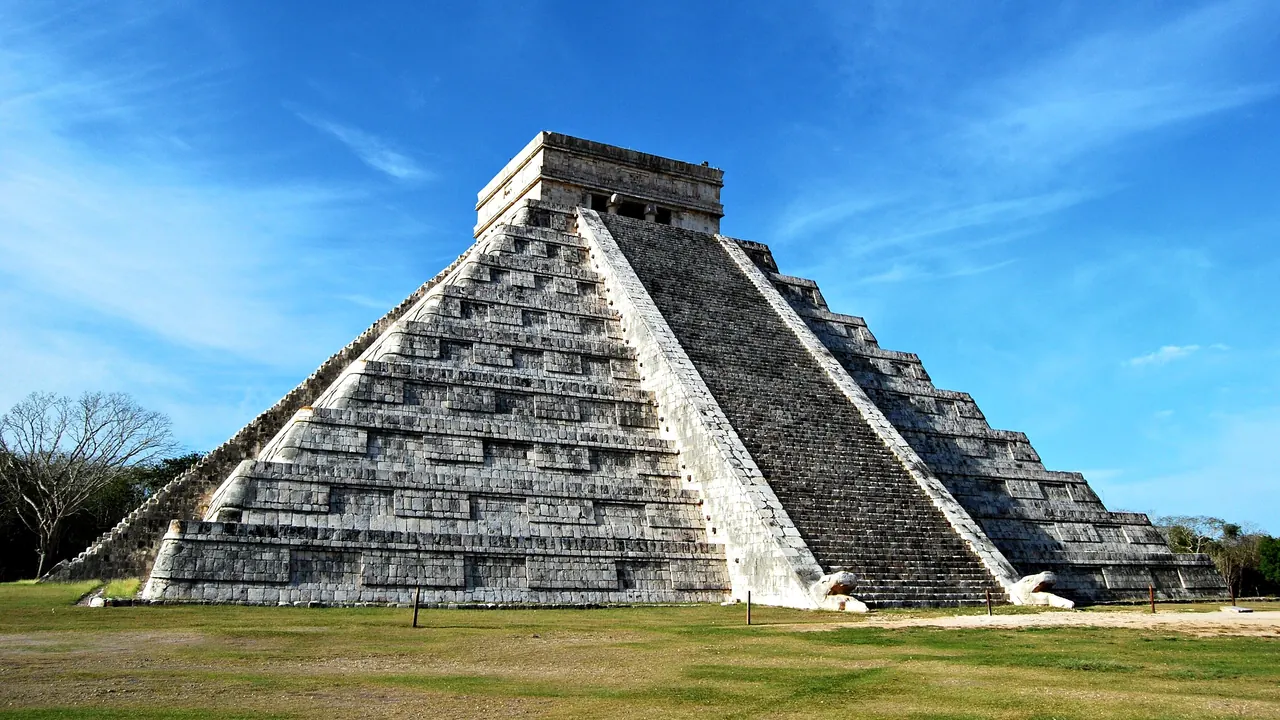
Photos: United States by Dylan.porcello, CC BY-SA 4.0, cropped; Mexico by Bernard DUPONT from FRANCE, CC BY-SA 2.0, cropped.
United States or Mexico?
Our verdict in twelve categories, each scored against the same fixed benchmark cities, and the climate month by month, so you can choose for your trip.
Choose United States for
- live music and the arts
- families
- shopping
The United States suits travellers who want big cities and big landscapes in one trip: Broadway and jazz clubs, flagship shopping, nights out in New York or Las Vegas, and the national parks of the Southwest, Yellowstone and California. It is also the easier choice with children, from Orlando's theme parks to Washington's free museums. Allow for a large budget, though, and a lot of driving or flying between regions.
Choose Mexico for
- prices
- culture and sights
- getting around
Mexico is for travellers who care most about heritage and food. It has pyramids, Maya cities and colonial towns, regional cooking from Oaxaca to Mérida, and Caribbean water warm enough to swim in all year. Your money goes much further, especially in the highland cities and the Yucatán, and buses and short flights make it simpler to tour without a car. It is also the better place to slow down, in a temazcal or by the lagoon at Bacalar.
Scoreboard
Twelve categories on one fixed scale from 0 to 100. The shaded stretch is the gap between the two.
Your match
Pick a travel style or drag the sliders, and both match scores follow your weighting.
Too close to call, level with your weighting
Wins on live music and the arts and families with your weighting.
Wins on prices and culture and sights with your weighting.
What matters to you?
Category by category
What the scores mean for a trip.
Beaches & swimming
Both countries have excellent beaches, and the difference is in the kind of sea and the season. In the United States, Florida is where you can swim all year. At Miami Beach the Atlantic stays at 25°C or more in every month, and the Keys add clear shallows. The Gulf Coast around Sarasota and Clearwater has white quartz sand on calm water that is warmest in summer, while the Outer Banks and Myrtle Beach are for June to September only. Hawaii has reef-sheltered bays all year, but it is a long flight from the mainland.
Mexico's Caribbean coast from Cancun to Tulum has turquoise water and white sand, with island beaches on Cozumel and Holbox, although seaweed can wash up there in the warmer months. Its Pacific side gives it a choice Florida lacks: sheltered bays at Puerto Vallarta, big surf at Puerto Escondido and very calm coves on the Sea of Cortez near La Paz.
Where in United States: Florida, Hawaii, Gulf Coast, Outer Banks
Where in Mexico: Riviera Maya, Puerto Vallarta and Riviera Nayarit, Oaxaca coast, La Paz
Food & drink
These two are close on food, and the difference is in what you eat. In the United States you eat by city and region. New York has the widest range, New Orleans has Creole cooking, and a road trip can follow barbecue from Texas to the Carolinas, with wine country in Napa and Oregon.
Mexico's food is centred on street stalls and markets. You find tacos on every corner in Mexico City, moles and mezcal in Oaxaca, cochinita pibil in Mérida and fish tacos in Baja. It is cheaper and more local from meal to meal, while the US is better for fine dining and the cuisines of many different countries in one city.
Where in United States: New York, New Orleans, California, Texas
Where in Mexico: Mexico City, Oaxaca, Mérida, Puebla
Culture & sights
Mexico is clearly ahead for sightseeing. It has the National Museum of Anthropology, Teotihuacan just outside the capital, Maya cities such as Chichén Itzá and Palenque, and a series of colonial towns from Guanajuato to Morelia. Its history goes back much further, and there is enough to fill two weeks without repeating yourself.
The United States is strongest in its museums: the Met and MoMA in New York, the Smithsonian on Washington's National Mall and the Art Institute in Chicago. Its historic buildings are younger. Boston and Philadelphia tell the revolutionary story, and the oldest sites are in the Southwest, at Mesa Verde and Taos Pueblo.
Where in United States: New York, Washington, Boston, Philadelphia
Where in Mexico: Mexico City, Yucatán peninsula, Oaxaca, Guanajuato and the colonial highlands
Nightlife
The United States has more cities built for a big night out. New York runs all night, Las Vegas has its megaclubs and pool parties, New Orleans has bars on Frenchmen Street, and South Beach in Miami goes on until dawn. Away from these cities, though, bars often close at 2am and small towns are quiet early.
Mexico's best nights are in Mexico City, with mezcal bars in Roma and Condesa and clubs that stay open late, and in Guadalajara's student scene. On the coast, Tulum has jungle and beach parties and Puerto Vallarta has its Zona Romántica. In the colonial towns, an evening mostly means a drink on the main square.
Where in United States: New York, Las Vegas, New Orleans, Miami
Where in Mexico: Mexico City, Guadalajara, Playa del Carmen and Tulum, Puerto Vallarta
Nature & outdoors
The United States is ahead on landscape. The Grand Canyon, the red-rock parks of Utah, Yosemite, Yellowstone and Alaska form one of the great collections of protected wilderness. The parks are well run and linked by long, easy drives.
Mexico is strongest on water and wildlife. You can swim in cenotes on the Yucatán, watch grey whales calving in Baja from January to March, and swim with whale sharks off Holbox. Inland there are the Copper Canyon, the volcano hikes near Puebla and the monarch butterflies in Michoacán, but these places are far apart and take more effort to reach.
Where in United States: The Southwest and Utah, California, Yellowstone and the Rockies, Alaska
Where in Mexico: Baja California Sur, Yucatán peninsula, Copper Canyon, Huasteca Potosina
Day trips
Both countries offer about the same number of good days out, but of different kinds. US day trips cluster in the Northeast and around San Francisco. From Boston you can visit Concord and Salem, Mount Vernon lies near Washington, and Napa or Carmel are within reach of San Francisco. Elsewhere, the distances are mostly empty landscape.
Mexico's outings are older and spread across more bases. From Mexico City you can see Teotihuacan, Cholula and Taxco. From Mérida there are the Puuc Maya ruins and Izamal, and the Oaxaca valley has Mitla and its weaving villages. Mexico's day trips lead you to ruins and craft villages, while American ones lead to colonial towns, wineries and coastline.
Where in United States: Boston, Washington, San Francisco, New York
Where in Mexico: Mexico City, Mérida, Oaxaca, Bajío
Good for families
The United States is the stronger family destination. Walt Disney World, Disneyland, Legoland and the San Diego Zoo are vacations in themselves, the Smithsonian makes history easy for children, and junior ranger programmes bring them into the national parks. Family rooms and children's menus are standard.
Mexico works best for families who settle in one place. The Riviera Maya has resorts built for children and eco-parks with snorkelling rivers, and Puerto Vallarta has whale watching and turtle releases. Mexicans are very welcoming to children, but long bus journeys and highland altitude make touring with them harder.
Where in United States: Orlando, Southern California, Washington, New York
Where in Mexico: Riviera Maya, Mexico City, Puerto Vallarta
Getting around
Mexico is somewhat easier to travel around without a car. First-class buses link the cities comfortably, domestic flights reach every region, colonial centres are compact enough to walk, and Mexico City has a large metro. On the Riviera Maya and in Baja you will still need taxis, colectivos or a hired car.
In the United States, a car or a plane is almost unavoidable outside the Northeast corridor and a few cities with good transit, such as New York and Chicago. Los Angeles, Orlando and the national parks all assume you drive, although the roads are good.
Where in United States: The Northeast corridor, New York, Chicago, San Francisco
Where in Mexico: Mexico City, Colonial highlands, Riviera Maya
Shopping & style
The United States is the place for big-name shopping. It has flagships on Fifth Avenue and Chicago's Magnificent Mile, luxury on Rodeo Drive and outlet malls on the edge of almost every city. For handmade goods, Santa Fe sells Native American jewellery and pottery.
Mexico's strength is craft, with something different in each region. Oaxaca has rugs and black pottery, Puebla has Talavera, Taxco has silver and San Cristóbal has Maya textiles. Polanco and Roma in Mexico City have designer boutiques, but the country cannot match the US for size or for international labels.
Where in United States: New York, Los Angeles, Chicago, Santa Fe
Where in Mexico: Mexico City, Oaxaca, San Miguel de Allende, San Cristóbal de las Casas
Affordability
The difference here is large. In the United States, the places most visitors want are the expensive ones, from New York and San Francisco to Hawaii. Sales tax and tipping are added on top of menu prices. The South, the Midwest, highway motels and cheap fuel help to keep the costs down.
Mexico is much cheaper for most of a trip. Market meals, guesthouses and buses cost little in Oaxaca, Mérida and Guanajuato. The exceptions are Tulum, Los Cabos and Cancun's hotel zone, where prices come close to Western resorts.
Where in United States: The South, The Midwest, The Southwest
Where in Mexico: Oaxaca, Mérida, San Cristóbal de las Casas, Oaxaca coast
Live music & performing arts
The United States is far ahead for live performance. In New York you can see Broadway shows, opera at the Met and concerts at Carnegie Hall. Jazz plays every night in New Orleans, Nashville has the Grand Ole Opry, Memphis has the blues of Beale Street, and Chicago has its orchestra and storefront theatres. You can hear music most nights of the year in many cities.
Mexico's strengths are its own traditions. The Ballet Folklórico performs at Bellas Artes, mariachi plays in Plaza Garibaldi and in Guadalajara, and lucha libre fills its arenas. Beyond these, much of the best performance comes with festivals such as the Cervantino in Guanajuato and the Guelaguetza in Oaxaca.
Where in United States: New York, New Orleans, Nashville and Memphis, Chicago
Where in Mexico: Mexico City, Guadalajara, Guanajuato, Oaxaca
Wellness & relaxation
Mexico has the edge for a slow, restorative trip. It has its own bathing ritual in the temazcal sweat lodge, yoga retreats and lagoon life at Tulum and Bacalar, and hot springs near San Miguel de Allende and at Tolantongo.
The United States offers spa resorts rather than a bathing tradition. There are destination spas in Sedona and Palm Springs, mud baths at Calistoga and hot springs across Colorado and in Arkansas. They are polished but usually expensive, and in the cities, wellness mostly means a hotel spa.
Where in United States: Sedona and Arizona, Palm Springs, Colorado hot springs, Napa Valley
Where in Mexico: Tulum and Bacalar, San Miguel de Allende, Oaxaca, Los Cabos
When should you go?
Pick your month, and for a country the place in it. The climate figures are measured averages, not a forecast.
Where in United States
Where in Mexico
New York (United States) in July
Cancun (Mexico) in July
Daytime high, °C
Rainfall in the month, mm
Where the figures come from
Cancun (Mexico) has no weather station within reach, so its figures come from a gridded climate model rather than a measured record, and read a broad area rather than one spot.
Temperature and rainfall are climate normals, averaged over the years shown. New York (United States): 1991-2020 normals, LaGuardia Airport (12.9 km from centre). Cancun (Mexico): 2001-2020 normals, NASA POWER reanalysis grid, no weather station within 90 km.
Seasons in the United States depend on which part you choose. New York and Chicago are best for walking in May and June and again in September and October. July and August are hot, and winter is cold enough to keep you indoors, with Chicago's January highs around 0°C. Las Vegas and the desert parks are best in spring and autumn, because July reaches 40°C. Miami and Honolulu are warm enough for the beach all year. Miami's best beach weather comes in March and April, when it is dry and sunny. Its winter is just as dry but has fewer hours of sun, and from May to October heavy rain sets in. Los Angeles is dry and mild through summer, but the Pacific there stays cool.
Mexico is warm almost everywhere for most of the year, so what matters is the rain. Around Cancun the Caribbean is warm enough to swim every month, at 26°C or more, and the wettest stretch is September and October. Puerto Vallarta, Mexico City and Oaxaca are dry from about November to April and wet through the summer, with Puerto Vallarta reaching 298mm in September. That makes November to April the best window for most of Mexico. In those months New York and Chicago are cold or only starting to warm up. The northern US cities are at their best in late spring and early autumn, when much of Mexico is in or near its rainy season.
Which traveller are you?
For a family trip with children, the United States is the easier choice. Orlando and Southern California have theme parks, Washington and New York have big museums children enjoy, and hotels and restaurants expect families everywhere. The long drives are the price you pay.
For a shopping trip, the United States has more to offer. New York's Fifth Avenue and SoHo, Rodeo Drive in Los Angeles and outlet malls near every big city outdo Mexico's range, although Mexico wins for handmade crafts such as Talavera ceramics and Oaxacan weaving.
More comparisons
Each shares a side with United States or Mexico.
 Australia vs United States
 Belize vs Mexico
 Brazil vs Mexico
 Canada vs United States
 Colombia vs Mexico
 Costa Rica vs Mexico
 Guatemala vs Mexico
 Hawaii vs Mexico
 Jamaica vs Mexico
 Mexico vs Cuba
 Mexico vs Dominican Republic
 Panama vs Mexico
 Peru vs Mexico
 Puerto Rico vs Mexico
 Punta Cana vs Mexico
 The Bahamas vs Mexico
Where else could you go?
Set United States or Mexico against any other country.