France
Tignes
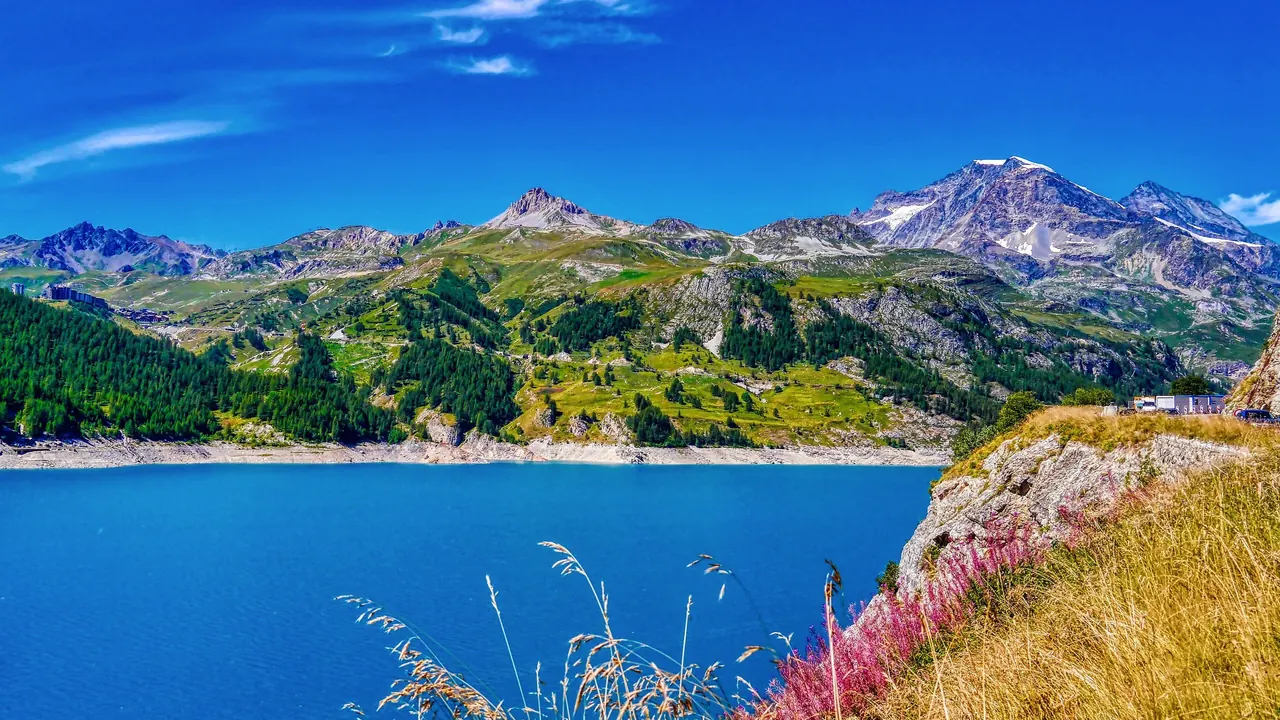
The Lac du Chevril below the peaks, with summer flowers
- Nature & outdoors93
- Families55
- Getting around55
Photo: Zairon, CC BY-SA 4.0, cropped
Tignes lies in French Alps, which has its own page.
Match
33
Every category weighted equally
- Beach & sun33
- Culture & arts27
- Food & nightlife28
- Family trip36
- Outdoors40
- Relax & unwind35
- Shopping & style30
- On a budget31
Tignes in twelve categories
Our verdict on each, scored 0 to 100 against the same fixed benchmark cities, so a score means the same thing on every page.
Beaches & swimming. Scores 14 out of 100.
Food & drink. Scores 30 out of 100.
Culture & sights. Scores 6 out of 100.
Nightlife. Scores 42 out of 100.
Nature & outdoors. Scores 93 out of 100.
Day trips. Scores 24 out of 100.
Good for families. Scores 55 out of 100.
Getting around. Scores 55 out of 100.
Shopping & style. Scores 14 out of 100.
Affordability. Scores 15 out of 100.
Live music & performing arts. Scores 6 out of 100.
Wellness & relaxation. Scores 40 out of 100.
Tignes category by category
Beaches & swimming
14Tignes is a high-mountain resort, and swimming here means a lake at 2,100m or a pool. In July and August a supervised bathing area opens on the Lac de Tignes, with a small sandy shore below the village of Tignes Le Lac, but the water is snowmelt and rarely climbs much above 16°C even on a hot afternoon. A quick dip is bracing rather than lazy.
The indoor aquatic centre beside the lake, with its lagoon pool and slides, is where most visitors actually swim, in any season. Anyone who wants real beach days should plan them somewhere else.
Food & drink
30Eating in Tignes is mountain resort eating: fondue, raclette, tartiflette and croziflette, built on Beaufort, Reblochon and Tomme from the surrounding valleys. Slope-side restaurants serve long lunches on sunny terraces, and the villages of Le Lac and Val Claret have pizzerias, burger places, crêperies and a handful of more ambitious kitchens with a modern Alpine menu.
The cheese is excellent and worth seeking out in the delicatessens that sell local charcuterie and Savoie wines. Beyond that the range is narrow, menus repeat from one restaurant to the next, and most places close outside the ski and summer seasons.
Culture & sights
6Tignes has very little to see in the usual sense. The resort was built from scratch in the 1960s and 1970s at altitude, after the old village in the valley was flooded by the Chevril dam in 1952, and its architecture is functional apartment blocks rather than old Savoyard stone.
The story of the drowned village is the main piece of heritage, told at the dam and recalled by the giant mural painted on its wall. A few small chapels in the lower hamlets of Les Brévières and Les Boisses complete the list. Visitors come for the mountains, not for sights.
Nightlife
42In the ski season Tignes goes out hard. Après-ski starts on the slopes in the late afternoon, with music on mountain terraces, then moves to the bars of Val Claret and Tignes Le Lac, where seasonal workers and groups of young skiers keep things loud until the small clubs close well after midnight. The crowd is British, Scandinavian and French, and the tone is beer, shots and dancing in ski boots rather than cocktails.
Summer evenings are much quieter, and in the between-seasons months the resort largely shuts. Families staying in Les Brévières or Les Boisses are well away from the noise.
Nature & outdoors
93This is the reason to come. Tignes sits at about 2,100m around a mountain lake, with the Grande Motte glacier rising to nearly 3,500m above it and the Vanoise National Park, France's oldest, on its doorstep. In winter the lifts link with Val d'Isère to form one of the largest ski areas in the Alps, with high, snow-sure pistes, big off-piste terrain and a long season that starts in autumn on the glacier.
In summer the glacier keeps a little skiing going early in the season while the valleys turn to hiking, mountain biking, trail running and paragliding, with ibex and marmots along the trails to alpine lakes. Spring and late autumn bring a quiet spell when much of the resort closes.
Day trips
24Tignes sits at the head of a long valley, and the road down takes time, so day trips are limited. Val d'Isère, the neighbouring resort with a more traditional old centre, is a short bus ride away. Lower down the Tarentaise, Bourg-Saint-Maurice is a working market town, and further on the medieval hill village of Conflans above Albertville and the cheese-making village of Beaufort make a pleasant day out by car.
In summer, when the Little St Bernard Pass is open, the Roman town of Aosta in Italy is about two hours away. Most visitors stay in the mountains instead.
Good for families
55For a family ski trip Tignes works well. Ski schools run children's classes from a young age, beginner areas sit right beside the villages of Le Lac and Val Claret, and many apartments are ski-in, ski-out, which saves carrying small skis through the streets. The indoor aquatic centre by the lake, with slides and a lagoon pool, is the fallback on a white-out day.
In summer the lake has pedalos, a bathing area and activities on its shores. The limits are the altitude, which can tire very young children, the cold, and the absence of anything aimed at children beyond the snow, the pool and the lake.
Getting around
55Inside the resort, getting around is simple. Tignes is a string of small villages, Tignes Le Lac, Le Lavachet, Val Claret and the lower hamlets of Les Brévières and Les Boisses, linked by free shuttle buses and by the lifts themselves, and in winter many people ski from door to door. Each village is small enough to walk, though the paths can be icy and uphill.
Reaching Tignes is the harder part. The nearest railway station is at Bourg-Saint-Maurice, about forty minutes below by bus or taxi up a winding road, and anything outside the valley needs a car or a transfer.
Shopping & style
14Shopping in Tignes is practical. The villages are lined with ski hire and outdoor gear shops, a few sportswear boutiques and supermarkets for self-catering apartments. The one thing worth taking home is food: Beaufort and other Savoie cheeses, cured sausages and mountain honey from the local delicatessens. Nobody comes here to shop.
Affordability
15Tignes is an expensive place to stay in winter. Lift passes, equipment hire, ski lessons and slope-side lunches add up quickly, and hotel rooms and apartments in the peak school vacation weeks command high prices. Self-catering apartments, which make up much of the resort, are the usual way to keep costs down, and early and late season weeks are noticeably cheaper.
Summer is easier on the budget, with lower lodging prices and free or cheap activities around the lake, though eating out stays at resort levels all year.
Live music & performing arts
6There is no performing arts life to speak of. Live music in Tignes means bands in après-ski bars, DJs on mountain terraces and the occasional free outdoor concert during winter and summer events in the resort. There is no theatre, concert hall or regular programme.
Wellness & relaxation
40After a day on the slopes, unwinding in Tignes means saunas, steam rooms and hot tubs. The aquatic centre by the lake has a spa and wellness area with hammam and massage, and the larger hotels and apartment residences have their own pools and treatment rooms. The thermal spa town of Brides-les-Bains lies about an hour down the valley for anyone wanting real thermal waters.
The rhythm here is energetic rather than restful, with early lifts and late bars in winter. Summer is calmer, and the quiet lakeside and mountain air suit a slower stay, but there is no bathing culture of its own.
When should you go?
Pick a month to see what it is like. The climate figures are measured averages, not a forecast.
Tignes in July
Daytime high, °C
Rainfall in the month, mm
The whole year
Shaded against this destination’s own year: the deepest cell is its best month for that figure and the palest its weakest.
Where the figures come from
Tignes has no weather station within reach, so its figures come from a gridded climate model rather than a measured record, and read a broad area rather than one spot.
Temperature and rainfall are climate normals, averaged over the years shown. Tignes: 2001-2020 normals, NASA POWER reanalysis grid, no weather station within 90 km.
Before you go
| Measure | Tignes |
|---|---|
| Official language | French |
| Currency | Euro (EUR) |
| Sockets | CE230 V, 50 Hz |
| Driving side | Right |
| Time zone | UTC+1, UTC+2 in summer |
| Emergency number | 112 |
| Elevation | 1,440 m |
| Main airport | Geneva International Airport (GVA)105 km from centre150 non-stop destinations |
| Public holidays this year | 11 days |
By the numbers
| Measure | Tignes |
|---|---|
| Population | 1,919 |
| People per km² | 24 |
| Museums within 10 km | 0 |
| UNESCO World Heritage sites within 50 km | 0 |
Compare Tignes with
Every comparison with a written verdict behind it.
- Adelboden
- Alpe d'Huez
- Andermatt
- Arosa
- Avoriaz
- Chamonix
- Châtel
- Courchevel
- Crans-Montana
- Davos
- Engelberg
- Flaine
- Grindelwald
- Gstaad
- Klosters
- La Clusaz
- La Plagne
- La Rosière
- Laax
- Le Grand-Bornand
- Lenzerheide
- Les Arcs
- Les Deux Alpes
- Les Gets
- Les Menuires
- Leukerbad
- Megève
- Méribel
- Montgenèvre
- Morzine
- Mürren
- Saas-Fee
- Saint-Gervais-les-Bains
- Samnaun
- Samoëns
- Serre Chevalier
- St. Moritz
- Val Cenis
- Val d'Isère
- Val Thorens
- Verbier
- Wengen
- Zermatt