United States
Fort Collins
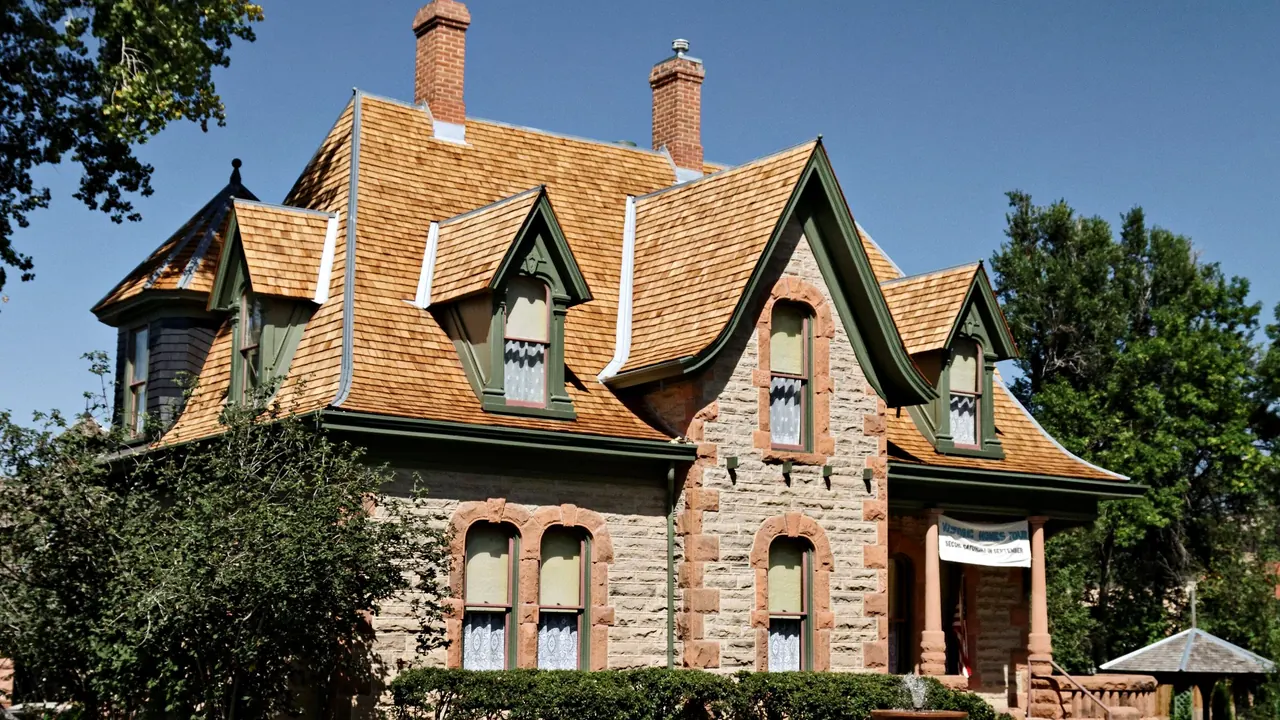
The sandstone Avery House in Fort Collins
- Nature & outdoors80
- Day trips50
- Families50
Photo: Gribeco, CC BY-SA 3.0, cropped
Match
39
Every category weighted equally
- Beach & sun37
- Culture & arts38
- Food & nightlife37
- Family trip41
- Outdoors45
- Relax & unwind38
- Shopping & style38
- On a budget39
Fort Collins in twelve categories
Our verdict on each, scored 0 to 100 against the same fixed benchmark cities, so a score means the same thing on every page.
Beaches & swimming. Scores 10 out of 100.
Food & drink. Scores 45 out of 100.
Culture & sights. Scores 22 out of 100.
Nightlife. Scores 38 out of 100.
Nature & outdoors. Scores 80 out of 100.
Day trips. Scores 50 out of 100.
Good for families. Scores 50 out of 100.
Getting around. Scores 45 out of 100.
Shopping & style. Scores 28 out of 100.
Affordability. Scores 40 out of 100.
Live music & performing arts. Scores 35 out of 100.
Wellness & relaxation. Scores 28 out of 100.
Fort Collins category by category
Beaches & swimming
10Fort Collins is about as far from the sea as a city can be, so swimming here means lakes and reservoirs. Horsetooth Reservoir, in the foothills just west of town, has a designated swim beach and coves that fill with paddleboards and boats on hot summer afternoons, and smaller lakes on the plains to the east and south offer more of the same. The water warms up well in July and August, but the season is short and this is a side activity, not a reason to come. Anyone who wants a beach should look elsewhere.
Food & drink
45Drinking is the stronger half of the story. Fort Collins is one of the best-known craft-beer towns in the country, with large, long-established breweries offering tours on the north side of Old Town and a dense spread of smaller taprooms across the city, many of them family-friendly places with food trucks parked outside. Beer lovers can fill several days here.
The eating is pleasant but ordinary for a university city of its size. Old Town has gastropubs, burger and taco spots, a few ambitious farm-to-table kitchens and coffee shops, and the summer farmers' markets bring in produce, honey and Palisade peaches from across Colorado. There is no local cuisine to speak of and little fine dining, so for a big night of eating most people drive to Denver.
Culture & sights
22The sights are modest. The best of them is Old Town itself, a district of red-brick and sandstone commercial buildings from the late nineteenth century centred on a tree-lined pedestrian square, which is pleasant to wander rather than a list of landmarks. The Fort Collins Museum of Discovery combines local history with science exhibits, the Avery House shows a Victorian home of one of the town's founders, and the Colorado State University campus adds a few galleries and a museum of art. Small historic districts of Victorian and Craftsman houses surround the centre. A day covers it all comfortably.
Nightlife
38A large university keeps Old Town lively on weekend nights, with a cluster of pubs, sports bars, rooftop patios and a few cocktail bars within a few blocks of the main square, and taprooms that stay busy into the evening. It is a friendly, casual scene rather than a late or sophisticated one: there are only a handful of dance clubs, much of the crowd is students, and quieter weeknights and summer breaks thin things out. Visitors after real clubbing head to Denver.
Nature & outdoors
80This is where Fort Collins earns its keep. The city sits right where the plains meet the foothills, and Horsetooth Mountain Open Space and Lory State Park start a short drive west of town, with trails up to rocky summits and wide views back over the plains. The Cache la Poudre River, a federally protected wild and scenic river, cuts a long canyon into the mountains to the north-west, with whitewater rafting, fly fishing, camping and hiking along its length. Within town, an unusually good network of paved trails follows the river and creeks for cycling and running.
Rocky Mountain National Park, with alpine lakes, elk and trails above the treeline, is about an hour and a half away via Estes Park. Summers are sunny and dry, autumn brings golden aspens in the high country, and winter means snowshoeing and cross-country skiing rather than downhill, since the big ski resorts are several hours off.
Day trips
50Several places make a decent day out. Boulder, about an hour south, has its pedestrian Pearl Street and a striking setting beneath the Flatirons, and Denver, a little further, adds big museums, galleries and a full city to explore. Estes Park, the mountain gateway town to Rocky Mountain National Park, is about an hour and a quarter away, and the mining-era town of Golden sits at the foot of the mountains west of Denver.
North across the Wyoming line, Cheyenne is under an hour away, with its state capitol, frontier museum and a famous rodeo every summer, and the university town of Laramie is close behind. It is a reasonable list, but most of these are pleasant rather than remarkable, and a car is needed for nearly all of them.
Good for families
50Fort Collins is an easy, safe and relaxed place to bring children, with parks and playgrounds in every neighbourhood and flat cycle paths along the river. The Fort Collins Museum of Discovery has hands-on science and a dome theatre, the city-run farm at Lee Martinez Park lets small children meet animals, and the Gardens on Spring Creek have a children's garden. Summer days at Horsetooth Reservoir, tubing on gentle stretches of the river and easy foothills walks fill out a stay. What it lacks are big headline attractions: for a zoo, aquarium or amusement park, families drive to Denver.
Getting around
45The centre is easy. Old Town is compact and flat, the university is a short walk or ride south, and a frequent rapid-bus line runs along the main north-south corridor. Fort Collins is one of the most bike-friendly cities in the country, with protected lanes, a bike-share scheme and long off-street trails, and cycling is the natural way to get between breweries, campus and parks on a dry, sunny day. Beyond that, though, the city spreads out in low-density suburbs, buses elsewhere are sparse, and the foothills, canyon and every day-trip destination realistically need a car.
Shopping & style
28Shopping is small-town in scale. Old Town has a likeable mix of independent boutiques, bookshops, outdoor and cycling shops, gift stores selling Colorado-made goods, and vintage clothing, all within a few walkable blocks. Beyond that there is a regional shopping mall and the usual American chain retail along the highways. There is no luxury shopping and no market or craft tradition of note, so it is browsing rather than a reason to visit.
Affordability
40Fort Collins is mid-priced by American standards, which means moderately expensive by world ones. Hotel rooms are middle of the road for the country, mostly chain hotels and motels along the highways plus a few smarter places in and near Old Town, and they climb sharply on university graduation and football weekends. Casual eating and brewery taprooms are reasonable for the country, but sit-down meals with tax and tip add up, and the biggest extra cost for most visitors is a hire car. Many of the best things to do, from foothills trails to the river paths and Old Town itself, cost nothing.
Live music & performing arts
35For a city of its size the programme is respectable. The Lincoln Center hosts touring Broadway shows, dance and the local symphony orchestra, and Colorado State University's arts centre puts on concerts, opera, theatre and dance during the academic year. A handful of small music venues and bar stages in Old Town book touring indie, bluegrass and rock bands, and free outdoor concerts fill the summer evenings. It is all regional in scale, and big-name touring acts and major theatre mostly stop in Denver instead.
Wellness & relaxation
28There is no bathing tradition here and no hot springs in or near town, so wellness means a handful of day spas, massage studios and yoga classes of the kind any American university town has. What the city does offer is an easy, unhurried pace: quiet neighbourhoods, shaded river paths and long sunny days that make it a calm place to slow down. The nearest mineral-spring soak is at Idaho Springs in the mountains west of Denver, about an hour and three-quarters by car, and the larger hot-spring pools at Glenwood Springs and Steamboat Springs are several hours away.
When should you go?
Pick a month to see what it is like. The climate figures are measured averages, not a forecast.
Fort Collins in July
Daytime high, °C
Rainfall in the month, mm
The whole year
Shaded against this destination’s own year: the deepest cell is its best month for that figure and the palest its weakest.
Where the figures come from
Fort Collins has no rain gauge within 25 km of the centre, so its rainfall comes from a gridded climate dataset read at the destination rather than from a gauge further away.
Temperature and rainfall are climate normals, averaged over the years shown. Fort Collins: 2006-2020 (rainfall 1991-2020) normals, Fort Collins / Redmond (16.1 km from centre).
Before you go
| Measure | Fort Collins |
|---|---|
| Currency | US Dollar (USD) |
| Sockets | AB120 V, 60 Hz |
| Driving side | Right |
| Time zone | UTC-7, UTC-6 in summer |
| Emergency number | 911 |
| Elevation | 1,525 m |
| Main airport | Denver International Airport (DEN)88 km from centre231 non-stop destinations |
| Public holidays this year | 12 days |
By the numbers
| Measure | Fort Collins |
|---|---|
| Population | 169,810 |
| People per km² | 1,181 |
| Museums within 10 km | 2 |
| UNESCO World Heritage sites within 50 km | 0 |
Compare Fort Collins with
Every comparison with a written verdict behind it.
- Albuquerque
- Alta, Utah
- Aspen
- Beaver Creek
- Big Sky
- Boulder
- Branson
- Breckenridge
- Colorado Springs
- Copper Mountain
- Dallas
- Deer Valley
- Denver
- Durango, Colorado
- Estes Park
- Flagstaff
- Jackson Hole
- Kansas City
- Keystone
- Las Vegas
- Minneapolis
- Moab
- Page, Arizona
- Park City
- Phoenix
- Rapid City
- Salt Lake City
- Santa Fe
- Scottsdale
- Sedona
- Snowbird
- Steamboat Springs
- Sun Valley
- Taos
- Telluride
- Tucson
- Vail
- Whitefish
- Winter Park, Colorado