Czechia
Brno
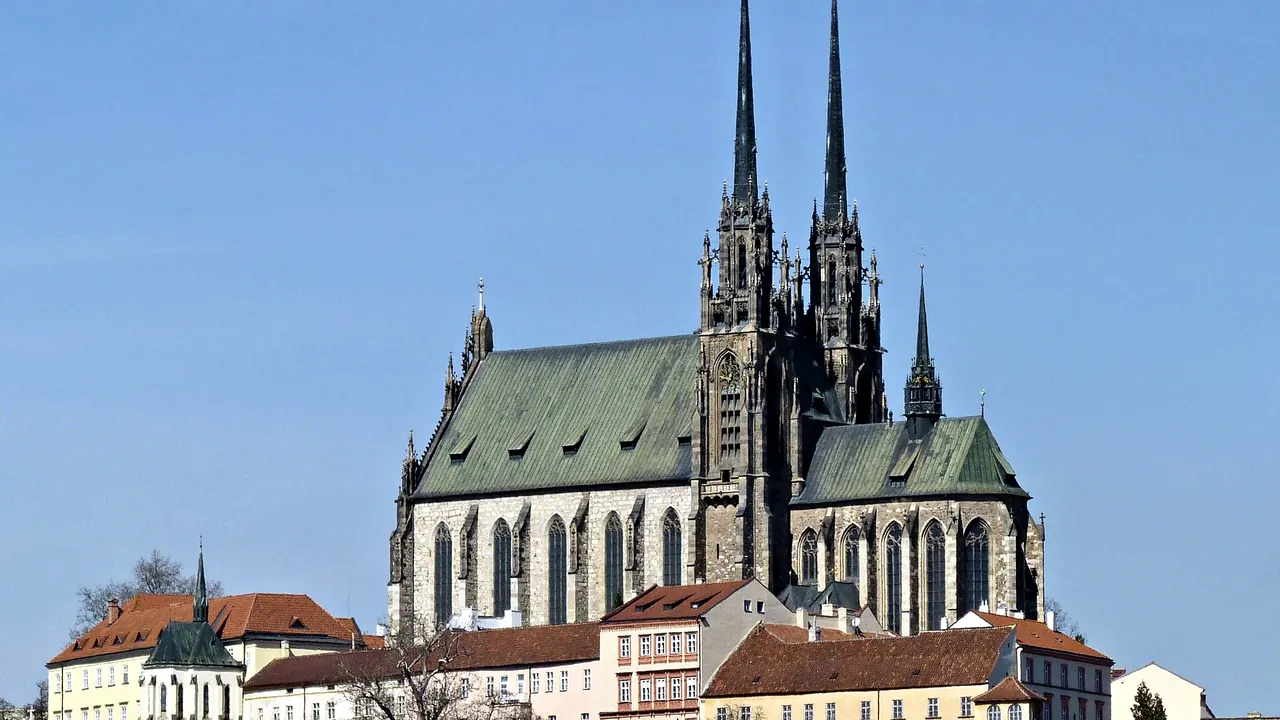
The Cathedral of St Peter and St Paul on Petrov hill above the roofs
- Day trips80
- Getting around76
- Affordable cities68
Photo: Michal Klajban, CC BY-SA 3.0, cropped
Match
51
Every category weighted equally
- Beach & sun45
- Culture & arts56
- Food & nightlife51
- Family trip52
- Outdoors54
- Relax & unwind46
- Shopping & style50
- On a budget52
Brno in twelve categories
Our verdict on each, scored 0 to 100 against the same fixed benchmark cities, so a score means the same thing on every page.
Beaches & swimming. Scores 12 out of 100.
Food & drink. Scores 45 out of 100.
Culture & sights. Scores 56 out of 100.
Nightlife. Scores 45 out of 100.
Nature & outdoors. Scores 56 out of 100.
Day trips. Scores 80 out of 100.
Good for families. Scores 50 out of 100.
Getting around. Scores 76 out of 100.
Shopping & style. Scores 32 out of 100.
Affordability. Scores 68 out of 100.
Live music & performing arts. Scores 58 out of 100.
Wellness & relaxation. Scores 28 out of 100.
Brno category by category
Beaches & swimming
12Brno is a long way from any sea. In summer, locals swim at the Brno Reservoir, a dammed stretch of the Svratka on the north-western edge of the city that you can reach by tram and river boat. It has grassy banks and small beaches, but blooms of algae can affect the water in hot spells. The Nove Mlyny lakes below the Palava hills, about an hour south, are the other choice. Both suit a hot afternoon, not a beach vacation.
Food & drink
45Eating out in Brno is mostly hearty Czech cooking: svickova, goulash, roast pork with dumplings, served in beer halls and pubs that pour excellent lager, including the local Starobrno. What sets the city apart is drink. It has a serious specialty coffee culture for a city its size, and many students and young professionals keep a scene of careful cocktail bars going. Because Brno is the capital of Moravia, the wine is local. Light whites and Frankovka reds come from vineyards less than an hour south, and wine bars serve them by the glass.
The morning market on Zelny trh sells vegetables, flowers and seasonal produce. Beyond that the range is limited. A handful of good modern bistros and some international cooking sit alongside plenty of ordinary lunch-menu places, and fine dining is thin.
Culture & sights
56Brno's best-known sight is modernist. Villa Tugendhat is Mies van der Rohe's UNESCO-listed house of 1930, with an onyx wall and windows that lower into the floor. Around it is one of Europe's richest collections of interwar functionalist architecture: the exhibition grounds, villas in the hillside districts and office blocks in the centre. The older city is compact. The Gothic Cathedral of St Peter and Paul and Spilberk Castle, a fortress and prison of the Habsburgs, face each other across the old town. Below the streets are the Capuchin Crypt with its mummified monks and the ossuary under St James's Church.
The Moravian Gallery and the Moravian Museum cover art and regional history well. The Mendel Museum stands in the Augustinian abbey where genetics began. The legends of the Old Town Hall, a stuffed 'dragon' and a crooked turret, add charm. Two or three days covers it.
Nightlife
45Brno is a university city, and you notice it at night. During term, the bars around Jakubske namesti and the streets off Namesti Svobody stay full until late. The city is known in Czechia for its cocktail bars, many of them small, hidden behind unmarked doors or down cellar steps, and taken seriously. Beer pubs, wine bars with Moravian wine and student cellars cover the cheaper end.
Clubbing is modest: a few dance clubs and alternative venues rather than a scene people travel for. In July and August, when the students leave, the city goes noticeably quieter. It is a good place for a long evening of drinks and a poor one for an all-night party.
Nature & outdoors
56The best outdoor trip from Brno is the Moravian Karst, about half an hour north. It is a wooded limestone area with more than a thousand caves. You can visit some, including the Punkva Caves, where a boat runs along an underground river below the Macocha Abyss, a gorge 138m deep. The forests and hills around the karst are good for marked trails and cycling.
To the south the land flattens into vineyards. The white limestone ridge of the Palava hills rises above the Nove Mlyny lakes, and the meandering Dyje valley in Podyji National Park lies about an hour away. Long-distance cycling routes run through the wine country. In the city, the woods around the Brno Reservoir and the Spilberk hill give quick green escapes. There are no mountains, and winters are grey rather than snowy.
Day trips
80Day trips are Brno's strongest point. Southern Moravia has more heritage within easy reach than most visitors expect. The Lednice-Valtice cultural landscape, about forty-five minutes away, is a UNESCO-listed estate of chateaux, follies and parkland. The Austerlitz battlefield and Slavkov chateau are closer still. Further out are the archbishop's palace and gardens at Kromeriz, the Jewish quarter and basilica at Trebic, the Renaissance square at Telc and the star-shaped pilgrimage church at Zelena Hora, all UNESCO sites within about an hour or two.
Olomouc, with its Baroque squares, is a little over an hour by train. Wine towns such as Mikulov and Znojmo make easy days in the vineyards. Vienna is about an hour and a half away by train and Bratislava about the same, so two capitals also fit in a day out.
Good for families
50Brno is easy and safe with children, but there is not much aimed at them. The VIDA science centre at the exhibition grounds is the main attraction made for children, with hands-on exhibits. The zoo spreads over a wooded hillside on the edge of the city. The Anthropos pavilion presents prehistory with mammoths and cave dwellers, and the observatory on Kravi hora has a planetarium. In summer, the reservoir with its boats and grassy banks makes a relaxed day.
The boat ride through the Punkva Caves in the Moravian Karst is the outing children remember best. Trams make the city simple to cover, and the centre is small, although cobbles and some hills mean a sturdy pushchair.
Getting around
76Brno is an easy city to manage on foot. The historic centre is small, mostly pedestrianised and crossed in a quarter of an hour. Beyond it, a dense tram network, backed by trolleybuses and buses, reaches the exhibition grounds, Villa Tugendhat, the zoo and the reservoir. All of it runs on one integrated ticket that also covers regional trains across South Moravia, which makes day trips simple. Night buses cover the late hours.
The main railway station sits at the edge of the old town. A car is useful only for the wine country or the karst villages, and even those are reachable by train and bus. Some streets around Spilberk and the cathedral hill are steep.
Shopping & style
32Shopping is not a reason to come to Brno. The centre has the usual high-street chains along Ceska and Masarykova. A few independent design, vintage and bookshops are scattered through the side streets and arcades of the old town, and large malls sit by the station and on the city edge. The most rewarding things to bring home are Moravian wine, bought from specialist shops or straight from cellars on a day trip, and seasonal produce and flowers from the Zelny trh market.
Affordability
68Brno is an inexpensive city by European standards and clearly cheaper than the Czech capital. Mid-range hotels and apartments cost little for a central European city, though big trade fairs at the exhibition grounds can fill rooms. Weekday lunch menus in pubs and canteens are very good value. Beer and local wine are cheap, and transport tickets and museum entries cost little. Specialty coffee and cocktail bars charge more, but rarely enough to change the overall picture.
Live music & performing arts
58For a city its size, Brno has a serious stage life, and the reason is Leos Janacek, who lived and worked here. The National Theatre Brno runs three houses. The large modernist Janacek Theatre hosts opera and ballet, with Janacek's operas at the heart of the repertoire. The Mahen Theatre is an ornate 1880s house for drama. The Reduta is one of the oldest theatres in Central Europe, where the young Mozart once played. The city's festival devoted to Janacek is a highlight of the musical calendar.
The Brno Philharmonic gives a regular orchestral season. The City Theatre Brno is known for large musical productions, and Divadlo Husa na provazku is a long-established experimental stage. Most of it is in Czech, so opera, ballet and concerts suit visitors best.
Wellness & relaxation
28Brno has no spa town tradition or thermal springs. Wellness here means public swimming complexes with sauna areas and a few hotel and day spas. The city's pace is calm for a regional capital, with café afternoons and quiet green spaces such as Luzanky park and the Spilberk slopes. That helps, but anyone who wants to take the waters has to travel further afield.
When should you go?
Pick a month to see what it is like. The climate figures are measured averages, not a forecast.
Brno in July
Daytime high, °C
Rainfall in the month, mm
The whole year
Shaded against this city’s own year: the deepest cell is its best month for that figure and the palest its weakest.
Temperature and rainfall are climate normals, averaged over the years shown. Brno: 1991-2020 normals, Brno / Turany (8.4 km from centre).
Before you go
| Measure | Brno |
|---|---|
| Official language | Czech |
| Currency | Czech Koruna (CZK) |
| Sockets | CE230 V, 50 Hz |
| Driving side | Right |
| Time zone | UTC+1, UTC+2 in summer |
| Emergency number | 112 |
| Elevation | 237 m |
| Main airport | Brno-Tuřany Airport (BRQ)8 km from centre40 non-stop destinations |
| Public holidays this year | 13 days |
By the numbers
| Measure | Brno |
|---|---|
| City population | 402,739 |
| People per km² | 1,750 |
| Museums within 10 km | 25 |
| UNESCO World Heritage sites within 50 km | 2 |
Compare Brno with
Every comparison with a written verdict behind it.
- Berlin
- Bled
- Bratislava
- Budapest
- Cesky Krumlov
- Cortina d'Ampezzo
- Dresden
- Graz
- Hallstatt
- Innsbruck
- Krakow
- Leipzig
- Ljubljana
- Munich
- Nuremberg
- Prague
- Salzburg
- Trieste
- Vienna
- Warsaw
- Wroclaw
- Zagreb