Germany
Hamburg
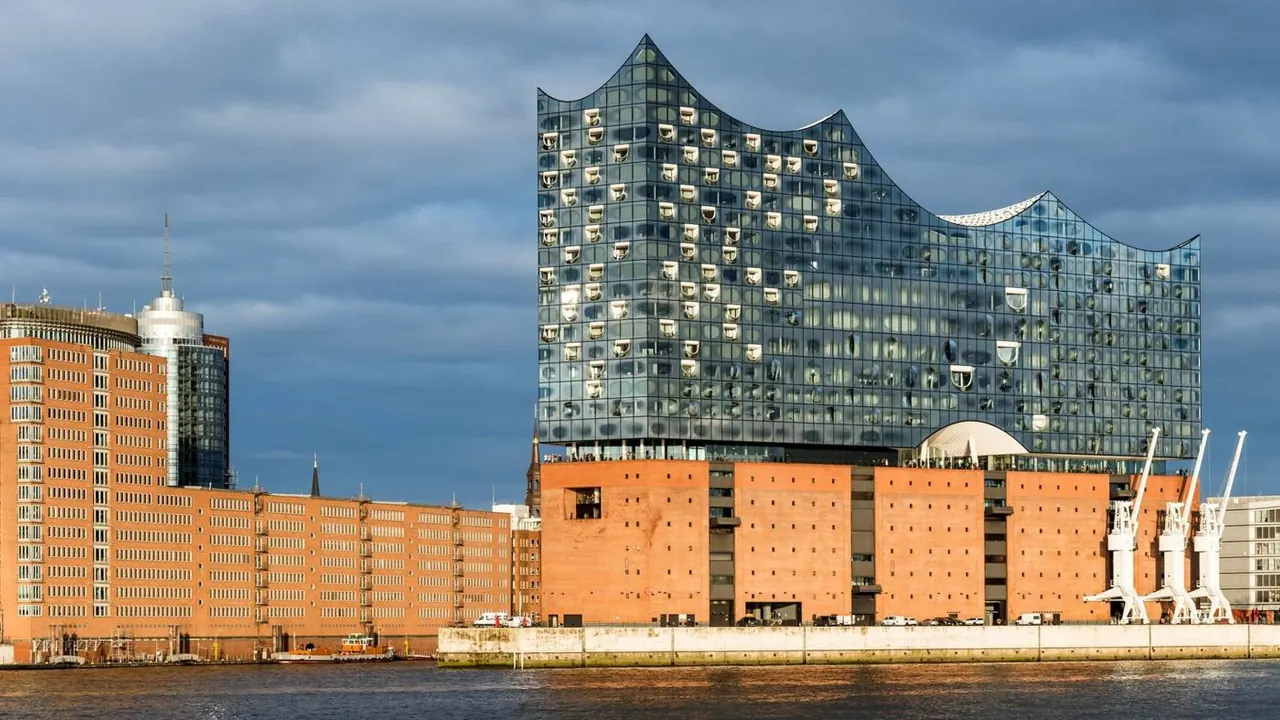
The Elbphilharmonie from the water
- Getting around80
- Live music & the arts80
- Nightlife76
Photo: Wolfgang Weiser, Pexels License
Match
60
Every category weighted equally
- Beach & sun54
- Culture & arts65
- Food & nightlife64
- Family trip58
- Outdoors57
- Relax & unwind54
- Shopping & style64
- On a budget58
Hamburg in twelve categories
Our verdict on each, scored 0 to 100 against the same fixed benchmark cities, so a score means the same thing on every page.
Beaches & swimming. Scores 28 out of 100.
Food & drink. Scores 55 out of 100.
Culture & sights. Scores 62 out of 100.
Nightlife. Scores 76 out of 100.
Nature & outdoors. Scores 52 out of 100.
Day trips. Scores 70 out of 100.
Good for families. Scores 74 out of 100.
Getting around. Scores 80 out of 100.
Shopping & style. Scores 65 out of 100.
Affordability. Scores 38 out of 100.
Live music & performing arts. Scores 80 out of 100.
Wellness & relaxation. Scores 44 out of 100.
Hamburg category by category
Beaches & swimming
28Hamburg has sand of its own, but not much swimming. The Elbe beaches at Oevelgoenne and below Blankenese are lovely for watching container ships slide past at sunset, yet the strong currents and the wash from passing ships make the river a poor place to swim. Real sea bathing means a day out to the Baltic at Travemuende or Timmendorfer Strand, about an hour away. The water there reaches around 18°C to 20°C in a good summer, and the beaches have the classic wicker beach chairs. A few lakes on the city edge and outdoor pools fill the gap in hot weather. Beach life is an extra here, not a reason to come.
Food & drink
55Hamburg eats like a port. The fish roll is the signature snack: herring, mackerel or shrimp in a bread roll, eaten standing on the Landungsbruecken piers or after the early Sunday fish market in Altona. Then come the heavier northern classics, Labskaus with beetroot and fried egg, eel soup and Finkenwerder plaice. The cinnamon Franzbroetchen pastry is the breakfast the city is proud of. A long history as a coffee port shows in the many roasteries and in the cafés of the Schanzenviertel and Ottensen.
Away from the waterfront, the modern dining scene is broad and confident, from Portuguese and Turkish places near the harbour to a serious fine-dining tier. It is good eating rather than a cuisine to travel for, and prices sit at the upper end for Germany.
Culture & sights
62Hamburg's great sight is its working waterfront and the merchant city built around it. The Speicherstadt, a district of red-brick warehouses on canals, and the neighbouring Kontorhaus district with the ship-shaped Chilehaus are listed together by UNESCO. The Elbphilharmonie rises from an old warehouse at their edge, with a public plaza and views over the harbour. The neo-Renaissance Rathaus, the baroque St Michael's church and the ruined spire of St Nikolai, kept as a war memorial, complete the centre.
The Kunsthalle has a strong collection running from old masters to Caspar David Friedrich, and the Museum fuer Kunst und Gewerbe and the Deichtorhallen add design and photography. Much of the old city was lost in the Second World War, so this is a city of districts and waterside walks rather than an intact historic core.
Nightlife
76Hamburg goes out hard and late. The Reeperbahn in St Pauli is Germany's best-known nightlife mile, a mix of neon, dive bars, music clubs, cabaret and the red-light streets around it, crowded with stag parties and locals alike at weekends. Bars have no fixed closing time, and a night here often ends at dawn at the harbour.
The character changes by district. The Schanzenviertel has packed pavement bars and an alternative crowd, Ottensen is calmer and more grown-up, and the bars around the Alster are smarter. Clubs range from bunker basements to harbour-side venues. Weekdays are quieter, and the scene is rougher around the edges than polished, which is much of its appeal.
Nature & outdoors
52The landscape is flat, and water is what defines the outdoors here. Sailing boats, canoes and stand-up paddleboards fill the Alster lakes in summer, and canoes reach far into the canals of the leafy districts to the north. The Elbe riverside path runs west past old captains' houses to Blankenese, where steep lanes climb a wooded bank above the river, the closest Hamburg gets to hills.
The Altes Land, a huge cherry and apple orchard district across the Elbe, is easy cycling and turns white in spring blossom. The purple heather of Lueneburg Heath is about an hour south, and the Wadden Sea mudflats lie further out on the North Sea coast. City parks such as Planten un Blomen and the Stadtpark are large and well used.
Day trips
70Northern Germany's brick Gothic towns make Hamburg a very good base. Luebeck, the old Hanseatic capital with its Holstentor gate, merchant houses and marzipan, is under an hour by train and the clear first choice. Lueneburg, a salt town of gabled houses that lean at odd angles, is about half an hour away.
Bremen's market square and Schnoor quarter are around an hour away, and Schwerin's fairy-tale castle on its lake is a similar distance. Celle's half-timbered streets, the harbour town of Stade and the UNESCO-listed old port of Wismar extend the list. Most outings run by train, and the Baltic resorts make an easy summer extra.
Good for families
74Hamburg is easy and rewarding with children. Miniatur Wunderland in the Speicherstadt, a vast model railway with working airports and harbours, holds children and adults for hours. Tierpark Hagenbeck in Stellingen pioneered open enclosures without bars, so animals are seen across moats and rocky landscapes, and its tropical aquarium is a good wet-day fallback. A harbour day works well too: a ferry ride across the Elbe, a climb around the museum ships at the Landungsbruecken and a walk through the old Elbe tunnel under the river.
The planetarium in the Stadtpark, the big playgrounds and water play areas in Planten un Blomen and the paths around the Alster fill the rest, and the Heide Park and Hansa-Park theme parks are each about an hour away. Streets feel safe and pavements are wide and pram-friendly. Grey, rainy weather is the main drawback, so plan indoor options for every day.
Getting around
80Hamburg is easy to get around without a car. The centre, the Speicherstadt, HafenCity and the Alster are all within walking distance of each other, and pavements and cycle lanes are good. The U-Bahn and S-Bahn link every district a visitor is likely to want, and the harbour ferries run on the same ticket, doubling as a cheap way to see the port from the water.
The airport is on the S-Bahn, and the main station is a hub for trains across northern Germany. Distances only become noticeable going out to Blankenese or Hagenbeck, which still means one train ride. Cycling suits the flat terrain, though rain and wind are frequent companions.
Shopping & style
65Hamburg is a wealthy merchant city and shops like one. Neuer Wall and the streets around the Jungfernstieg hold the luxury labels, and a network of covered shopping arcades links them, useful on wet days. The Alsterhaus, a long-established department store on the water, anchors the area, while Spitalerstrasse and Moenckebergstrasse cover the high-street chains.
For independents, the Karolinenviertel and Schanzenviertel have vintage, streetwear and small design shops, and Ottensen has a quieter local mix. The Isemarkt, a long covered street market under the elevated railway, and the Sunday fish market add character, though neither is a craft or souvenir destination. Maritime goods and tea and coffee from the old trading houses make good things to take home.
Affordability
38Hamburg is one of Germany's more expensive cities. Hotel rooms cost noticeably more than the national average, especially during big trade fairs, festivals and summer weekends, and restaurant meals in the centre and HafenCity are priced for a wealthy city. Visitors save on transport, since a day ticket covers trains, buses and harbour ferries, and on the free things: the Elbphilharmonie plaza, the Speicherstadt, the riverside walks and the parks. Fish rolls, bakeries and the casual places in Altona and St Pauli keep daily eating manageable.
Live music & performing arts
80This is one of the strongest reasons to choose Hamburg. The Elbphilharmonie is among the most celebrated concert halls built anywhere, with a large main hall of exceptional acoustics, and the older Laeiszhalle carries a full classical season alongside it. The Hamburg State Opera has a long history, and the Hamburg Ballet is internationally known. The Deutsches Schauspielhaus and the Thalia Theater are among Germany's leading stages.
Hamburg is also Germany's musical capital, with several large theatres running long-running shows, some reached by boat across the harbour. The Beatles played their early years on the Reeperbahn, and St Pauli still has a dense circuit of small rock and indie clubs. The Reeperbahn Festival each autumn fills them with new bands.
Wellness & relaxation
44Hamburg has no thermal springs, but it does share the German sauna habit. The city's public baths include the art nouveau Holthusenbad in Eppendorf, with pools and a sauna area, and several other bath complexes have large sauna landscapes where locals spend whole winter afternoons. Hotel spas fill the upper end.
The city's calmer side is easy to find: a slow walk or boat ride around the Alster, an afternoon in Planten un Blomen's Japanese garden, or the riverside paths towards Blankenese. It is a pleasant place to unwind rather than a wellness destination.
When should you go?
Pick a month to see what it is like. The climate figures are measured averages, not a forecast.
Hamburg in July
Daytime high, °C
Rainfall in the month, mm
The whole year
Shaded against this city’s own year: the deepest cell is its best month for that figure and the palest its weakest.
Temperature and rainfall are climate normals, averaged over the years shown. Hamburg: 1991-2020 normals, Hamburg Airport (9.3 km from centre).
Before you go
| Measure | Hamburg |
|---|---|
| Official language | German |
| Currency | Euro (EUR) |
| Sockets | CF230 V, 50 Hz |
| Driving side | Right |
| Time zone | UTC+1, UTC+2 in summer |
| Emergency number | 112 |
| Elevation | 6 m |
| Main airport | Hamburg Helmut Schmidt Airport (HAM)9 km from centre120 non-stop destinations |
| Public holidays this year | 10 days |
By the numbers
| Measure | Hamburg |
|---|---|
| City population | 1,869,473 |
| People per km² | 2,476 |
| Museums within 10 km | 77 |
| UNESCO World Heritage sites within 50 km | 1 |
Compare Hamburg with
Every comparison with a written verdict behind it.
- Aarhus
- Amsterdam
- Antwerp
- Baden-Baden
- Berlin
- Brussels
- Cologne
- Copenhagen
- Dresden
- Dusseldorf
- Frankfurt
- Heidelberg
- Maastricht
- Munich
- Nuremberg
- Prague
- Rotterdam
- Stuttgart
- The Hague
- Utrecht