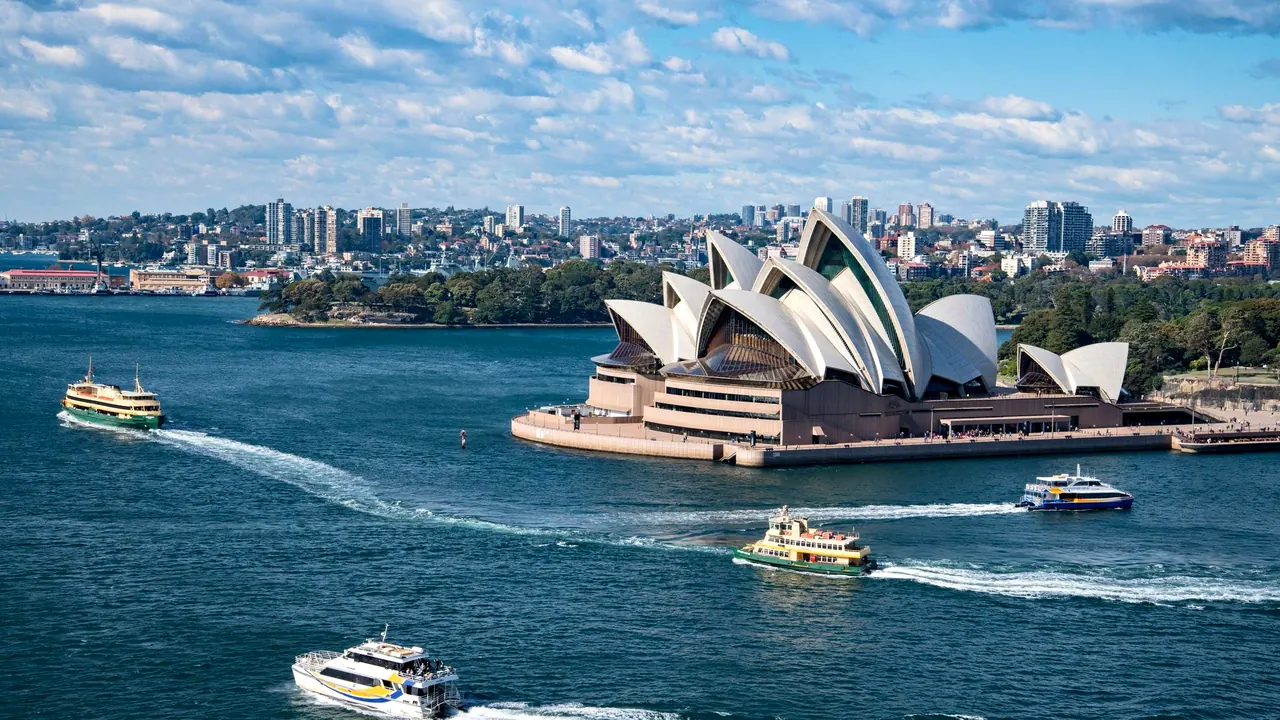
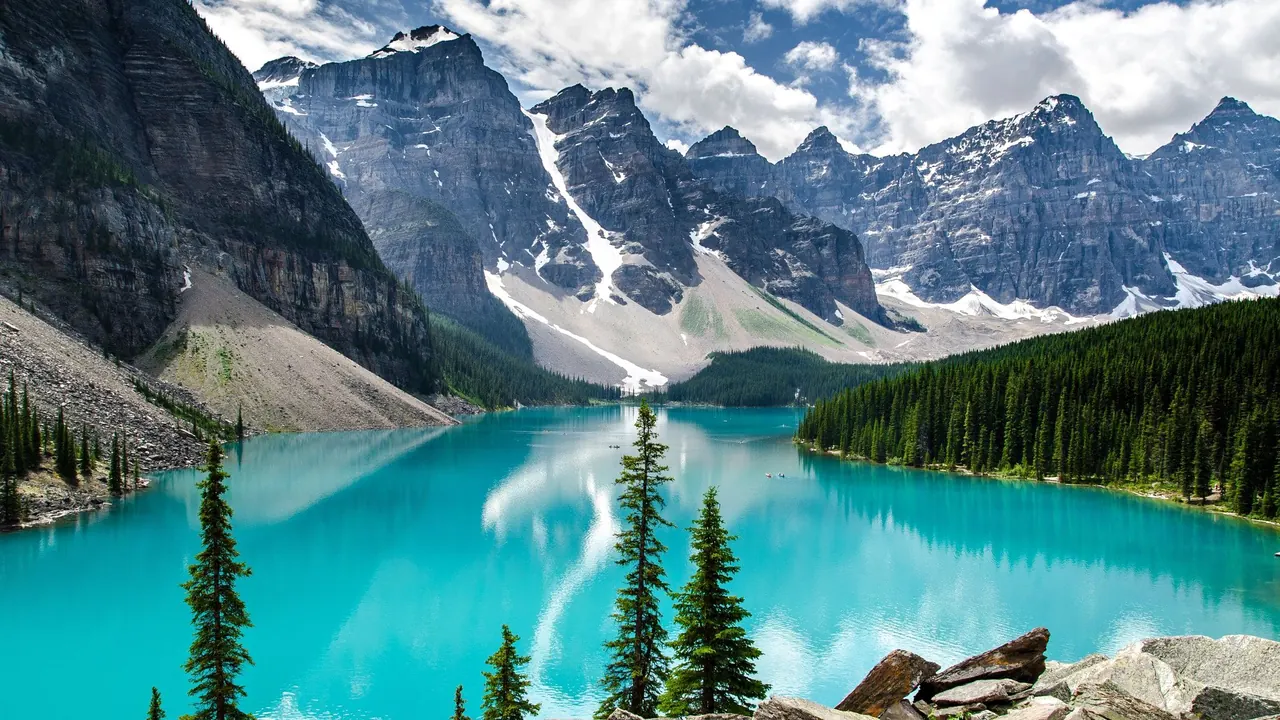
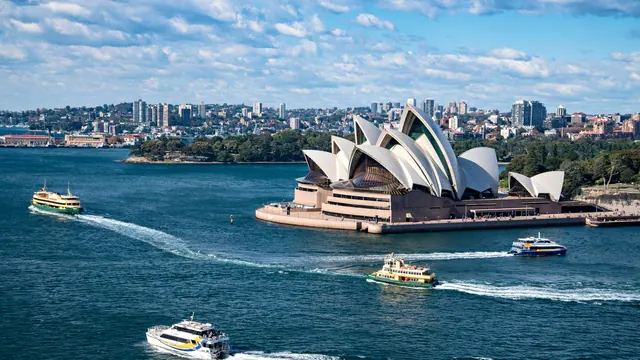
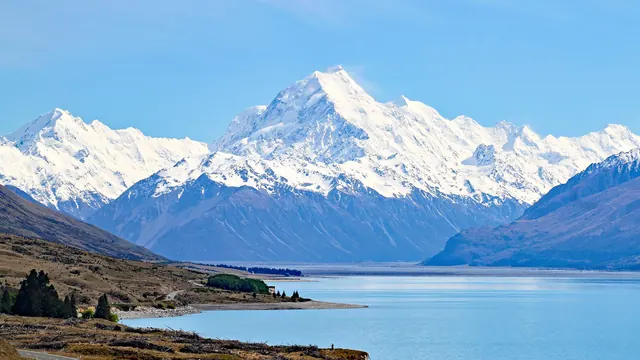
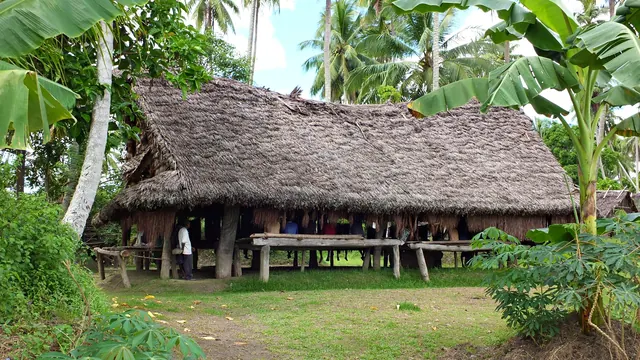
Photos: Australia by David Dibert, Pexels License; Canada by Ronny Von Arx, CC BY-SA 3.0, cropped.
Australia or Canada?
Our verdict in twelve categories, each scored against the same fixed benchmark cities, and the climate month by month, so you can choose for your trip.
Choose Australia for
- beaches
- families
- getting around
Australia suits a warm-weather trip built around the sea. You get surf beaches from Sydney up to the Gold Coast, the reef off Cairns and the Whitsundays, and relaxed cities with good food and coffee. It is also the easier choice with children, as long as you pick one or two regions rather than trying to cover the whole map.
Choose Canada for
- prices
- live music and the arts
- wellness
Pick Canada when mountains, lakes and forest matter more than the beach, or when winter should mean skiing rather than getting away from the cold. The Rockies, the Pacific coast and the Atlantic provinces are its strengths. French-speaking Quebec adds an old walled city, later nights in Montreal and a slightly fuller stage programme. Canada is also a little kinder to the budget, especially in Quebec and the Maritimes.
Scoreboard
Twelve categories on one fixed scale from 0 to 100. The shaded stretch is the gap between the two.
Your match
Pick a travel style or drag the sliders, and both match scores follow your weighting.
Wins on beaches and families with your weighting.
Wins on prices and live music and the arts with your weighting.
What matters to you?
Category by category
What the scores mean for a trip.
Beaches & swimming
The gap is wide here. Australia's coast is a reason to go in itself: Sydney's surf beaches and harbour coves, Byron Bay and the Gold Coast, Whitehaven's silica sand in the Whitsundays and the clear Indian Ocean shore around Perth. The popular beaches have lifesavers and swimming between the flags. The limits are the box jellyfish season in the tropical north and the cooler water around Melbourne and Tasmania.
In Canada, swimming is a summer extra, mostly in July and August. The options are the red-sand beaches of Prince Edward Island and the Northumberland Strait, the warm Okanagan lakes and the freshwater beaches of Lake Huron. The Pacific at Tofino is for surfing in a wetsuit and for watching, not for long swims.
Where in Australia: Sydney, Gold Coast and Byron Bay, Whitsunday Islands, Perth and the South West
Where in Canada: Prince Edward Island, Okanagan Valley, Northumberland Shore, Lake Huron shore
Food & drink
Both countries eat best in their big cities and rely on immigrant cooking, but Australia has the edge. Melbourne and Sydney combine serious restaurants with a daily café and brunch habit. The seafood runs from Sydney rock oysters to Tasmanian scallops, and the Barossa, Margaret River and the Yarra Valley put wine country close to the cities.
Canada's strongest case is Montreal, with French bistros, bagels, smoked meat and the Jean-Talon market. Toronto's neighbourhood cooking and Vancouver's Cantonese and Japanese food back it up. Nova Scotia's lobster suppers are worth the trip east, but between the cities the choice thins to diners and chains.
Where in Australia: Melbourne, Sydney, Adelaide and the Barossa, Tasmania
Where in Canada: Montreal, Toronto, Vancouver, Nova Scotia
Culture & sights
Neither country has many dense old towns, and on sights they come out about even. Australia's depth lies in Aboriginal heritage, with rock art in Kakadu and the guided walks at Uluru. Alongside it sit a young colonial layer in Sydney's Rocks and at the Port Arthur convict site, and landmarks such as the Opera House and MONA.
Canada has the only real historic walled town of the two in Quebec City. Old Montreal, Ottawa's Parliament and Toronto's big museums add to it, all within one eastern corridor that can be toured by train.
Where in Australia: Sydney, Melbourne, Hobart and Port Arthur, Kakadu and Uluru
Where in Canada: Quebec City, Montreal, Ottawa, Toronto
Nightlife
Australia has a little more going on after dark, mostly because more of its cities have a proper scene. Melbourne has cocktail bars in its laneways and late pubs and clubs in Fitzroy and St Kilda. Sydney has its pub culture, Brisbane has Fortitude Valley, and the Gold Coast and Byron Bay have backpacker party nights.
Canada's best night out is in Montreal, which stays open later than anywhere else in the country along Saint-Laurent and in the Plateau. Toronto's Queen West and Ossington close earlier, and away from these cities a Canadian evening usually ends in a pub, apart from the winter après-ski crowd in Banff and Whistler.
Where in Australia: Melbourne, Sydney, Brisbane, Gold Coast
Nature & outdoors
Both are among the world's great outdoor countries, so the difference is the kind of wilderness. Australia's is warm-weather nature: snorkelling and diving on the Great Barrier Reef, the Daintree rainforest, the red desert around Uluru and animals such as kangaroos and koalas that live nowhere else.
Canada's is mountains, lakes and cold water. There are glaciers and turquoise lakes in Banff and Jasper, kayaking among orcas off Vancouver Island, and the Cabot Trail and the fjords of Gros Morne in the east. In winter there is first-rate skiing at Whistler and Lake Louise.
Where in Australia: Great Barrier Reef and Daintree, Tasmania, Uluru and the Red Centre, Great Ocean Road
Where in Canada: Canadian Rockies, British Columbia coast and Vancouver Island, Cape Breton Island, Gros Morne and Newfoundland
Day trips
In both countries the cities are far apart, so day trips are limited, but Australia has more good wine outings close to its cities. Adelaide is the standout base, with the Barossa, McLaren Vale and the German-settled village of Hahndorf nearby. Melbourne, Hobart and Perth each have a wine valley, a convict site or a historic town within easy reach.
Canada's best days out are from Toronto, to Niagara-on-the-Lake and Stratford, and from Montreal, to Ottawa or the Eastern Townships. Victoria makes a long day by ferry from Vancouver.
Where in Australia: Adelaide, Melbourne, Hobart, Perth
Where in Canada: Niagara Peninsula, Eastern Townships, Lunenburg and the South Shore, Victoria
Good for families
Australia is the easier family destination once the long flight is behind you. The Gold Coast puts theme parks, water parks and long patrolled beaches in one place, and children can feed kangaroos in the Sunshine Coast wildlife parks. Free park barbecues and playgrounds make everyday life simple.
Canada suits families who like the outdoors, with well-run campgrounds in the Rockies, canoeing on calm lakes and elk seen from the car. Toronto's dinosaur galleries and Montreal's Biodôme cover rainy days, but warm beaches for young children are mostly limited to Prince Edward Island in summer.
Where in Australia: Gold Coast, Sydney, Melbourne, Sunshine Coast
Where in Canada: Toronto, Vancouver, Banff and the Rocky Mountains, Prince Edward Island
Getting around
Australia is the easier country to move around, mainly because its main bases work well without a car. Sydney's trains and harbour ferries, Melbourne's trams and Brisbane's river ferries cover the cities, and the coast road from Sydney to Brisbane or along the Great Ocean Road makes a classic road trip. The catch is distance: Cairns, Perth and Uluru are flights apart, and driving at dusk means watching for wildlife.
Canada's trains are useful only on the corridor from Quebec City through Montreal and Ottawa to Toronto, where metro systems make the cities easy. The Rockies, Vancouver Island and the Atlantic coasts all effectively need a hire car, and winter roads in the mountains and the east call for care.
Where in Australia: Sydney, Melbourne, Brisbane
Where in Canada: Montreal, Toronto, Vancouver, Quebec City-Windsor corridor
Shopping & style
Shopping is a sideline in both countries and gathers in two or three cities, so the difference lies in the streets and in what you carry home. In Australia the best browsing is in Melbourne's Victorian arcades and laneway boutiques and at Sydney's weekend markets in Paddington and the Rocks. The truly Australian keepsake is Aboriginal art, best bought from community-linked galleries in Alice Springs, Darwin or the big cities rather than from street stalls, with opals and surfwear as the other things to take home.
Canada spreads its shopping across three cities rather than two, with Vancouver's Robson Street and Granville Island alongside Toronto and Montreal. Montreal's Plateau boutiques also lean more towards local designers than the big-name labels around Sydney's Pitt Street. Canada's answer to Aboriginal painting is Northwest Coast carving and prints. Where Australia sends you home with opals and surfwear, Canada sends you home with maple products, ice wine and clothing made for real cold.
Affordability
Both are expensive, but Canada is the gentler of the two. Montreal and Quebec City are moderate for big cities, Nova Scotia and Prince Edward Island cost less again, and camping in the national parks keeps a Rockies trip within reason.
In Australia the bill grows with alcohol, reef boat trips, stays at Uluru and long domestic flights. Adelaide, Brisbane and the Gold Coast's many apartments soften it, as do free beaches and park barbecues.
Where in Australia: Adelaide, Gold Coast, Brisbane
Where in Canada: Montreal, Quebec City, Nova Scotia, Prince Edward Island
Live music & performing arts
The two are close, and both have their stage life gathered in two main cities. Australia's highlights are opera at the Sydney Opera House, the band circuit in Melbourne's pubs and Adelaide's Festival and Fringe in late summer.
Canada has the bigger theatre scene in Toronto, plus Cirque du Soleil and the summer jazz festival in Montreal. Shakespeare at Stratford and fiddle music on Cape Breton give it a slightly fuller summer programme.
Where in Australia: Melbourne, Sydney, Adelaide
Where in Canada: Toronto, Montreal, Stratford, Cape Breton Island
Wellness & relaxation
Neither country has an old bathing tradition, so the difference is the setting. Australia leans towards warm-weather retreats: yoga and health resorts around Byron Bay and Noosa, the mineral springs of Daylesford and the ocean pools cut into Sydney's rocks.
Canada has hot springs with mountain views at Banff and along the Kootenays. Quebec's Nordic spas, with their cycle of hot baths, saunas and cold plunges, work as well in snow as in summer.
Where in Australia: Daylesford and Hepburn Springs, Byron Bay, Mornington Peninsula, Noosa
Where in Canada: Kootenay Rockies, Banff, Laurentians and Eastern Townships, Gatineau
When should you go?
Pick your month, and for a country the place in it. The climate figures are measured averages, not a forecast.
Where in Australia
Where in Canada
Sydney (Australia) in July
Toronto (Canada) in July
Daytime high, °C
Rainfall in the month, mm
Temperature and rainfall are climate normals, averaged over the years shown. Sydney (Australia): 1991-2020 normals, Sydney Airport (3.7 km from centre). Toronto (Canada): 1991-2020 (sunshine 1961-1990) normals, Toronto City (1.1 km from centre).
Australia's seasons run opposite to Canada's. Sydney and the south are at their best for the beach from December to March, when the sea off Sydney reaches 23°C, while Melbourne turns cool and greyer from June to August. The tropical north works the other way round. Cairns is soaked in its wet season, with 548mm in February, and is at its best from May to October. That is also the time for the Red Centre, because Uluru reaches 38°C in January. Perth gets long dry summers and has its rain in June and July.
Canada has two main seasons, summer and winter. July and August are warm everywhere. They are the only months for swimming in lakes or the sea, and the best for hiking in the Rockies and walking the streets of Toronto and Montreal. Winter is properly cold, around -3°C in Montreal in January. That suits skiing around Banff but not sightseeing on foot. Vancouver is milder but wet from October, with 245mm in November, and spring is muddy in the mountains.
Which traveller are you?
On a beach and sun trip, Australia wins easily. Sydney's surf beaches, Byron Bay, the Gold Coast and Whitehaven's white sand are reasons to go in themselves. In Canada, swimming is a short summer extra on Prince Edward Island or the Okanagan lakes.
On a family trip with children, Australia is easier day to day. The Gold Coast has theme parks and patrolled beaches together, and wildlife parks let children feed kangaroos. Canada is better for families who like camping, though its warm beaches are few.
For skiers, Canada is the clear choice. Whistler, Lake Louise and Revelstoke offer first-rate skiing, hot springs and a lively après-ski crowd in Banff. Australia's outdoor strengths are reef, rainforest and desert rather than snow.
More comparisons
Each shares a side with Australia or Canada.
Where else could you go?
Set Australia or Canada against any other country.