United States
Asheville
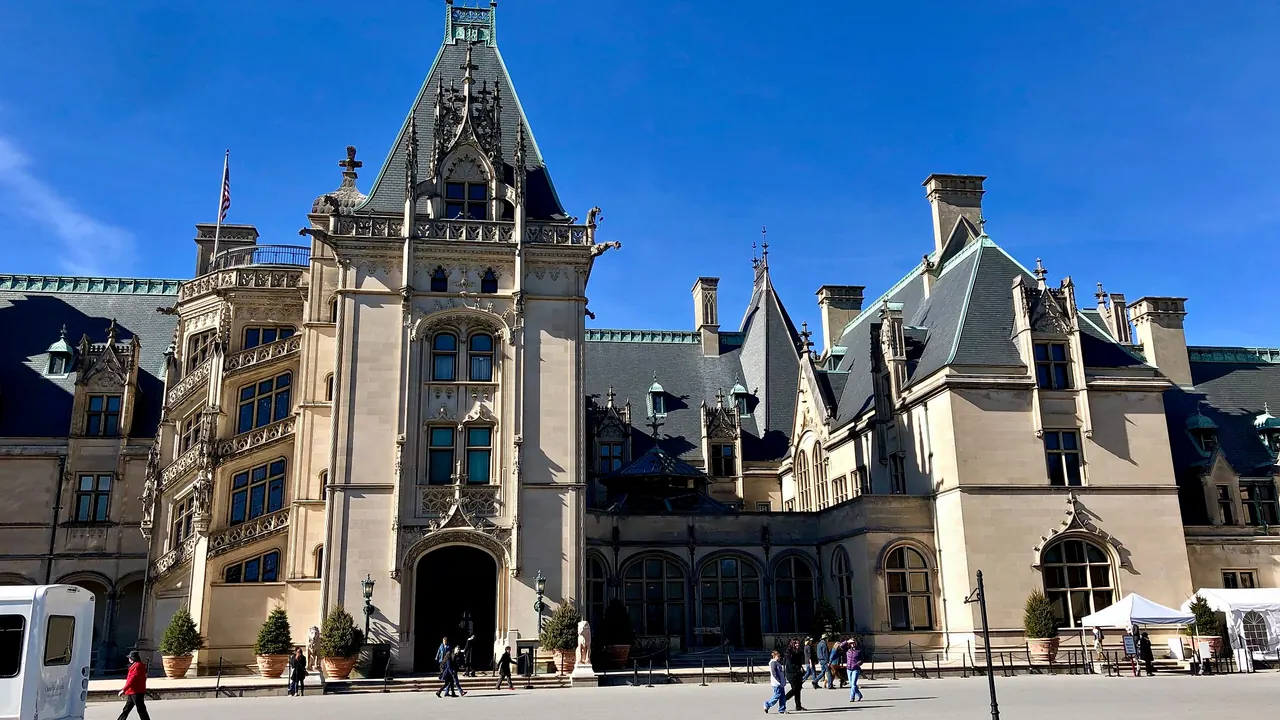
Biltmore House and its carved stair tower
- Nature & outdoors83
- Food & drink64
- Culture & sights55
Photo: Warren LeMay, CC0
Match
49
Every category weighted equally
- Beach & sun45
- Culture & arts49
- Food & nightlife47
- Family trip47
- Outdoors52
- Relax & unwind49
- Shopping & style49
- On a budget47
Asheville in twelve categories
Our verdict on each, scored 0 to 100 against the same fixed benchmark cities, so a score means the same thing on every page.
Beaches & swimming. Scores 10 out of 100.
Food & drink. Scores 64 out of 100.
Culture & sights. Scores 55 out of 100.
Nightlife. Scores 42 out of 100.
Nature & outdoors. Scores 83 out of 100.
Day trips. Scores 50 out of 100.
Good for families. Scores 55 out of 100.
Getting around. Scores 30 out of 100.
Shopping & style. Scores 48 out of 100.
Affordability. Scores 36 out of 100.
Live music & performing arts. Scores 54 out of 100.
Wellness & relaxation. Scores 55 out of 100.
Asheville category by category
Beaches & swimming
10Asheville sits high in the Blue Ridge Mountains, and the nearest sea beach is several hours' drive away. Swimming here means mountain water: cold pools under waterfalls in Pisgah National Forest, the natural rock slide at Sliding Rock, lazy summer floats on the French Broad River, and a small sandy beach on Lake Lure, under an hour south-east. All of these are refreshing summer half-days rather than beach life, and the water stays cool even in July. Anyone who wants sand and warm sea should plan another trip.
Food & drink
64For a small mountain city, Asheville takes eating and drinking unusually seriously. Brewing is the headline. Dozens of breweries and taprooms are spread through downtown, the South Slope and West Asheville, and several large national brewers run regional sites in the surrounding valleys. Cooking draws on the farms of the Appalachians: trout, heirloom corn and beans, foraged ramps and mushrooms, sorghum, and serious Southern barbecue and biscuits, served in chef-driven dining rooms and casual counters alike.
The tailgate farmers' markets and the long-running WNC Farmers Market show where the produce comes from, and cider, mead and distilling round out the drinks. The limit is size. Beyond Southern and modern American cooking the international range is thin, and the best tables book up quickly at weekends and during leaf season.
Culture & sights
55The Biltmore Estate dominates. It is the Vanderbilts' Gilded Age château on the south edge of the city, the largest private house in the United States, with formal gardens laid out by Frederick Law Olmsted, and it easily fills a full day. Downtown is the other draw. A boom in the 1920s, followed by a long slump, left one of the most intact collections of Art Deco and Beaux-Arts buildings in the American South. The domed City Hall, the Grove Arcade and the tiled Basilica of St Lawrence are the highlights.
After that the list gets smaller: the Asheville Art Museum on Pack Square, the Thomas Wolfe Memorial in the novelist's boarding-house home, and the Folk Art Center on the Blue Ridge Parkway, which displays the region's craft heritage. Two or three days covers it.
Nightlife
42Evenings in Asheville revolve around brewery taprooms, cocktail bars and neighbourhood dive bars, most of them in walking distance of each other downtown and on the South Slope. West Asheville has a looser, local set of bars along Haywood Road. The crowd is a mix of locals, students and visitors, the mood is relaxed and friendly, and there is a small but long-standing LGBTQ bar scene. On summer Friday evenings the drum circle in Pritchard Park draws a crowd. There are only a handful of dance clubs, and most places quieten by midnight or soon after. It suits a sociable night of good beer, not a long night out.
Nature & outdoors
83This is the main reason to come. Asheville sits in a bowl of the Southern Appalachians. The Blue Ridge Parkway runs along its edge, Pisgah National Forest begins just south of town, and Mount Mitchell, the highest peak in the eastern United States at 2,037m, is about an hour away. The Great Smoky Mountains National Park lies about an hour west. Trails range from easy waterfall walks to long ridge hikes over grassy balds such as Max Patch and the Art Loeb Trail, and the Appalachian Trail passes nearby.
Pisgah is one of the country's great mountain-biking areas, and the French Broad, Nantahala and Pigeon rivers offer rafting and kayaking. The seasons shape everything. Rhododendron and flame azalea bloom in late spring, and the October colour is spectacular and very busy. Summer is humid with afternoon storms, and winter brings a little skiing at small nearby slopes. The mountains are old and wooded rather than jagged.
Day trips
50Within an hour or two lie small mountain towns rather than major destinations. Hendersonville and the Carl Sandburg Home at Flat Rock are close to the south, and Black Mountain, with its connection to the experimental college, is a short drive east. Brevard is the gateway to the waterfall country. To the west, Cherokee has the Museum of the Cherokee Indian and the Oconaluftee village, which together give the deepest look at the region's original people.
Greenville in South Carolina offers a lively riverside downtown about an hour away, and the foothill apple orchards and the vineyards of the Yadkin Valley make good autumn outings. Blowing Rock and the High Country are near the two-hour limit. Most excursions here are really into the landscape, and the list of towns is short.
Good for families
55Asheville works well for families who like the outdoors. The Western North Carolina Nature Center keeps native animals such as black bears, red wolves and otters, and short waterfall hikes, river tubing and Sliding Rock fill summer days. Older children enjoy the treetop rope courses and zip lines around the city, and the grounds and farmyard at Biltmore keep younger ones busy. The pace is easy-going and the downtown is safe and relaxed.
There is no large zoo, aquarium or theme park in town. The nearest big park is Dollywood, near Pigeon Forge, about two hours away over the mountains. Much of a family stay is spent driving between scattered sights, so it suits active children more than those who want rides and shows.
Getting around
30Downtown Asheville is compact and pleasant to walk, and it is hilly in places. The South Slope breweries and the River Arts District are within reach on foot or by a short ride. Beyond that the city spreads along valleys and highways. The local bus network is limited, and the things most visitors come for, such as the Biltmore Estate, the Blue Ridge Parkway, the trailheads and the waterfalls, are much easier to reach with a car. Mountain roads are winding and slow, and October weekends bring heavy traffic on the scenic routes. Most visitors drive or hire a car.
Shopping & style
48Shopping here is about craft. The Southern Appalachians have a long tradition of handmade work, and Asheville is where it is sold. Pottery, woodwork, weaving, glass and jewellery fill the galleries downtown and the working studios of the River Arts District along the French Broad. The Folk Art Center on the Blue Ridge Parkway is the showcase of a craft guild founded in the 1930s. The Grove Arcade, an elegant 1920s market building, and the streets around Lexington Avenue hold independent boutiques, bookshops, vintage clothing and outdoor-gear shops. Luxury brands and department stores are essentially absent, so this is a place for buying something handmade.
Affordability
36Asheville is a popular weekend escape, and its prices show it. Hotels and inns downtown and near Biltmore are expensive by American standards, and they climb sharply on autumn weekends, when the leaves turn. Eating and drinking cost about the same as in any American tourist town, with tipping on top. Biltmore admission is one of the costlier days out in the region, and most visitors also pay for a hire car. The counterweight is that the mountains themselves cost little: trails, waterfalls and the Parkway are free. Midweek and winter stays are noticeably easier on the budget.
Live music & performing arts
54Live music runs deep for a city of this size. Two or three well-known downtown and riverside venues bring touring rock, indie and Americana acts most nights. The bigger draw for many visitors is the Appalachian tradition: bluegrass and old-time jams in pubs and on porches, and buskers on the downtown streets. Shindig on the Green holds free outdoor summer evenings of fiddle music and clogging, and the Mountain Dance and Folk Festival has run since 1928, making it one of the oldest of its kind in the country.
The formal side is modest. A regional symphony orchestra, a handful of small professional and community theatres, and touring shows at the civic auditorium make up a pleasant programme, but not one worth travelling for.
Wellness & relaxation
55Asheville has long been a place to slow down. In the nineteenth century people came to its mountain air to recover their health, and that legacy survives in a strong culture of retreats, yoga studios, massage and alternative therapies, and in the large spas of the grand resort hotels on the hillsides. Hot Springs, about forty minutes north-west on the French Broad River, has natural mineral water piped into outdoor riverside tubs, the nearest thing the area has to a bathing tradition. There are no public bathhouses in the city itself, but the unhurried pace, the cool evenings and the quiet porches of the mountain inns make it an easy place to rest.
When should you go?
Pick a month to see what it is like. The climate figures are measured averages, not a forecast.
Asheville in July
Daytime high, °C
Rainfall in the month, mm
The whole year
Shaded against this city’s own year: the deepest cell is its best month for that figure and the palest its weakest.
Where the figures come from
Asheville's temperatures are measured 50 km from the centre, at Asheville Regional Airport.
Asheville has no rain gauge within 25 km of the centre, so its rainfall comes from a gridded climate dataset read at the city rather than from a gauge further away.
Temperature and rainfall are climate normals, averaged over the years shown. Asheville: 1991-2020 (sunshine 1981-2010) normals, Asheville Regional Airport (50.3 km from centre).
Before you go
| Measure | Asheville |
|---|---|
| Currency | US Dollar (USD) |
| Sockets | AB120 V, 60 Hz |
| Driving side | Right |
| Time zone | UTC-5, UTC-4 in summer |
| Emergency number | 911 |
| Elevation | 650 m |
| Main airport | Asheville Regional Airport (AVL)18 km from centre27 non-stop destinations |
| Public holidays this year | 14 days |
By the numbers
| Measure | Asheville |
|---|---|
| City population | 94,589 |
| People per km² | 796 |
| Museums within 10 km | 4 |
| UNESCO World Heritage sites within 50 km | 0 |
Compare Asheville with
Every comparison with a written verdict behind it.
- Atlanta
- Bethany Beach
- Boca Raton
- Boulder
- Charleston
- Chicago
- Clearwater
- Cocoa Beach
- Daytona Beach
- Destin
- Fort Lauderdale
- Fort Myers
- Gatlinburg
- Gulf Shores
- Memphis
- Miami
- Miami Beach
- Myrtle Beach
- Naples, Florida
- Nashville
- New Orleans
- New York
- Ocean City, Maryland
- Orange Beach
- Orlando
- Palm Beach
- Pensacola
- Philadelphia
- Pigeon Forge
- Portland
- Rehoboth Beach
- Sarasota
- Savannah
- St. Augustine
- St. Pete Beach
- St. Petersburg, Florida
- Tampa
- Virginia Beach
- Washington DC
- West Palm Beach
- Wilmington