Germany
Dresden
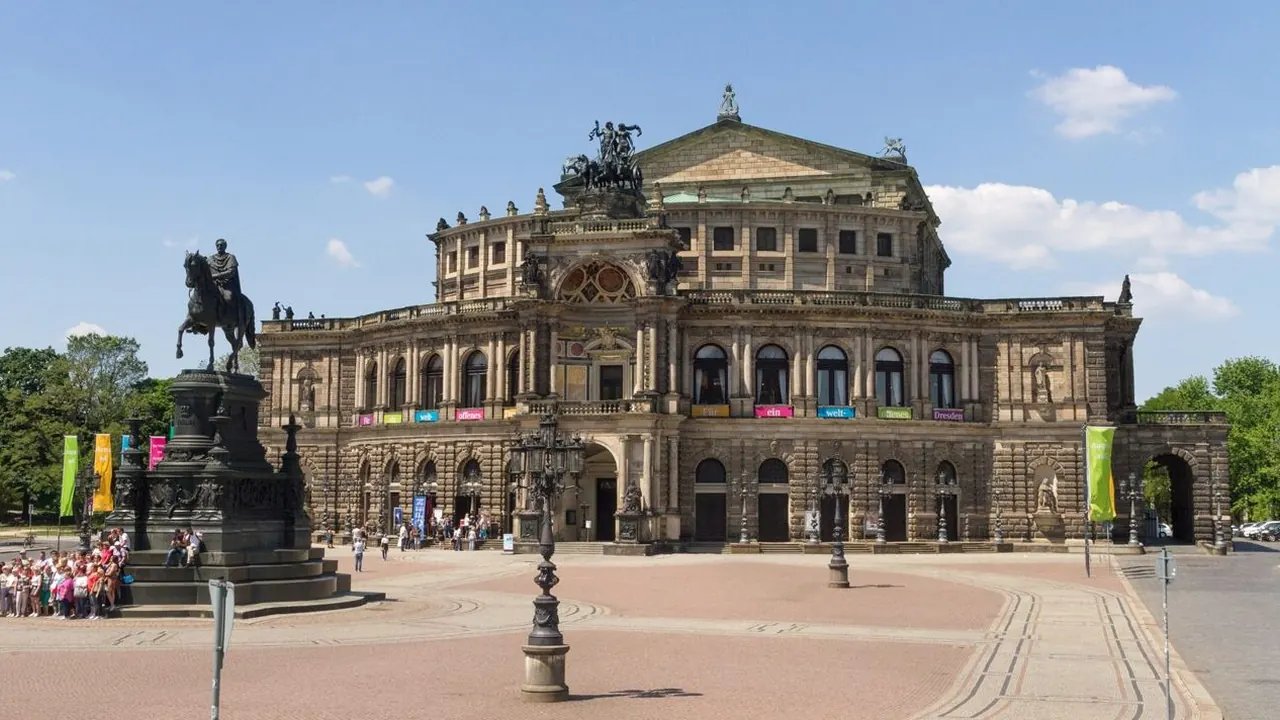
The Semperoper
- Culture & sights79
- Day trips76
- Live music & the arts76
Photo: Maksym Kozlenko, CC BY-SA 4.0, cropped
Match
57
Every category weighted equally
- Beach & sun49
- Culture & arts64
- Food & nightlife56
- Family trip57
- Outdoors59
- Relax & unwind52
- Shopping & style56
- On a budget56
Dresden in twelve categories
Our verdict on each, scored 0 to 100 against the same fixed benchmark cities, so a score means the same thing on every page.
Beaches & swimming. Scores 10 out of 100.
Food & drink. Scores 45 out of 100.
Culture & sights. Scores 79 out of 100.
Nightlife. Scores 47 out of 100.
Nature & outdoors. Scores 74 out of 100.
Day trips. Scores 76 out of 100.
Good for families. Scores 60 out of 100.
Getting around. Scores 74 out of 100.
Shopping & style. Scores 42 out of 100.
Affordability. Scores 55 out of 100.
Live music & performing arts. Scores 76 out of 100.
Wellness & relaxation. Scores 42 out of 100.
Dresden category by category
Beaches & swimming
10Dresden is a long way from any sea, and the Baltic coast is a journey rather than a day out. The Elbe runs through the centre with sandy banks and summer deckchair spots, but the river has shipping and strong currents and is not a place to swim.
On hot days locals head to outdoor pools, the flooded gravel pits on the edge of the city and the ponds around Moritzburg. That is pleasant for a cool-off, but anyone who wants beach time should plan it elsewhere.
Food & drink
45Saxon cooking is hearty and unshowy: sauerbraten, potato soup, dumplings and plenty of game, with a strong baking tradition behind it. Dresden is the home of Christstollen, and the local Eierschecke, a layered cheesecake-like slab, is a fixture of afternoon coffee, which people here take seriously.
The Elbe valley around Radebeul and Meissen is one of Germany's small northern wine regions, so dry Müller-Thurgau, Riesling and sparkling wine appear on many lists. The Neustadt has the most varied and casual eating, from Vietnamese and Middle Eastern places to beer gardens, while the old town around the Frauenkirche leans towards tourist menus. Depth beyond that is limited.
Culture & sights
79Dresden was the showpiece of the Saxon electors, and its baroque core along the Elbe holds collections of genuine world rank. The Zwinger houses the Old Masters Picture Gallery with Raphael's Sistine Madonna, the Residenzschloss holds the jewel-encrusted treasures of the Green Vault, and the Albertinum covers Romantic painting from Caspar David Friedrich onwards. The rebuilt Frauenkirche, its dome restored stone by stone after the bombing of 1945, anchors the Neumarkt.
Brühl's Terrace, the Semperoper, the Fürstenzug porcelain mural and the riverside palace of Pillnitz complete a set that rewards three or four days. Much of the old town is reconstruction, and post-war blocks sit close by, which gives the city a layered, sometimes uneven feel.
Nightlife
47Going out in Dresden means the Äußere Neustadt, a dense grid of late nineteenth-century streets north of the river where students fill small bars, beer kiosks and courtyard pubs, and people drink on the pavements on summer nights. It stays lively late at weekends and has a handful of clubs in old industrial buildings.
The old town across the river is quiet after dinner. It is a friendly, informal scene for a few evenings, but not one that draws people to the city on its own.
Nature & outdoors
74The great asset is Saxon Switzerland, a national park of sandstone towers, gorges and table mountains that begins well under an hour upriver by suburban train. The Bastei rocks above the Elbe are the classic view, the Malerweg trail strings together several days of walking, and the area is one of the birthplaces of free climbing, with hundreds of rock towers still climbed by strict traditional rules.
Closer in, the Elbe meadows run green through the city, the Elbe cycle route follows the river past vineyards and palaces, and the Dresden Heath forest offers easy walks on the northern edge. The Ore Mountains to the south add hiking in summer and modest cross-country skiing in winter.
Day trips
76Meissen, the cradle of European porcelain, is about forty minutes away, with its cathedral and castle above the Elbe and the porcelain manufactory below. Moritzburg's baroque hunting lodge sits on its own lake just north of the city, the Königstein fortress crowns a table mountain upriver, and the vineyard towns of Radebeul are a short tram ride out.
Leipzig, with its Bach heritage and arcades, is about an hour by fast train. Bautzen's towered old town and Görlitz, one of Germany's most intact historic towns on the Polish border, are both reachable in an hour or so. Prague lies at the outer edge of a day, a little over two hours by train along the Elbe gorge.
Good for families
60Dresden is an easy, unhurried city with children. The Großer Garten park has a zoo at its edge and a miniature railway run largely by children, the Transport Museum is full of trams, trains and cars, and the German Hygiene Museum has a hands-on children's section about the senses and the body.
Trips on the historic paddle steamers up the Elbe, the castle at Moritzburg and the rock formations of Saxon Switzerland give older children an outdoor day. The cobbles of the old town and the formal art museums are less engaging for the young, and there is no theme park or aquarium of any size.
Getting around
74The main sights of the old town sit within a short walk of each other, and the Neustadt is just across the Augustus Bridge, so much of a stay happens on foot. A dense tram network covers the rest of the city, including the Großer Garten and the riverside villas towards the Blue Wonder bridge.
Suburban trains run along the Elbe to Meissen and into Saxon Switzerland, and the paddle steamers double as a slow way to reach Pillnitz. A car is not needed for anything a visitor is likely to do.
Shopping & style
42Everyday shopping runs along Prager Straße and in the malls around the Altmarkt, mostly familiar chains. The Neustadt is more interesting, with second-hand clothes, small design shops and the decorated courtyards of the Kunsthofpassage.
The local speciality is Meissen porcelain, sold in showrooms in the old town, along with wooden Ore Mountain toys and Christmas figures. In Advent the Striezelmarkt, one of Germany's oldest Christmas markets, fills the Altmarkt with stalls of crafts and Stollen. Beyond that, luxury and fashion are thin.
Affordability
55Dresden is moderately priced for Western Europe and noticeably cheaper than the big cities of western and southern Germany. Hotels are reasonable for most of the year, eating out in the Neustadt is good value, and a day ticket covers the trams and suburban trains.
The major museums each charge their own entry, which adds up across a few days, and rooms in the old town climb during the Christmas market season and big festivals.
Live music & performing arts
76Music is Dresden's great performing tradition. The Semperoper is one of Europe's celebrated opera houses, home to the Staatskapelle, an orchestra with roots going back to the sixteenth century, and premieres by Wagner and Richard Strauss belong to its history. The Dresden Philharmonic plays in the Kulturpalast's concert hall, and the boys of the Kreuzchor sing in the Kreuzkirche, with Bach at the Frauenkirche as well.
The Staatsschauspiel and the operetta house add theatre and lighter fare, and the Dresden Music Festival and a long-running Dixieland jazz festival mark the calendar. Rock, club concerts and jazz outside festival time are modest.
Wellness & relaxation
42Dresden has no thermal springs of its own, but it shares the German habit of public saunas, and municipal baths in the city offer sauna areas where an afternoon of heat and cold plunges is ordinary local practice. The nearest proper thermal pool is at Bad Schandau, under an hour away at the gateway to Saxon Switzerland.
The city's pace helps more than its spas. The Elbe meadows are wide, green and unhurried, the old town empties in the evening, and a coffee and cake in a terrace café above the river is about as restorative as a day here gets.
When should you go?
Pick a month to see what it is like. The climate figures are measured averages, not a forecast.
Dresden in July
Daytime high, °C
Rainfall in the month, mm
The whole year
Shaded against this city’s own year: the deepest cell is its best month for that figure and the palest its weakest.
Temperature and rainfall are climate normals, averaged over the years shown. Dresden: 1991-2020 normals, Dresden-Strehlen (3.8 km from centre).
Before you go
| Measure | Dresden |
|---|---|
| Official language | German |
| Currency | Euro (EUR) |
| Sockets | CF230 V, 50 Hz |
| Driving side | Right |
| Time zone | UTC+1, UTC+2 in summer |
| Emergency number | 112 |
| Elevation | 126 m |
| Main airport | Dresden Airport (DRS)10 km from centre13 non-stop destinations |
| Public holidays this year | 11 days |
By the numbers
| Measure | Dresden |
|---|---|
| City population | 562,764 |
| People per km² | 1,713 |
| Museums within 10 km | 70 |
| UNESCO World Heritage sites within 50 km | 1 |
Compare Dresden with
Every comparison with a written verdict behind it.