Czechia
Prague
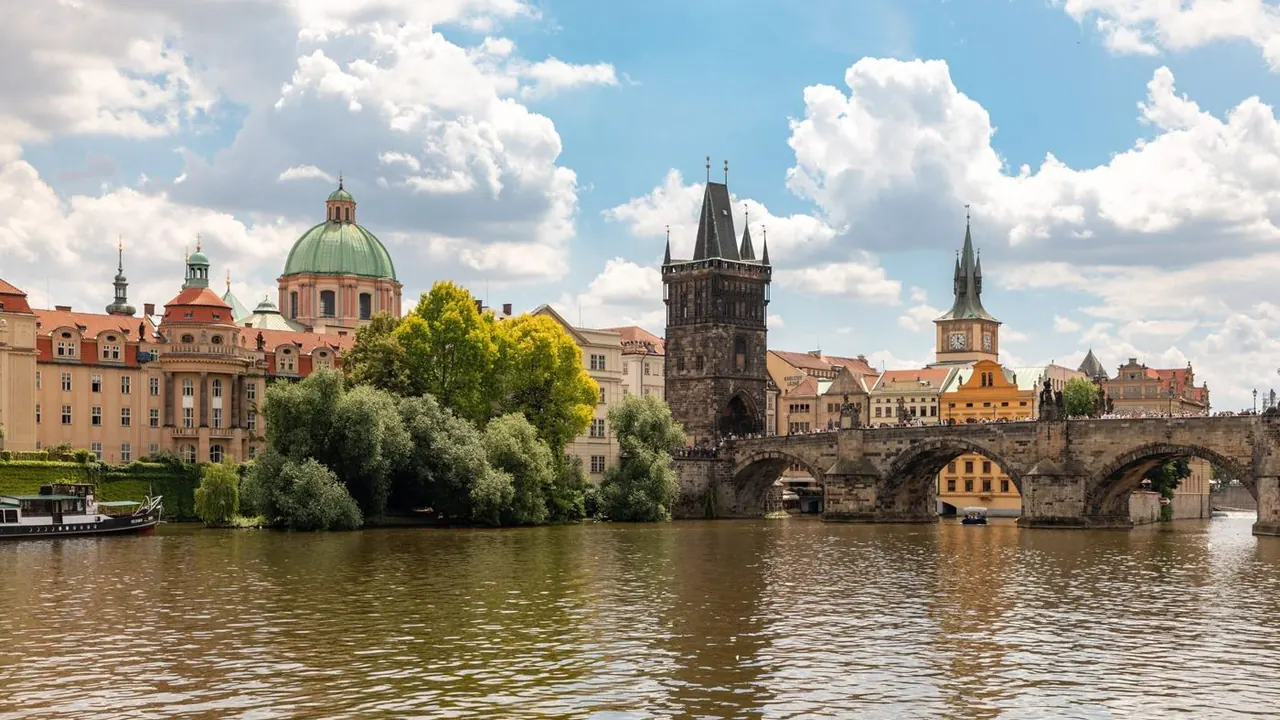
Charles Bridge and the Old Town Bridge Tower
- Culture & sights83
- Getting around83
- Day trips77
Photo: Dietmar Rabich, CC BY-SA 4.0, cropped
Match
59
Every category weighted equally
- Beach & sun50
- Culture & arts68
- Food & nightlife62
- Family trip56
- Outdoors58
- Relax & unwind52
- Shopping & style61
- On a budget59
Prague in twelve categories
Our verdict on each, scored 0 to 100 against the same fixed benchmark cities, so a score means the same thing on every page.
Beaches & swimming. Scores 10 out of 100.
Food & drink. Scores 50 out of 100.
Culture & sights. Scores 83 out of 100.
Nightlife. Scores 65 out of 100.
Nature & outdoors. Scores 58 out of 100.
Day trips. Scores 77 out of 100.
Good for families. Scores 50 out of 100.
Getting around. Scores 83 out of 100.
Shopping & style. Scores 50 out of 100.
Affordability. Scores 62 out of 100.
Live music & performing arts. Scores 76 out of 100.
Wellness & relaxation. Scores 40 out of 100.
Prague category by category
Beaches & swimming
10Prague is landlocked and hundreds of kilometres from any sea, so this is not a beach destination. In a warm summer, locals swim at the Dzban reservoir in the Sarka valley on the city's north-western edge, at outdoor pools, or at the Slapy reservoir on the Vltava about an hour south, where wooded banks and cabin settlements give a lakeside feel. The river through the centre is for boats and riverside bars, not for swimming. If swimming matters to your trip, plan for a hotel pool or a day at a reservoir.
Food & drink
50Beer is the heart of eating and drinking here. Pilsner-style lager is poured with great care in classic pubs, often unpasteurised from tanks, and a long tradition of microbreweries adds variety. The cooking that goes with it is hearty and narrow: roast pork with dumplings and cabbage, svickova beef in a creamy root-vegetable sauce, goulash, fried cheese and pickled sausages eaten as beer snacks. Open-faced chlebicky sandwiches and the old canteen-style buffets make good cheap lunches.
The catch is the centre. The streets around Old Town Square and the Charles Bridge are full of indifferent, overpriced menus and chimney-cake stands that have nothing to do with Czech food. Eat in Vinohrady, Karlin, Letna or Holesovice instead, where neighbourhood pubs, good cafés, Moravian wine bars and a modest modern restaurant scene serve locals. It is a satisfying city for a beer lover and a fine one for comfort food, but a narrow one for anyone who travels mainly to eat.
Culture & sights
83Few European cities kept their historic fabric as completely as Prague, and the whole centre is a UNESCO site. The Castle complex on its hill holds St Vitus Cathedral, the Old Royal Palace and Golden Lane. Below it, Mala Strana is a quarter of Baroque palaces and churches, among them St Nicholas. The Charles Bridge, lined with statues, crosses to the Old Town, with its astronomical clock, the Tyn Church and a maze of Gothic and Romanesque lanes. Josefov, the old Jewish Quarter, preserves several synagogues and the crowded Old Jewish Cemetery.
The architecture goes beyond the medieval: Art Nouveau facades and the Municipal House, Cubist buildings found almost nowhere else, and the Dancing House by the river. The museums are good rather than great. The National Gallery's collections are spread across several palaces and the Trade Fair Palace, the National Museum stands at the top of Wenceslas Square, and Vysehrad has its fortress and cemetery of national figures. Three or four days covers the essentials. The main sights draw heavy crowds, so early mornings are best.
Nightlife
65Going out in Prague means pubs before anything else. Cheap, excellent beer keeps the long wooden tables full until late, and the city has a reputation as a drinking destination to match. Zizkov is said to have more pubs per head than anywhere else, and its plain, inexpensive neighbourhood bars, full of locals and students rather than visitors, are the city's most unpretentious night out. Vinohrady has wine bars and cocktail lounges, and the riverbank and summer beer gardens on Letna and Riegrovy sady fill on warm evenings.
Clubbing comes in two kinds. The large multi-floor clubs near the Charles Bridge and Wenceslas Square stay open until dawn and cater to visitors and stag parties. A smaller, more interesting circuit of techno and alternative venues sits in Holesovice and in converted industrial spaces further out. The Old Town can be loud and boozy on weekend nights. The better evenings are found a tram ride away.
Nature & outdoors
58Prague itself is green and hilly. Petrin Hill rises behind Mala Strana with orchards and woodland paths, Stromovka is a large former royal hunting park, and Divoka Sarka is a rocky wooded gorge on the city's edge that feels far from town. The Vltava is good for pedal boats, rowing and riverside cycling.
Further out, the landscape is gentle rather than dramatic. The Bohemian Karst south-west of the city has limestone gorges and forest trails around Karlstejn. The sandstone towers and rock gateways of Bohemian Switzerland and the Bohemian Paradise are both within about two hours and make for excellent hiking. There are no real mountains nearby, and winters are grey and cold. Late spring and early autumn are the best seasons for walking and cycling.
Day trips
77Bohemia is castle country, and Prague is a good base for it. Kutna Hora, about an hour by train, is a UNESCO-listed silver-mining town with the Gothic St Barbara's Cathedral and the bone-decorated Sedlec Ossuary. Karlstejn, a Gothic castle above a wooded valley, is under an hour away. Konopiste, the Archduke Franz Ferdinand's château, and Krivoklat are easy outings. Terezin, the former fortress town and Nazi ghetto, is a sobering and important visit about an hour north.
Melnik looks over the confluence of the Vltava and Elbe among the vineyards of Czech wine country. Dresden, with its rebuilt Baroque centre and great galleries, is about two hours by train along the Elbe valley. The spa town of Karlovy Vary is about two hours by bus. The fairy-tale town of Cesky Krumlov is a long day at nearly three hours each way, so many visitors stay overnight.
Good for families
50Prague is safe and compact, and children tend to love its storybook look: the castle, the knights and armour, the astronomical clock with its moving apostles on the hour. The zoo, in Troja on the northern edge of the city, is one of Europe's best, set on a wooded hillside along the river, with a chairlift and big enclosures. Beyond it the offer is thinner. There are the Petrin funicular and lookout tower with its mirror maze, the National Technical Museum, boat trips on the Vltava, and playgrounds in Letna and Stromovka.
The hard parts are physical. Cobbles and steep lanes make pushchairs a struggle, the stairs up to the castle are long, and the old centre is crushed with crowds in summer. Trams are easy and children travel cheaply. Families do best with a few days, a zoo visit and a base outside the busiest streets.
Getting around
83The historic centre is small enough to walk end to end: from Old Town Square across the Charles Bridge to Mala Strana takes about fifteen minutes. The climb to the castle is the only real effort, and a tram does it for you. Public transport is excellent and simple to use. Three metro lines cover the main axes, while a dense tram network reaches nearly every neighbourhood and runs through the night. Buses, the Petrin funicular and some river ferries all share the same integrated tickets.
No visitor needs a car, and parking in the centre is hard work. Cobbled streets are tiring on the feet and awkward with wheeled luggage. Pickpockets work the crowded trams around the tourist core, especially the lines running through Mala Strana.
Shopping & style
50Parizska Street, running from Old Town Square through the Jewish Quarter, holds the international luxury labels under Art Nouveau facades, and Na Prikope and Wenceslas Square have the high-street chains and arcades. The distinctive buys are Czech: Bohemian crystal and glass, garnet jewellery, wooden toys and marionettes, and Art Nouveau-inspired design.
Much of the old centre, though, is wall-to-wall souvenir shops selling the same matryoshka dolls, absinthe and fridge magnets. Better finds are in small design and vintage shops in Vinohrady, Holesovice and around Karlin, and at seasonal farmers' markets and the Christmas markets on the old squares. It is a pleasant city to browse rather than a reason to come shopping.
Affordability
62Prague is cheaper than most Western European capitals, but it is not a budget city in the centre. Beer, a pub lunch and public transport stay inexpensive, and eating where locals eat in Vinohrady, Zizkov or Karlin costs much less than in the streets around Old Town Square. Hotels in the historic core and restaurants with a view of the river or the squares are priced for visitors, and currency exchange booths in the centre are a known trap. Staying a few tram stops out and eating in neighbourhood pubs makes a stay good value.
Live music & performing arts
76Classical music is Prague's great strength. The city has three opera stages: the gilded National Theatre on the river, the State Opera, and the Estates Theatre, where Mozart conducted the premiere of Don Giovanni. Repertoire runs from Dvorak, Smetana and Janacek to the standard Italian works, and performances are frequent through the season. The Czech Philharmonic plays at the Rudolfinum, and the Municipal House's Smetana Hall is an Art Nouveau setting for concerts. The Prague Spring festival opens each year with Smetana's Ma vlast.
Around these are countless church and palace concerts aimed at visitors, uneven in quality but atmospheric. Black-light theatre and marionette shows are local traditions that need no Czech. Most spoken theatre is in Czech, while the jazz clubs in the Old Town and the rock and alternative venues further out make a solid but modest circuit.
Wellness & relaxation
40Prague has no bathing tradition of its own. The country's famous spa towns lie in western Bohemia, a long way from the capital. In the city, wellness means hotel spas, plenty of Thai and other massage studios, and the beer spas where visitors soak in tubs of hops and malt, which are more novelty than restoration. A few public pools and saunas serve locals.
The slower pleasures are elsewhere: an afternoon in one of the grand old coffee houses, a walk through the terraced Baroque gardens below the castle, or a quiet bench on Kampa island or in Vysehrad. The tourist core is crowded and noisy, so rest comes from staying in a residential neighbourhood rather than from the city's spa offer.
When should you go?
Pick a month to see what it is like. The climate figures are measured averages, not a forecast.
Prague in July
Daytime high, °C
Rainfall in the month, mm
The whole year
Shaded against this city’s own year: the deepest cell is its best month for that figure and the palest its weakest.
Temperature and rainfall are climate normals, averaged over the years shown. Prague: 1991-2020 normals, Praha-Libus (8.1 km from centre).
Before you go
| Measure | Prague |
|---|---|
| Official language | Czech |
| Currency | Czech Koruna (CZK) |
| Sockets | CE230 V, 50 Hz |
| Driving side | Right |
| Time zone | UTC+1, UTC+2 in summer |
| Emergency number | 112 |
| Elevation | 235 m |
| Main airport | Václav Havel Airport Prague (PRG)12 km from centre178 non-stop destinations |
| Public holidays this year | 13 days |
By the numbers
| Measure | Prague |
|---|---|
| City population | 1,397,880 |
| People per km² | 2,817 |
| Museums within 10 km | 88 |
| UNESCO World Heritage sites within 50 km | 1 |
Compare Prague with
Every comparison with a written verdict behind it.
- Amsterdam
- Baden-Baden
- Berlin
- Bled
- Bratislava
- Budapest
- Dresden
- Frankfurt
- Hamburg
- Heidelberg
- Innsbruck
- Krakow
- Ljubljana
- Munich
- Nuremberg
- Paris
- Salzburg
- Stuttgart
- Vienna
- Zagreb