United States
Charleston
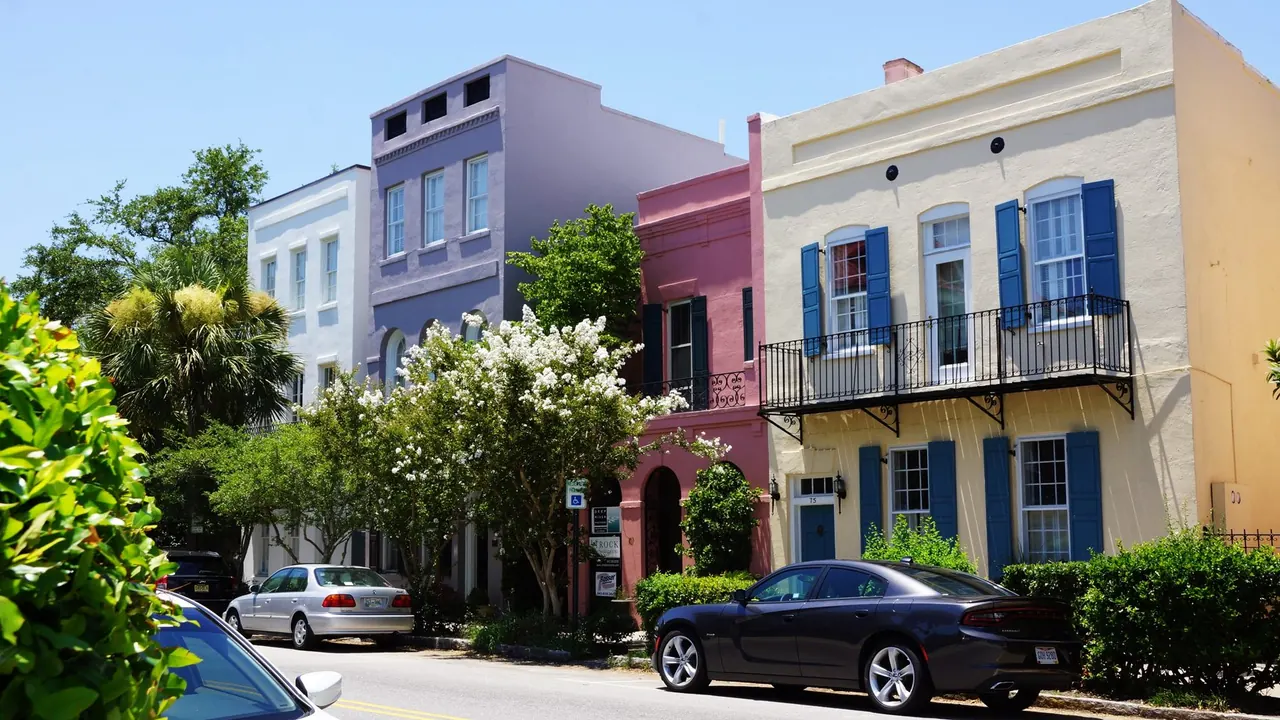
The pastel houses of Rainbow Row
- Beaches72
- Food & drink72
- Culture & sights64
Photo: NealVickers, CC BY-SA 4.0, cropped
Match
53
Every category weighted equally
- Beach & sun54
- Culture & arts53
- Food & nightlife53
- Family trip55
- Outdoors55
- Relax & unwind54
- Shopping & style54
- On a budget50
Charleston in twelve categories
Our verdict on each, scored 0 to 100 against the same fixed benchmark cities, so a score means the same thing on every page.
Beaches & swimming. Scores 72 out of 100.
Food & drink. Scores 72 out of 100.
Culture & sights. Scores 64 out of 100.
Nightlife. Scores 44 out of 100.
Nature & outdoors. Scores 55 out of 100.
Day trips. Scores 62 out of 100.
Good for families. Scores 60 out of 100.
Getting around. Scores 46 out of 100.
Shopping & style. Scores 55 out of 100.
Affordability. Scores 27 out of 100.
Live music & performing arts. Scores 42 out of 100.
Wellness & relaxation. Scores 40 out of 100.
Charleston category by category
Beaches & swimming
72Three barrier-island beaches sit within about half an hour of the historic centre. Folly Beach is the casual, surfy one, with a long pier and a beach-town main street. Sullivan's Island is quieter and residential, with dunes and old military forts behind the sand. Isle of Palms is wider and more resort-like, and further south Kiawah and Seabrook have long, uncrowded stretches.
From June to September the Atlantic here reaches about 28°C, and swimming is pleasant from late spring into October. The water is greenish and churned by tides rather than clear, and rip currents and jellyfish turn up some days. Most visitors split their time between the old town and the beach, and you need a car or a ride to get there.
Food & drink
72Charleston eats far above its size. Its own cooking is Lowcountry: shrimp and grits, she-crab soup, Frogmore stew, Carolina Gold rice dishes, oysters roasted by the bushel in winter. This food draws on West African, Gullah Geechee and coastal Southern traditions, and the city's chefs take it seriously, from fine dining rooms in restored townhouses to barbecue joints doing whole-hog smoking.
Most of the eating happens on and around upper King Street and in the old French Quarter, with fried seafood shacks out on Shem Creek and the islands. Biscuits and fried chicken make breakfast a fixture, and there are plenty of craft breweries and cocktail bars. The weakness is range. There's little street food or cheap international cooking, and good tables book up well ahead.
Culture & sights
64The historic peninsula is the main sight: block after block of Georgian and antebellum houses with side piazzas, church steeples, walled gardens and cobbled lanes. Rainbow Row, the Battery and the old Charleston single houses south of Broad Street reward slow walking. Inside, the Nathaniel Russell and Aiken-Rhett houses show both sides of the city's wealth, the grand rooms and the enslaved people's quarters.
History is the main subject here. Fort Sumter, where the Civil War began, is a boat ride out into the harbour. The Old Slave Mart Museum and the International African American Museum confront the city's role in the slave trade. The Gibbes Museum and the Charleston Museum are good but small, and two or three days covers it all.
Nightlife
44Going out here means bars more than clubs. Upper King Street has the most of it, with rooftop bars, craft cocktail rooms, oyster bars and loud sports pubs. College students and large weekend groups fill it on Friday and Saturday nights. Quieter wine bars and old taverns are scattered through the French Quarter, and Folly Beach has a few sandy beach bars. There's little dance-club culture, and most places close by about 2am. It's a pleasant evening out, not a reason to come.
Nature & outdoors
55This is the Lowcountry: flat, low-lying coast, broken into tidal creeks, spartina marsh and maritime forest of live oaks hung with Spanish moss. The best way into it is by water. Kayak tours through the marsh creeks often meet bottlenose dolphins, and paddleboarding and fishing are easy to arrange. On land, the Francis Marion National Forest and the ACE Basin have quiet trails, birdlife and alligators, and Kiawah and Edisto islands have good cycling and wild stretches of shore.
There are no hills. Summers are hot, humid and full of mosquitoes, so spring and autumn are the best seasons for being outdoors.
Day trips
62The closest outings are the old plantations along the Ashley River and in Mount Pleasant, about half an hour away. Middleton Place, Magnolia, Drayton Hall and Boone Hall pair formal gardens and grand houses with the history of the enslaved people who worked them. McLeod Plantation, on James Island, focuses fully on that history.
Further out, Savannah is about two hours' drive, and its squares and historic district make a full day. Beaufort, about an hour and a half away, is a smaller, quieter antebellum river town, a good stop for Gullah culture on the sea islands. Georgetown and the tiny village of McClellanville are smaller stops up the coast. You need a car for all of these.
Good for families
60Charleston is calm, manageable and friendly to children. The South Carolina Aquarium and the Children's Museum of the Lowcountry sit on the downtown waterfront. Across the harbour, Patriots Point lets children climb through an aircraft carrier. The boat out to Fort Sumter and the replica ship and small wildlife area at Charles Towne Landing work well for school-age children.
The beaches are the other big draw, with wide sand and gentle surf on most days. There's no theme park or major zoo, house tours bore small children, and summer afternoons are draining. Spring and autumn are the easiest times to come with children.
Getting around
46The historic peninsula is compact, flat and lovely on foot. Most of what a visitor wants downtown is within about 3km of walking, and pedicabs and a free downtown shuttle bus fill the gaps. Beyond the peninsula, it's a car town. City buses reach few of the beaches or plantations, so most people drive or use ride-hailing for anything outside the old town. Parking downtown is tight, and summer heat shortens how far people walk at midday.
Shopping & style
55King Street does most of the work, and changes along its length. Lower King has antiques dealers and galleries, the middle stretch has national fashion brands and a few upscale names, and upper King has independent boutiques and design shops. The open-air City Market sells mostly souvenirs, but it's also where Gullah artisans weave and sell sweetgrass baskets, the city's signature craft. Art galleries cluster in the French Quarter. It's pleasant browsing in a handsome setting, but there's no real luxury tier.
Affordability
27Charleston is an expensive place to stay. Hotels and inns on the historic peninsula cost as much as in far larger American cities, spring and autumn weekends push them higher, and the well-known restaurants charge big-city prices. Taxis, parking and paid house and plantation tours add up. Some of the best things are free, such as walking the old streets, the Battery and the beaches. Staying in the suburbs or across the bridge in Mount Pleasant is cheaper but means driving in every day.
Live music & performing arts
42Every late spring, Spoleto Festival USA fills the city for over two weeks with opera, chamber music, dance, theatre and jazz, and the Piccolo Spoleto festival runs alongside it. For the rest of the year the offer is smaller. The historic Dock Street Theatre stages plays, the Gaillard Center hosts the Charleston Symphony and touring shows, and a handful of music halls and bars book local bands and Southern songwriters. Gullah storytelling and song performances are a distinctive local strand worth looking out for.
Wellness & relaxation
40Charleston has no bathing tradition. Wellness here means good hotel spas, a few day spas and resort spas out on Kiawah Island. What helps is the pace. The old town moves slowly, with shaded gardens, quiet church courtyards, porches and long evenings on the waterfront at White Point Garden. It's a gentle place to unwind, but not one to come to for spa or bathing culture.
When should you go?
Pick a month to see what it is like. The climate figures are measured averages, not a forecast.
Charleston in July
Daytime high, °C
Rainfall in the month, mm
The whole year
Shaded against this city’s own year: the deepest cell is its best month for that figure and the palest its weakest.
Temperature and rainfall are climate normals, averaged over the years shown. Charleston: 1991-2020 normals, Charleston Airport (16.1 km from centre).
Before you go
| Measure | Charleston |
|---|---|
| Currency | US Dollar (USD) |
| Sockets | AB120 V, 60 Hz |
| Driving side | Right |
| Time zone | UTC-5, UTC-4 in summer |
| Emergency number | 911 |
| Elevation | 6 m |
| Main airport | Charleston International Airport (CHS)16 km from centre56 non-stop destinations |
| Public holidays this year | 12 days |
By the numbers
| Measure | Charleston |
|---|---|
| City population | 150,227 |
| People per km² | 532 |
| Museums within 10 km | 19 |
| UNESCO World Heritage sites within 50 km | 0 |
| Swim season, months above 21 °C | 6 months |
Compare Charleston with
Every comparison with a written verdict behind it.