Netherlands
Maastricht
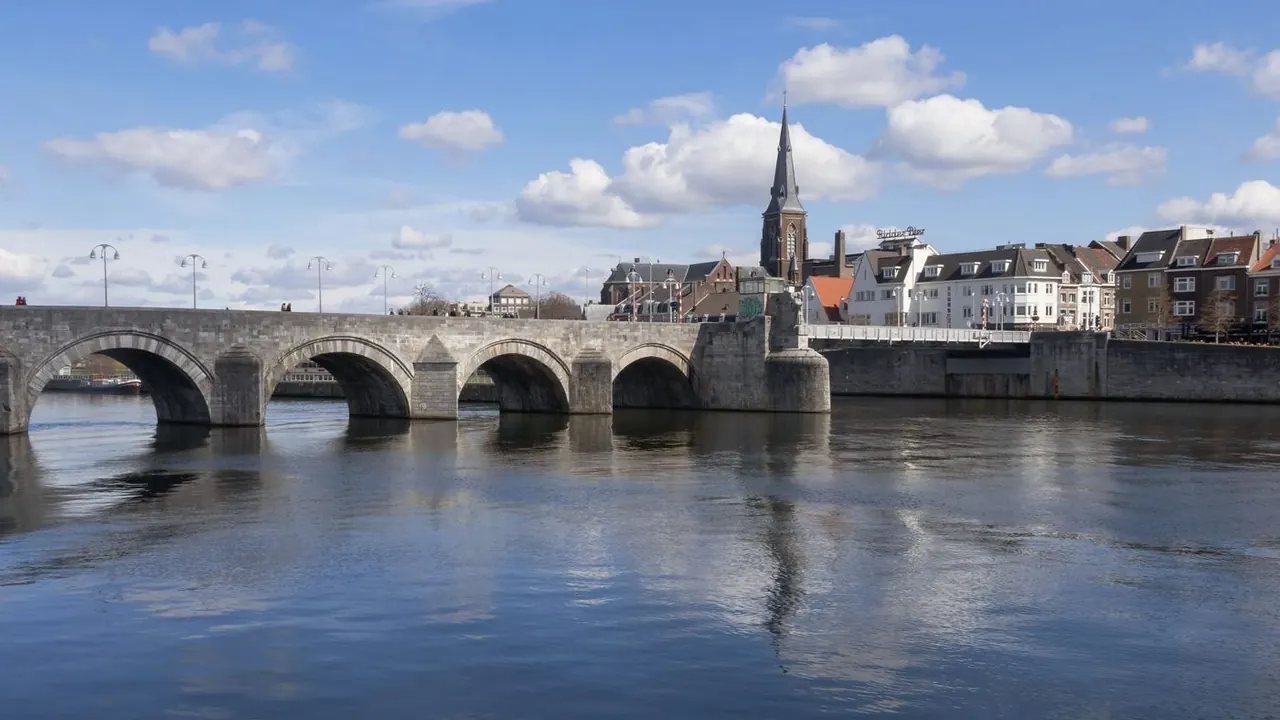
Sint Servaasbrug over the Maas
- Day trips77
- Getting around74
- Culture & sights60
Photo: Michielverbeek, CC BY-SA 4.0, cropped
Match
52
Every category weighted equally
- Beach & sun47
- Culture & arts56
- Food & nightlife52
- Family trip52
- Outdoors54
- Relax & unwind50
- Shopping & style55
- On a budget50
Maastricht in twelve categories
Our verdict on each, scored 0 to 100 against the same fixed benchmark cities, so a score means the same thing on every page.
Beaches & swimming. Scores 8 out of 100.
Food & drink. Scores 58 out of 100.
Culture & sights. Scores 60 out of 100.
Nightlife. Scores 42 out of 100.
Nature & outdoors. Scores 58 out of 100.
Day trips. Scores 77 out of 100.
Good for families. Scores 55 out of 100.
Getting around. Scores 74 out of 100.
Shopping & style. Scores 60 out of 100.
Affordability. Scores 38 out of 100.
Live music & performing arts. Scores 40 out of 100.
Wellness & relaxation. Scores 52 out of 100.
Maastricht category by category
Beaches & swimming
8Maastricht is far inland, and the North Sea is a long day's journey away. On hot summer days locals swim in the old gravel-pit lakes along the Maas, on both the Dutch and Belgian sides, which have small sandy shores and lifeguarded areas. These are pleasant for an afternoon but nobody plans a trip around them. If swimming matters to you, look for a hotel with a pool.
Food & drink
58Maastricht has a reputation in the Netherlands for good living, and much of that is about eating. The regional dishes are Limburg ones: zuurvlees, a sweet-sour beef stew served with fries, slices of vlaai fruit tart in every bakery, and asparagus and game when they are in season. Belgian beer is everywhere, and the hillsides around the city grow white wines.
The best eating is in the old centre and across the river in Wyck, from brown cafés and lunchrooms to a fine-dining tier that is strong for a city of this size. Terraces fill the Vrijthof and the Markt whenever the weather allows. The range is narrow, though, and there is very little street food or international depth.
Culture & sights
60This is one of the oldest cities in the Netherlands, and it shows. Two Romanesque churches anchor the centre: the Basilica of Saint Servatius, with its treasury, on the Vrijthof, and the Basilica of Our Lady in its own quiet square. Stretches of medieval wall survive along the Jeker, together with the Helpoort, the oldest city gate in the country. The Sint Servaasbrug has crossed the Maas since the 13th century.
On the southern edge, Fort Sint Pieter and the miles of tunnels quarried into the Sint-Pietersberg can be visited with a guide. The Bonnefanten museum has old masters and contemporary art in a striking riverside building, and one Gothic Dominican church now serves as a bookshop. It is a rewarding place for two days, though there is no single sight that would draw you here on its own.
Nightlife
42Nights out here mostly happen in cafés. Locals and the large university population drink on the squares and in the brown cafés around the Markt, the Platielstraat and the lanes off the Vrijthof, and Belgian beer is the default. Bars stay busy late at weekends during term, but the club scene is small and many people looking for a big night head to bigger cities over the border.
The great exception is carnival. For several days before Lent the whole city dresses up and parties in the streets around the clock, and it feels like a different place.
Nature & outdoors
58In this corner the Netherlands stops being flat. South of the city the Sint-Pietersberg rises above the Maas, with marl cliffs, nature reserves and walking paths that start at the city's edge, and the Jeker valley runs green into Belgium. To the east, the Heuvelland of South Limburg is a land of sunken lanes, orchards, half-timbered farms and short steep climbs that road cyclists know from the spring classics.
Across the border the Hoge Kempen national park offers heath and forest about half an hour away, and the wooded valleys of the Ardennes are reachable for a longer day. The countryside is gentle and pastoral rather than dramatic, and at its best in spring and early autumn.
Day trips
77Maastricht's position, wedged between Belgium and Germany, is one of its strongest assets. Aachen is about half an hour away, with Charlemagne's cathedral and a fine old centre, and Liège is about as close by train, with its stairways, river views and grand station. Tongeren, Belgium's oldest town, and the pretty castle town of Valkenburg are even nearer, and Thorn, the white village, is an easy drive north.
With a little more time, Cologne and its cathedral are about an hour and a half by car, and Brussels and the university town of Leuven are within roughly two hours by train. Few small cities give such a varied choice of countries, languages and towns.
Good for families
55Maastricht is small, safe and mostly flat, so it is easy with a buggy and calm enough for children to wander the squares. In the city, the main family outing is the guided tour through the dark tunnels of the Sint-Pietersberg. Most of the attractions for children are just outside: Valkenburg, about twenty minutes away, has show caves, a cable car and a fairy-tale park in the woods, and there is a large zoo in Kerkrade. Older children may enjoy cycling along the Maas. The city's main pleasures, which are eating, shopping and strolling, appeal more to adults.
Getting around
74The historic centre is compact enough that almost everything a visitor wants is within a fifteen-minute walk, on either bank of the Maas. The streets are flat, many are pedestrianised, and the cobbles are the only nuisance. Bikes are the local way to get about, and the riverside paths make cycling easy even for those who rarely ride.
The station is in Wyck, a short walk over the bridge, with trains to the rest of the Netherlands, to Liège, and to Aachen. Regional buses reach Valkenburg and the hill villages, but a car or bike makes the countryside much easier to explore.
Shopping & style
60Shopping is one of the reasons Dutch, Belgian and German visitors come here for the weekend. The Stokstraat quarter, with its restored 17th- and 18th-century houses, is lined with fashion and designer boutiques, and the Grote Staat and the streets around it have the main high-street brands. In Wyck you will find smaller independent shops for interiors, vintage and food. The weekly market fills the Markt with produce, cheese and textiles. The streets are attractive and pleasant to browse, but there is not the depth of luxury or design you would find in a large capital.
Affordability
38Maastricht has Northern European prices. Restaurant meals, drinks on a terrace and hotel rooms all cost about the Dutch norm, and weekend rooms are in demand because the city is a favourite for short breaks. It is easier on the wallet than the big Dutch cities, though. Simple lunches, bakery stops and Belgian beer in a brown café cost less than in the capital, and because the centre can be walked, transport costs almost nothing. Staying from Sunday to Thursday makes the biggest difference.
Live music & performing arts
40Most of the city's performing arts happen at the theatre on the Vrijthof, which hosts the regional symphony orchestra and opera company, Dutch and Flemish drama and visiting dance. Students from the conservatory add recitals, and in the churches there are organ and choral concerts. In summer the Vrijthof becomes an open-air arena for large concerts that draw crowds from across Europe. Small jazz and live-music cafés fill out the week, and during carnival brass bands march through every street. The scene is solid but provincial, and few people travel here mainly for it.
Wellness & relaxation
52Maastricht itself has no bathing culture, but the region does. The thermal spa above Valkenburg, about twenty minutes away, has warm mineral pools and saunas looking out over the hills. Aachen, a spa town since Roman times, has its own thermal baths about half an hour away, and the Belgian town of Spa, which gave all spas their name, is within an hour.
The city's pace helps too. Long lunches on quiet squares, walks along the Maas and the Jeker, and an unhurried, slightly southern rhythm make it a restful place for a short break.
When should you go?
Pick a month to see what it is like. The climate figures are measured averages, not a forecast.
Maastricht in July
Daytime high, °C
Rainfall in the month, mm
The whole year
Shaded against this city’s own year: the deepest cell is its best month for that figure and the palest its weakest.
Temperature and rainfall are climate normals, averaged over the years shown. Maastricht: 1991-2020 normals, Maastricht Airport Zuid Limburg (10 km from centre).
Before you go
| Measure | Maastricht |
|---|---|
| Official language | Dutch |
| Currency | Euro (EUR) |
| Sockets | CF230 V, 50 Hz |
| Driving side | Right |
| Time zone | UTC+1, UTC+2 in summer |
| Emergency number | 112 |
| Elevation | 49 m |
| Main airport | Maastricht Aachen Airport (MST)9 km from centre5 non-stop destinations |
| Public holidays this year | 11 days |
By the numbers
| Measure | Maastricht |
|---|---|
| City population | 120,227 |
| People per km² | 2,000 |
| Museums within 10 km | 21 |
| UNESCO World Heritage sites within 50 km | 5 |
Compare Maastricht with
Every comparison with a written verdict behind it.