Netherlands
The Hague
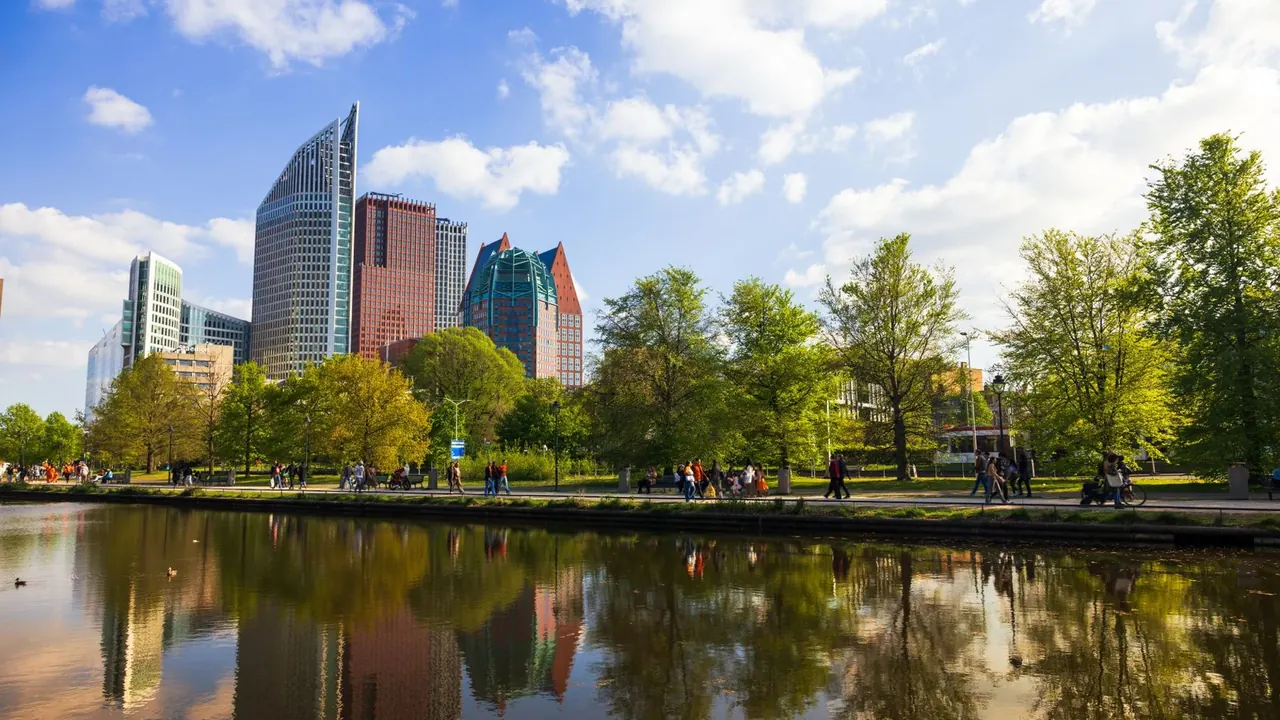
The skyline reflected in the water
- Day trips86
- Getting around78
- Families72
Photo: Bráulio jardim, Pexels License
Match
56
Every category weighted equally
- Beach & sun52
- Culture & arts60
- Food & nightlife54
- Family trip58
- Outdoors58
- Relax & unwind53
- Shopping & style57
- On a budget54
The Hague in twelve categories
Our verdict on each, scored 0 to 100 against the same fixed benchmark cities, so a score means the same thing on every page.
Beaches & swimming. Scores 38 out of 100.
Food & drink. Scores 48 out of 100.
Culture & sights. Scores 66 out of 100.
Nightlife. Scores 38 out of 100.
Nature & outdoors. Scores 52 out of 100.
Day trips. Scores 86 out of 100.
Good for families. Scores 72 out of 100.
Getting around. Scores 78 out of 100.
Shopping & style. Scores 55 out of 100.
Affordability. Scores 35 out of 100.
Live music & performing arts. Scores 58 out of 100.
Wellness & relaxation. Scores 45 out of 100.
The Hague category by category
Beaches & swimming
38The Hague's sea is inside the city. Scheveningen is a long, wide sandy beach with a pier and a promenade, about a quarter of an hour from the centre by tram, and in summer it fills with pavilions, deckchairs and people who came straight from work. Kijkduin, further south, is smaller and calmer, with dunes behind it.
The catch is the water. This is the North Sea, grey-green and rarely warmer than 18°C even in August, and wind, waves and currents keep swims brisk and short. The beach is good for sunbathing on a warm day and a quick dip, but nobody should plan a swimming vacation here. From October to May it belongs to dog walkers and kitesurfers.
Food & drink
48The city's most distinctive food comes from its colonial past. The Hague has long been home to families from the former Dutch East Indies, and Indonesian cooking, from a full rijsttafel to simple warung-style plates of rendang and sate, is better and more common here than almost anywhere outside Indonesia. The small Chinatown near the Grote Markt adds noodle shops and Asian grocers.
Beyond that, eating is pleasant rather than memorable: brown cafés and bistros along the Denneweg and around the Plaats, fish stalls and seafood places by Scheveningen harbour, and raw herring from street carts in early summer. Dutch home cooking is plain, and fine dining exists but is limited in range.
Culture & sights
66The Hague is the seat of the Dutch government and the royal family without being the capital, and its sights reflect that: stately rather than spectacular. The Binnenhof, the medieval parliament complex around the Hofvijver pond, is the heart of it. Next door, the Mauritshuis is a small, superb collection of Dutch Golden Age painting, home to Vermeer's Girl with a Pearl Earring and View of Delft and Rembrandt's Anatomy Lesson.
Around these sit the Peace Palace, home of the international courts, the Kunstmuseum with the world's largest Mondrian collection, Escher in a former royal palace, and the vast circular Panorama Mesdag. Leafy embassy streets and the grand Kurhaus at Scheveningen complete a city best seen in two or three unhurried days.
Nightlife
38Evenings in The Hague are civil and fairly early. The Plein, the square beside parliament, is lined with café terraces full of civil servants after work, and the Grote Markt is the closest the city has to a student strip, with big terraces and bars that stay busy at weekends. In summer the action moves to the beach pavilions at Scheveningen, where sundowners turn into music and dancing.
There are a few clubs, but the scene is small, and anyone wanting a serious night out takes the train to Rotterdam or Amsterdam.
Nature & outdoors
52The landscape is flat but more varied than it first appears. Between the city and the sea run real dunes: Meijendel to the north is a large protected area of sand hills, woods and ponds with cycle and walking paths, and the Westduinpark lines the southern shore. The Haagse Bos, an old forest, reaches almost into the centre.
The coast is the main outdoor draw, with long beach walks in any season, cycling along the dune path towards Wassenaar or the bulb fields, and kitesurfing and surfing when the wind is up. There are no hills anywhere, and the weather is windy and changeable most of the year.
Day trips
86Few cities have so much so close. Delft, with its canals, Vermeer's townscape and blue pottery, is about fifteen minutes away, and Leiden, the old university town of almshouses and museums, is just as near. Rotterdam's modern architecture and harbour take under half an hour, and Gouda, with its cheese market and town hall, is about twenty minutes.
Amsterdam is under an hour by train, as are Haarlem and Utrecht, so a visitor can see the country's major cities while sleeping somewhere quieter. Add the windmills of Kinderdijk, a UNESCO site, the spring bulb fields and Keukenhof gardens near Lisse, and the dune villages along the coast, and the list barely thins within an hour.
Good for families
72The Hague works well with children. Madurodam, a miniature Netherlands of canals, airports and windmills, is the city's signature family outing, and Scheveningen adds a wide sandy beach, a pier and a large sea aquarium. Museon combines science and culture for school-age children, and the Louwman car museum appeals to older ones. The Duinrell amusement and water park lies just outside the city in Wassenaar.
The city is safe, flat and calm, trams take pushchairs easily and parks with playgrounds are everywhere. What limits it is the weather: the sea is too cold for long swims, and a rainy day pushes everyone indoors.
Getting around
78The centre is compact and flat, and the main sights around the Binnenhof can be walked in minutes. The rest of the city is spread out, with the beach, Madurodam and the Peace Palace some distance away, but a good tram network links them all, and the trams to Scheveningen are frequent and simple to use with a contactless card.
The city is also made for bicycles, with separate lanes almost everywhere and dune paths along the coast. Two main stations connect to the national rail network, so Delft, Leiden and Rotterdam are as easy to reach as a suburb. A car is a burden rather than a help.
Shopping & style
55Shopping here is more refined than large. The Denneweg and Noordeinde, near the royal working palace, are lined with antique dealers, galleries, interior shops and small fashion boutiques, and the Hoogstraat area has more upmarket labels. The Passage, a glass-roofed arcade from the 1880s, is a pleasant covered stroll, and the main pedestrian streets around Grote Marktstraat carry the usual chains and a large department store.
The Haagse Markt, one of Europe's biggest open-air markets, is the most characterful stop, stacked with fabrics, spices and produce from the city's many communities. There is little luxury depth and no distinctive craft to bring home.
Affordability
35The Hague is an expensive place, though less punishing than its role as a seat of government might suggest. Hotel rooms, restaurant meals and drinks are priced at full Northern European levels, and seafront hotels in Scheveningen charge a clear premium in summer. Government and business travellers fill central hotels from Monday to Thursday, so rooms in the centre are often easier to find at a reasonable price at weekends, particularly outside the beach season.
The city has good ways to spend less. Indonesian and Surinamese eateries serve filling plates for much less than a sit-down Dutch meal, the Haagse Markt and supermarkets make picnics easy, and a hired bicycle or the tram covers the city cheaply.
Live music & performing arts
58The Hague's great asset is dance. Nederlands Dans Theater, one of the world's leading contemporary dance companies, is based here, and seeing it at home is the city's outstanding performing arts experience. The Residentie Orkest, the city's symphony orchestra, gives a full concert season, and the Royal Conservatory keeps a steady flow of student and early-music concerts.
The Koninklijke Schouwburg, the historic royal theatre, stages Dutch-language drama, so much of the theatre is closed to visitors who do not speak the language. Pop and rock venues are good for a city this size, and the summer brings outdoor festivals at the beach, but there is no resident opera company.
Wellness & relaxation
45Wellness here means the Dutch sauna. The Netherlands takes its sauna seriously, and the city and its outskirts have several large sauna and wellness complexes built for spending a whole day: series of saunas and steam rooms, cold plunge pools, outdoor gardens, quiet rooms and massage. Visitors should know that in most of them nudity is the rule. Scheveningen, a fishing village for centuries, developed into a seaside bathing resort in the early nineteenth century, and the grand Kurhaus is a reminder of that era, but no historic bath from it is still in use, and hotel spas make up the rest.
The city's pace helps more than its facilities. The Hague is a calm, orderly place of government offices and embassies, with quiet residential streets, little late noise and few crowds outside summer weekends, which makes unwinding easy.
When should you go?
Pick a month to see what it is like. The climate figures are measured averages, not a forecast.
The Hague in July
Daytime high, °C
Rainfall in the month, mm
The whole year
Shaded against this city’s own year: the deepest cell is its best month for that figure and the palest its weakest.
Where the figures come from
The Hague has no rain gauge within 25 km of the centre, so its rainfall comes from a gridded climate dataset read at the city rather than from a gauge further away.
The Hague's sunshine is measured 60 km from the centre, at De Bilt.
Temperature and rainfall are climate normals, averaged over the years shown. The Hague: 1991-2020 normals, Valkenburg (13.6 km from centre).
Before you go
| Measure | The Hague |
|---|---|
| Official language | Dutch |
| Currency | Euro (EUR) |
| Sockets | CF230 V, 50 Hz |
| Driving side | Right |
| Time zone | UTC+1, UTC+2 in summer |
| Emergency number | 112 |
| Elevation | 1 m |
| Main airport | Rotterdam The Hague Airport (RTM)16 km from centre53 non-stop destinations |
| Public holidays this year | 11 days |
By the numbers
| Measure | The Hague |
|---|---|
| City population | 548,320 |
| People per km² | 5,589 |
| Museums within 10 km | 54 |
| UNESCO World Heritage sites within 50 km | 4 |
| Swim season, months above 21 °C | None |
Compare The Hague with
Every comparison with a written verdict behind it.