United Kingdom
Cardiff
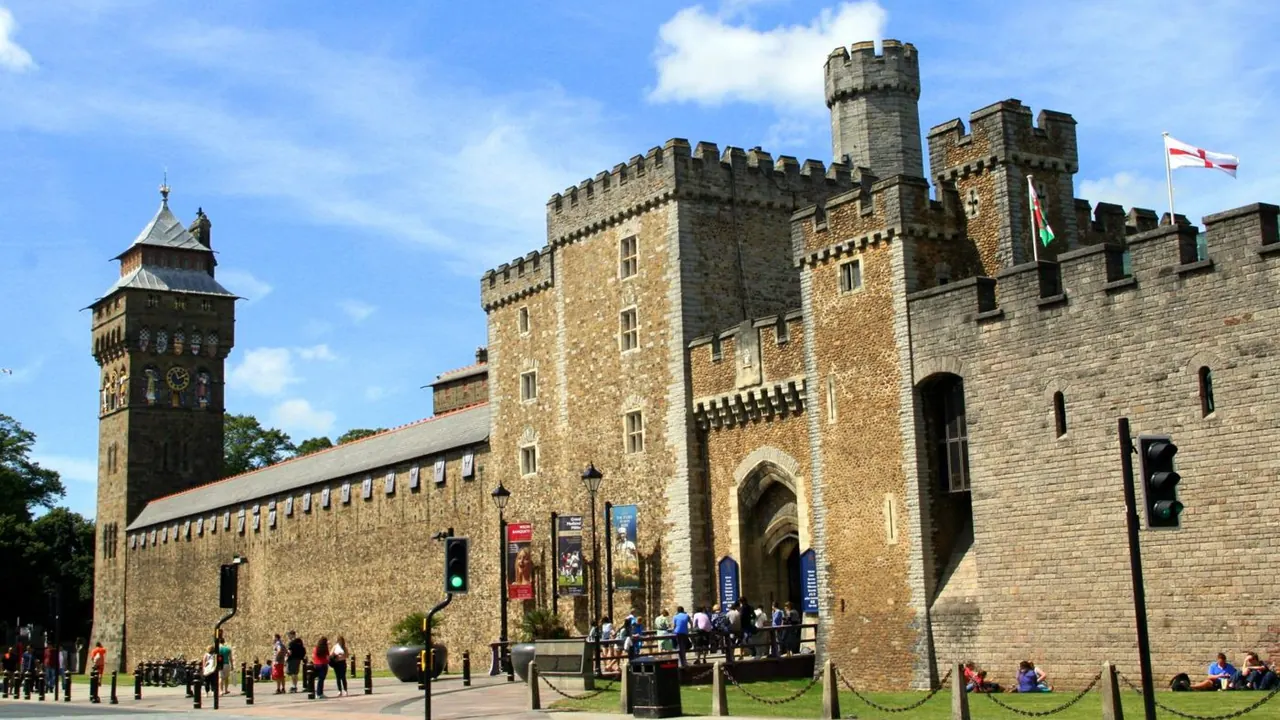
Cardiff Castle
- Day trips72
- Nature & outdoors70
- Getting around66
Photo: Tevfik Teker, CC BY 3.0, cropped
Match
52
Every category weighted equally
- Beach & sun48
- Culture & arts55
- Food & nightlife52
- Family trip53
- Outdoors55
- Relax & unwind48
- Shopping & style52
- On a budget52
Cardiff in twelve categories
Our verdict on each, scored 0 to 100 against the same fixed benchmark cities, so a score means the same thing on every page.
Beaches & swimming. Scores 30 out of 100.
Food & drink. Scores 45 out of 100.
Culture & sights. Scores 58 out of 100.
Nightlife. Scores 50 out of 100.
Nature & outdoors. Scores 70 out of 100.
Day trips. Scores 72 out of 100.
Good for families. Scores 58 out of 100.
Getting around. Scores 66 out of 100.
Shopping & style. Scores 50 out of 100.
Affordability. Scores 46 out of 100.
Live music & performing arts. Scores 57 out of 100.
Wellness & relaxation. Scores 27 out of 100.
Cardiff category by category
Beaches & swimming
30Cardiff faces the Bristol Channel, but there is no beach in the city. The water there is brown and tidal, and the waterfront at Cardiff Bay is for walking, not swimming. The nearest proper sand is Barry Island, about half an hour by train, a traditional seaside bay with a promenade and a summer funfair atmosphere. Penarth, just along the coast, has a pebble shore and a Victorian pier.
Further west, Porthcawl's surf beaches and the wide sands of the Gower peninsula are better, but they take a drive of an hour or more. Even in August the sea is cool, around 16-17°C, so most visitors paddle rather than swim. A beach is a pleasant afternoon out, not the reason to come.
Food & drink
45Eating in Cardiff is pleasant, but it is not a reason to come. Welsh food turns up in a few places. Welsh cakes are cooked on the griddle in the Victorian Cardiff Market, and you will find cawl, a lamb and vegetable broth, laverbread with cockles at breakfast, and good Welsh lamb and cheeses. The market hall is the best place to start.
The more interesting restaurants are in the leafy western districts of Pontcanna and Canton, which have neighbourhood bistros and brunch places, along with a small fine-dining tier. City Road has a long run of Middle Eastern and South Asian cooking. The city has an old brewing tradition, and its pubs pour good local ales. The waterfront at Cardiff Bay is mostly chain restaurants facing the water, so people tend to go there for the view rather than the food.
Culture & sights
58Cardiff Castle sits right in the city centre. Inside its Roman and Norman walls are lavish Victorian Gothic rooms, created when coal money made this one of the richest ports in the world. Next to it, the civic centre at Cathays Park is a set of white Portland stone buildings. Among them is the National Museum, whose collection of French Impressionist paintings is surprisingly strong.
On the city's western edge, St Fagans is a large open-air museum of buildings brought in from all over Wales, from farmhouses to a miners' institute. Llandaff Cathedral has its own quiet village green, and the Senedd and the Pierhead building stand by the water at Cardiff Bay. It is a good two or three days of sights, but little of the city's fabric is older than the Victorian era.
Nightlife
50Cardiff goes out hard at weekends. St Mary Street and the lanes around it fill up with large groups on Saturday nights, and on rugby international days the whole centre turns into one crowd in red. Womanby Street, a narrow lane facing the castle, is the more interesting corner, with small alternative bars and late venues. Two large universities keep things busy during term.
For a calmer evening, the pubs and wine bars of Pontcanna and Canton are more relaxed, and the Bay has waterfront bars. Clubbing is mostly mainstream, the scene is easy to see in a couple of nights, and midweek is quiet.
Nature & outdoors
70Bute Park is a large green space running north from the castle along the River Taff. It is also the start of the Taff Trail, a cycle and walking route that follows the valley up into the hills. The Bannau Brycheiniog (Brecon Beacons) national park is about an hour away by car. There, Pen y Fan, the highest peak in southern Britain, gives a classic half-day hike across open moorland ridges.
Closer in, the Cardiff Bay barrage has a level walking and cycling loop, and the Wales Coast Path runs past the cliffs at Penarth and the Vale of Glamorgan. The Gower peninsula's limestone headlands are a longer drive west. Expect rain at any time of year, and wind on the tops.
Day trips
72The surroundings are where Cardiff does best. Castles are the theme. Caerphilly, one of the largest medieval fortresses in Britain, is about twenty minutes by train, and Castell Coch, a fairy-tale Victorian rebuild, stands in the woods just north of the city. Further east, Chepstow Castle and the ruined Tintern Abbey in the Wye Valley make a fine day together.
Across the Severn, Bristol is under an hour by train and Bath, with its Roman Baths and Georgian crescents, is about an hour. In the old mining valleys, Blaenavon's ironworks and the Big Pit coal mine are a UNESCO industrial landscape. Caerleon's Roman amphitheatre and Swansea are also within easy reach.
Good for families
58Cardiff is easy with children. It is compact and flat, and most of the sights are free or cheap. Techniquest, the hands-on science centre at Cardiff Bay, is the main attraction made for kids. The waterfront around it has boat trips, open space and the barrage walk. St Fagans works for all ages, with farm animals, old shops and craft demonstrations spread across parkland. Cardiff Castle's walls and keep make an easy introduction to history.
Bute Park and Roath Park, with its lake and rowing boats, give room to run. In summer, Barry Island's sands and seaside funfair are a short train ride away. There is no zoo, large aquarium or theme park.
Getting around
66The centre of Cardiff is small and flat, and much of it is pedestrianised. The castle, museum, arcades, market and main shopping streets are all within a few minutes' walk of each other and of Cardiff Central station. Cardiff Bay is a longer walk of about half an hour. You can also take a frequent shuttle train or a bus there, or a water taxi along the Taff.
There is no metro or tram. Instead, local trains run to Penarth, Barry Island, Caerphilly and the valleys, and buses serve the suburbs and St Fagans. Visitors manage fine without a car in the city, but you need one for the national park and the more remote castles.
Shopping & style
50Cardiff's shopping is mostly high-street. Queen Street and a large covered mall in the centre hold the usual national chains and a department store. What sets the city apart is its network of glass-roofed Victorian and Edwardian arcades, such as the Royal, Morgan and Castle arcades. They are lined with independent shops for records, books, vintage clothing and coffee.
The Victorian Cardiff Market sells local produce and odds and ends. For Welsh crafts, look for lovespoons, woollen blankets and slate. There is no real luxury shopping, and most visitors cover it all in an afternoon.
Affordability
46Cardiff is mid-priced for Britain. Hotels are moderate on ordinary weekdays, but prices rise steeply when the national stadium hosts a rugby international or a big concert, so check the calendar before booking. Restaurants and pubs charge typical British prices.
The savings come elsewhere. The national museums, including St Fagans, are free, the centre is walkable, and the train trips to castles and the coast are short and inexpensive.
Live music & performing arts
57Cardiff's arts life is centred on the Wales Millennium Centre at Cardiff Bay. You will recognise its bronze-clad dome and the Welsh lettering on the front. It is home to Welsh National Opera and hosts touring musicals, dance and comedy. The BBC National Orchestra of Wales is based in the city, and the Royal Welsh College of Music and Drama puts on frequent student concerts and plays. The Sherman and the New Theatre cover drama and touring shows.
The city has a long-standing grassroots music scene, with small venues around Womanby Street booking rising bands most nights. Choral singing is a Welsh tradition. At the other end of the scale, the national stadium in the centre hosts major touring concerts.
Wellness & relaxation
27Cardiff has no bathing tradition. Relaxing here means a hotel spa, a few day spas, or the leisure pools at the waterfront hotels at Cardiff Bay. The city's pace is easy-going for a capital, and the quieter side shows in slow mornings in the cafés of Pontcanna or a walk along the Taff through Bute Park. Few people choose Cardiff to unwind.
When should you go?
Pick a month to see what it is like. The climate figures are measured averages, not a forecast.
Cardiff in July
Daytime high, °C
Rainfall in the month, mm
The whole year
Shaded against this city’s own year: the deepest cell is its best month for that figure and the palest its weakest.
Where the figures come from
Cardiff has no rain gauge within 25 km of the centre, so its rainfall comes from a gridded climate dataset read at the city rather than from a gauge further away.
Cardiff's sunshine is measured 83 km from the centre, at Lyneham.
Temperature and rainfall are climate normals, averaged over the years shown. Cardiff: 1991-2020 normals, Cardiff-Wales Airport (14.9 km from centre).
Before you go
| Measure | Cardiff |
|---|---|
| Official language | English |
| Currency | Pound Sterling (GBP) |
| Sockets | G230 V, 50 Hz |
| Driving side | Left |
| Time zone | UTC, UTC+1 in summer |
| Emergency number | 112 or 999 |
| Elevation | 41 m |
| Main airport | Cardiff International Airport (CWL)15 km from centre30 non-stop destinations |
| Public holidays this year | 8 days |
By the numbers
| Measure | Cardiff |
|---|---|
| City population | 383,536 |
| People per km² | 2,734 |
| Museums within 10 km | 9 |
| UNESCO World Heritage sites within 50 km | 1 |
| Swim season, months above 21 °C | None |
Compare Cardiff with
Every comparison with a written verdict behind it.