France
Saint-Tropez
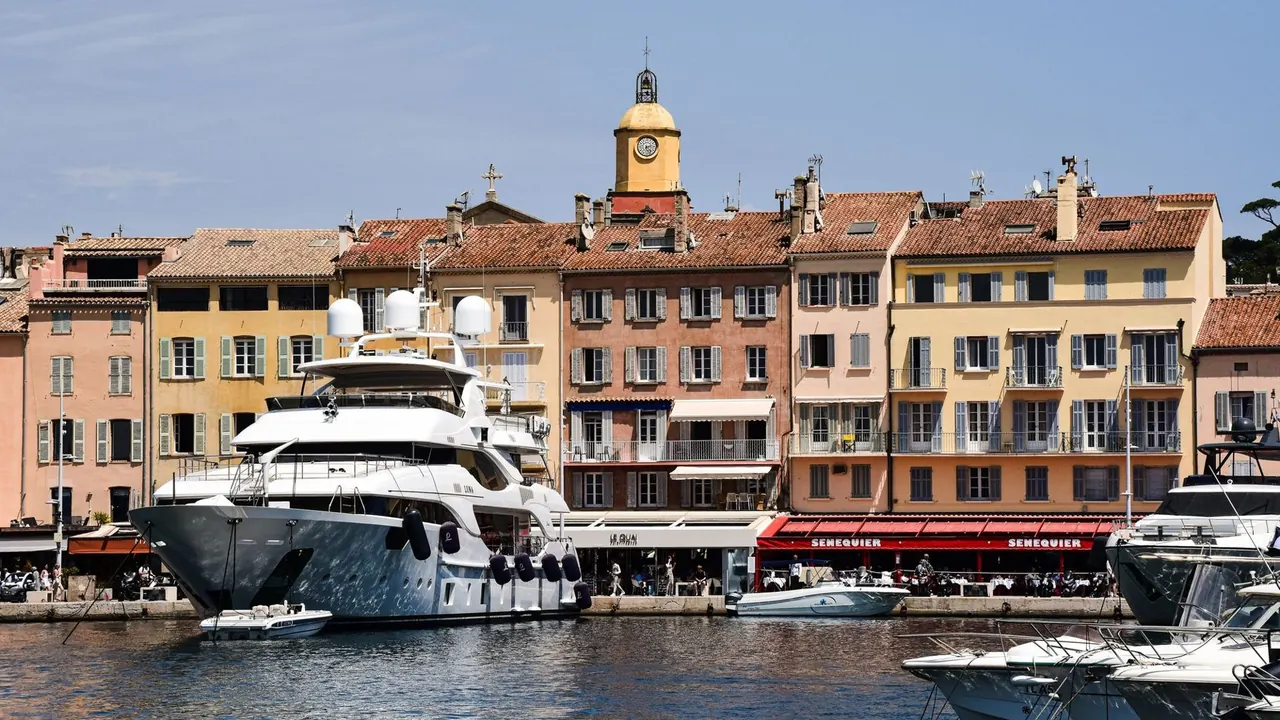
The harbour front with the church tower above the houses
- Beaches82
- Nature & outdoors72
- Shopping64
Photo: AXP Photography, Pexels License
Match
46
Every category weighted equally
- Beach & sun50
- Culture & arts40
- Food & nightlife44
- Family trip46
- Outdoors50
- Relax & unwind48
- Shopping & style45
- On a budget42
Saint-Tropez in twelve categories
Our verdict on each, scored 0 to 100 against the same fixed benchmark cities, so a score means the same thing on every page.
Beaches & swimming. Scores 82 out of 100.
Food & drink. Scores 48 out of 100.
Culture & sights. Scores 35 out of 100.
Nightlife. Scores 60 out of 100.
Nature & outdoors. Scores 72 out of 100.
Day trips. Scores 57 out of 100.
Good for families. Scores 42 out of 100.
Getting around. Scores 32 out of 100.
Shopping & style. Scores 64 out of 100.
Affordability. Scores 8 out of 100.
Live music & performing arts. Scores 18 out of 100.
Wellness & relaxation. Scores 35 out of 100.
Saint-Tropez category by category
Beaches & swimming
82Beach life is what a summer stay in Saint-Tropez is about, though the famous sand is not in the town itself. Pampelonne, about 5km of fine pale sand on the Ramatuelle side of the peninsula, is lined with beach clubs, with stretches of public beach between them. The water is clear and warms to about 24°C in August. Quieter coves such as Escalet, Cap Taillat and Gigaro lie further south, reached by car or on foot along the coast path.
Close to town there are only small beaches, such as Les Graniers below the citadel and La Ponche by the old fishing quarter, which are handy for a quick swim. The season runs from June to September. Outside it the beaches are empty and lovely to walk on, but the sea is too cool for most swimmers.
Food & drink
48Eating in Saint-Tropez means Provençal cooking done with expensive polish: grilled fish, bouillabaisse, vegetables with aïoli and long lunches on the sand washed down with pale Côtes de Provence rosé from the vineyards around the town. The market on the Place des Lices, under the plane trees, is the best place to see local produce, olives, cheese and flowers. The tarte tropézienne, a cream-filled brioche invented here, is the snack everyone tries.
The top end is genuinely good, with serious hotel dining rooms and polished harbourside restaurants. Simple, good-value eating is harder to find, though. Many quayside places trade on the view, and in winter much of the town closes.
Culture & sights
35The town's main sight is the Musée de l'Annonciade, a former chapel on the port that holds a fine collection of pointillist and Fauvist painting. It recalls the years when Paul Signac and his circle painted the harbour. Above the town, the 17th-century citadel houses a maritime museum and looks out over the gulf. The old fishing quarter of La Ponche, with its narrow lanes and ochre façades, is pleasant to wander, as is the bell tower of the parish church.
The film history connected with the town adds some interest, but the sights are seen in a day. Most visitors come for the setting rather than the heritage.
Nightlife
60In high summer Saint-Tropez has one of the best-known party scenes on the Mediterranean. Long afternoon beach-club parties at Pampelonne turn into evenings of champagne on the yachts and terraces of the harbour, and then into a handful of famous clubs that run until dawn. The style is glamorous and moneyed, with table service and a dress code, and less about bar-hopping or underground music.
The season is short. By October the harbour is quiet, and in winter going out means a drink in a café on the Place des Lices. Anyone looking for a varied, everyday bar scene will find it narrow.
Nature & outdoors
72The peninsula is ringed by the Sentier du Littoral, a coastal path that runs from the town past pine-backed coves and rocky headlands to the wild capes of Camarat and Taillat. It is best walked in spring and autumn, when the maquis smells of rosemary and the heat has eased. Inland, the cork-oak and chestnut forests of the Massif des Maures offer quieter hiking and mountain biking.
The gulf is a classic sailing water, and diving and snorkelling are good around the rocky points. Within reach by car and ferry, the islands of Port-Cros and Porquerolles form a protected national park with marked trails and clear water. Summer brings heat and the risk of forest fires, which close some trails.
Day trips
57The best outings are short ones to the villages around the gulf. Ramatuelle and Gassin are hilltop villages looking over the vineyards towards the sea. Grimaud has a ruined castle above its old lanes, and Cogolin is known for its pipe and carpet workshops. Port Grimaud is a lagoon village of canals and pastel houses built in the 1960s, and you can cross to it or to Sainte-Maxime by passenger boat. The Côtes de Provence estates around the peninsula open their cellars for tastings.
Further afield, the medieval village of Bormes-les-Mimosas and the island of Porquerolles, with its small village and vineyards, make a full day out. Eastwards, Fréjus has Roman remains and an early cathedral, and Cannes is about an hour and a half away. None of these places is of great historic rank, and all depend on the roads, which jam badly in July and August whether you leave by Grimaud or by La Croix-Valmer.
Good for families
42Families come to Saint-Tropez for the beaches. The sandy, gently shelving stretches at Pampelonne and Gigaro suit small children, and the old town is small and safe to walk. Beyond that, little is made for children: the harbour scene, the beach clubs and the nightlife are aimed at adults, and the prices make long family stays hard.
Summer traffic jams and hot afternoons add to the effort. Families often do better staying in Sainte-Maxime or the villages around the gulf and coming over by boat for the day. Water parks and the larger family attractions are elsewhere on the Var coast.
Getting around
32The town itself is tiny and easy on foot, with everything from the port to the citadel a few minutes' walk apart. Getting anywhere else is the problem. There is no railway, the nearest stations are at Saint-Raphaël and Toulon, and regional buses are slow. The main beaches lie several kilometres out on the Ramatuelle side.
Most visitors use a car, a scooter, a bicycle or taxis. In July and August the single road along the gulf jams for hours. The passenger boats from Sainte-Maxime and Port Grimaud across the bay are often the quickest and most pleasant way in.
Shopping & style
64For a town of its size, Saint-Tropez has a remarkable cluster of luxury boutiques. The big fashion houses keep summer shops in the lanes behind the port and around the Place de la Garonne, alongside resort-wear labels, swimwear and jewellery. The local speciality is the hand-made leather Tropézienne sandal, still cut and stitched in small workshops in the old town.
The market on the Place des Lices mixes Provençal produce with linen, baskets, pottery and vintage finds. Away from the luxury and resort end, though, choice is limited. Many shops close for the winter, and those that stay open are mostly in the high street.
Affordability
8Saint-Tropez is one of the most expensive places to stay on the Mediterranean. In July and August, rooms, harbourside meals, beach loungers and cocktails are priced for the yachting crowd, and with little public transport visitors often pay for taxis or parking on top. Even simple sandwiches and coffee on the port cost far more than elsewhere in Provence.
Budget travellers usually stay inland or across the gulf and visit for the day, picnic from the market and swim from the public stretches of beach. Late spring and autumn bring lower prices, but the town is never cheap.
Live music & performing arts
18There is little formal performing arts here. Summer brings open-air classical and jazz concerts in gardens and on the citadel, and some beach clubs host live sets. The most distinctive event is the Bravade each May, a centuries-old procession in which costumed townspeople parade with muskets in honour of the town's patron saint. For the rest of the year there is almost nothing to attend, and serious opera or theatre means a long drive to Toulon or Nice.
Wellness & relaxation
35Saint-Tropez has no bathing culture of its own. Its wellness offer is the spas of its luxury hotels and villas, which are polished but aimed at guests. How restful a stay feels depends on the season. In high summer the town is crowded and the evenings are loud. In May, June and September it slows to long lunches, morning walks to the citadel and a game of pétanque under the plane trees, and it becomes a genuinely calm place to unwind.
When should you go?
Pick a month to see what it is like. The climate figures are measured averages, not a forecast.
Saint-Tropez in July
Daytime high, °C
Rainfall in the month, mm
The whole year
Shaded against this city’s own year: the deepest cell is its best month for that figure and the palest its weakest.
Where the figures come from
Saint-Tropez has no rain gauge within 25 km of the centre, so its rainfall comes from a gridded climate dataset read at the city rather than from a gauge further away.
Saint-Tropez's sunshine is measured 62 km from the centre, at Nice.
Temperature and rainfall are climate normals, averaged over the years shown. Saint-Tropez: 1999-2020 (sunshine 1991-2020, rainfall 1991-2020) normals, Le Luc (24.2 km from centre).
Before you go
| Measure | Saint-Tropez |
|---|---|
| Official language | French |
| Currency | Euro (EUR) |
| Sockets | CE230 V, 50 Hz |
| Driving side | Right |
| Time zone | UTC+1, UTC+2 in summer |
| Emergency number | 112 |
| Elevation | 0 m |
| Main airport | Nice-Côte d'Azur Airport (NCE)64 km from centre130 non-stop destinations |
| Public holidays this year | 11 days |
By the numbers
| Measure | Saint-Tropez |
|---|---|
| City population | 3,582 |
| People per km² | 320 |
| Museums within 10 km | 4 |
| UNESCO World Heritage sites within 50 km | 0 |
| Swim season, months above 21 °C | 3 months |
Compare Saint-Tropez with
Every comparison with a written verdict behind it.