Belgium
Brussels
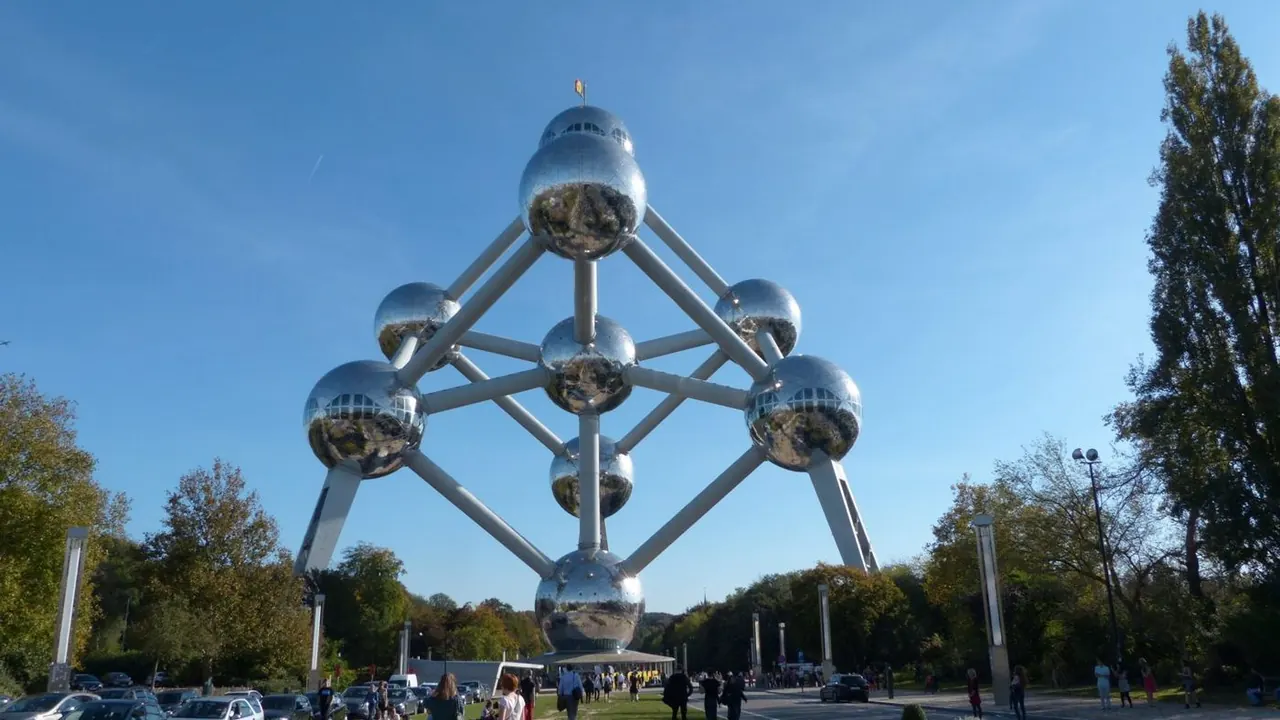
The Atomium
- Day trips89
- Culture & sights74
- Food & drink72
Photo: Ettanghe, CC BY-SA 4.0, cropped
Match
58
Every category weighted equally
- Beach & sun51
- Culture & arts66
- Food & nightlife62
- Family trip55
- Outdoors57
- Relax & unwind52
- Shopping & style62
- On a budget56
Brussels in twelve categories
Our verdict on each, scored 0 to 100 against the same fixed benchmark cities, so a score means the same thing on every page.
Beaches & swimming. Scores 18 out of 100.
Food & drink. Scores 72 out of 100.
Culture & sights. Scores 74 out of 100.
Nightlife. Scores 60 out of 100.
Nature & outdoors. Scores 45 out of 100.
Day trips. Scores 89 out of 100.
Good for families. Scores 60 out of 100.
Getting around. Scores 72 out of 100.
Shopping & style. Scores 62 out of 100.
Affordability. Scores 40 out of 100.
Live music & performing arts. Scores 68 out of 100.
Wellness & relaxation. Scores 33 out of 100.
Brussels category by category
Beaches & swimming
18Brussels is an inland city, and beach life plays no part in a stay. The Belgian coast at Ostend, De Haan or Knokke is a little over an hour away by train. It has long, wide sandy beaches and promenades, but this is the North Sea, which reaches only about 18°C at its warmest, and the summer season is short and often windy. A trip there works as a breezy day out, not a swimming vacation. In the city, swimming means indoor pools, some of them handsome Art Deco buildings, or the open-air basins in the summer months.
Food & drink
72Eating in Brussels runs from paper cones of twice-fried frites at a corner friterie to serious French-Belgian cooking: mussels in white wine, carbonnade flamande stewed in beer, waterzooi, shrimp croquettes and endive gratin. Beer matters more here than almost anywhere. Old brown cafés pour hundreds of styles, from abbey and Trappist ales to the sour lambics and gueuzes brewed only in and around the city. Chocolate is a craft of its own, with praline makers clustered around the Sablon.
Beyond the Belgian classics, the city's immigrant communities give it real range: Congolese food in Matonge, Moroccan and Turkish cooking around Saint-Josse and Schaerbeek, and a strong Italian and Portuguese presence. Saint-Gilles and Ixelles have the most interesting neighbourhood restaurants. Avoid the lanes of touts near the Grand-Place, where the seafood terraces are aimed squarely at passers-by.
Culture & sights
74The Grand-Place is the centrepiece, a square of gilded guild houses around a Gothic town hall that is one of the finest civic spaces in Europe. Nearby are the cathedral of Saint Michael and Saint Gudula and the elegant glass-roofed Galeries Royales Saint-Hubert. On the hill of the upper town, the Royal Museums of Fine Arts hold a fine Flemish collection with Bruegel and Rubens alongside a museum devoted to Magritte, and the vast Palais de Justice looks over the city.
Brussels was a birthplace of Art Nouveau, and Victor Horta's houses in Saint-Gilles and Ixelles, including his own home, are UNESCO listed. Add the Cinquantenaire museums of art, history and military history, the Musical Instruments Museum, the Atomium and the comics trail of murals across the centre. The weakness is the city around them: grand quarters sit next to dull office blocks, and the historic fabric is broken rather than intact.
Nightlife
60A night out in Brussels is built around the bar more than the club. The streets around Saint-Géry and the Bourse fill with drinkers on warm evenings. Place Flagey and Châtelain in Ixelles have a more local crowd, and Saint-Gilles has its corner cafés that stay busy late. Beer is the main draw: strong ales and lambics in wood-panelled taverns, some of them kept the same way for a century.
The club scene is smaller but has real standing, with a long-established techno club in the Marolles that draws DJs from across Europe, and an active queer scene around Rue du Marché au Charbon. It is a lively, unpretentious city after dark rather than an all-night one.
Nature & outdoors
45The best of the outdoors here is the Sonian Forest on the south-eastern edge of the city, a large beech forest, partly UNESCO listed, with tall, cathedral-like stands of trees and good walking and cycling trails. In the city, the Bois de la Cambre, the Parc de Bruxelles and the ponds of Woluwe and Ixelles give green space for a run or a walk. Around the city the land is flat farmland and suburbs. For hills, kayaking and longer hikes, the Meuse and Ardennes valleys around Dinant and Namur are reachable in about one and a half to two hours, and make a good day out. The climate is mild and grey, with rain in every season.
Day trips
89Brussels is one of the best bases in Europe for day trips, thanks to short distances and frequent trains. Ghent, with its canals and the Van Eyck altarpiece, is about half an hour away. Bruges, the most complete medieval town in the Low Countries, is about an hour. Antwerp, with its Rubens house, cathedral and grand railway station, takes about forty minutes. Leuven and Mechelen, both handsome university and cathedral towns, are closer still.
To the south are the Waterloo battlefield, Namur's citadel above the Meuse and the riverside town of Dinant. High-speed trains bring Paris within about an hour and a half, with Lille, Cologne and Amsterdam all reachable for a long day. Few cities offer this many first-rank towns this easily.
Good for families
60Children tend to enjoy Brussels more than parents expect. The Atomium and the Mini-Europe model park sit side by side at Heysel, and the Natural Sciences museum has one of Europe's great dinosaur halls, with its herd of Iguanodons found in a Belgian coal mine. Train World, the comic strip centre and the murals of comic heroes on walls across the centre add to the list, and chocolate and waffles do the rest. Larger outings are easy: the Walibi amusement park is about half an hour away and the Pairi Daiza animal park about an hour.
The downsides are practical. Traffic is heavy, pavements in the old centre are cobbled and uneven, and the weather often drives the day indoors.
Getting around
72Most of what a visitor wants is close together. The Grand-Place, the Sablon, the Mont des Arts and the royal quarter are all a short walk from each other, though the climb between the lower and upper town is steep. Metro, tram and bus lines cover the city, and you can pay by tapping a bank card. Trams are the most pleasant way to reach Ixelles, Saint-Gilles and the Bois de la Cambre. The three main railway stations connect directly to the airport and to the rest of Belgium. A car is a burden: traffic is heavy, and the tunnels and one-way streets are hard to navigate. Pavements can be rough, which is worth knowing with a pushchair.
Shopping & style
62Shopping in Brussels is at its best when it is local. The Galeries Royales Saint-Hubert, a nineteenth-century glass arcade, and the Sablon square are lined with the city's master chocolatiers. The Sablon is also the centre of the antiques trade, with a weekend market on the square. Below it, the Marolles has secondhand and vintage shops and the daily flea market on Place du Jeu de Balle, best early in the morning.
Rue Antoine Dansaert is the street for Belgian fashion designers and concept stores. Avenue Louise and the Boulevard de Waterloo hold the luxury brands, and Rue Neuve the high-street chains. Lace, comics and beer are the classic things to take home. It is a good city for browsing, though it lacks real depth in big-name fashion.
Affordability
40Brussels has Northern European prices, but a stay need not be costly. Eating out in sit-down restaurants and central hotel rooms on weekdays are the main expenses, since much of the hotel trade is aimed at EU and business travellers. That same pattern makes weekends noticeably better value, when many business hotels empty out. Frites, sandwiches and the cooking in the immigrant neighbourhoods keep daily costs down. Beer is good value for its quality, and public transport is fairly priced. Overall it is a mid-to-upper-priced city, not a budget one.
Live music & performing arts
68La Monnaie, the royal opera house, is the centre of the city's formal music life. It has a reputation for adventurous productions, and the 1830 performance there that sparked the Belgian revolution is a famous part of its history. Bozar, Victor Horta's Art Deco Centre for Fine Arts, hosts the national orchestra and visiting ensembles. The Art Deco Flagey building is known for its acoustics, and the Queen Elisabeth Competition for young musicians, held in the spring, is a major event in the classical calendar.
Brussels is also a serious city for contemporary dance and theatre in both French and Dutch, and its rock and pop concert halls are on every European tour. The jazz scene is small but lively, and an old marionette theatre still performs folk plays in local dialect.
Wellness & relaxation
33Brussels is not a place people visit to unwind. There is no thermal or bathing tradition. What exists is a handful of hammams run by the city's North African community, some day spas and the hotel spas, along with fine Art Deco public swimming pools. The town of Spa, which gave its name to the idea, is a long trip away towards the Ardennes. In the city itself, the slowest pleasures are a long lunch, an afternoon on a café terrace in Ixelles or a walk in the Sonian Forest, against a backdrop of heavy traffic and a working capital's pace.
When should you go?
Pick a month to see what it is like. The climate figures are measured averages, not a forecast.
Brussels in July
Daytime high, °C
Rainfall in the month, mm
The whole year
Shaded against this city’s own year: the deepest cell is its best month for that figure and the palest its weakest.
Temperature and rainfall are climate normals, averaged over the years shown. Brussels: 1991-2020 normals, Uccle (5.2 km from centre).
Before you go
| Measure | Brussels |
|---|---|
| Official language | French, German, Dutch |
| Currency | Euro (EUR) |
| Sockets | CE230 V, 50 Hz |
| Driving side | Right |
| Time zone | UTC+1, UTC+2 in summer |
| Emergency number | 112 |
| Elevation | 70 m |
| Main airport | Brussels Airport (BRU)11 km from centre191 non-stop destinations |
| Public holidays this year | 14 days |
By the numbers
| Measure | Brussels |
|---|---|
| City population | 195,546 |
| People per km² | 5,908 |
| Museums within 10 km | 106 |
| UNESCO World Heritage sites within 50 km | 10 |
Compare Brussels with
Every comparison with a written verdict behind it.