Belgium
Ghent
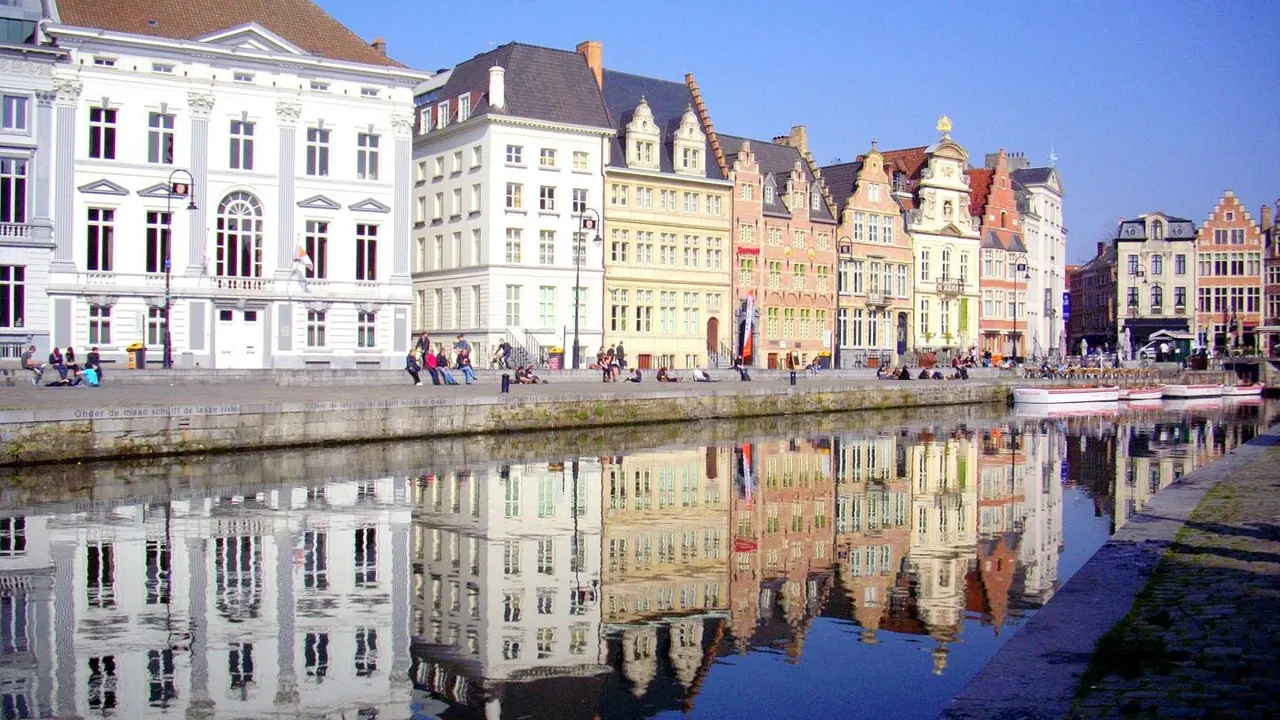
Korenlei reflected in the Leie
- Day trips88
- Getting around78
- Culture & sights72
Photo: ykeiko, CC BY-SA 3.0, cropped
Match
54
Every category weighted equally
- Beach & sun48
- Culture & arts62
- Food & nightlife58
- Family trip52
- Outdoors53
- Relax & unwind49
- Shopping & style57
- On a budget52
Ghent in twelve categories
Our verdict on each, scored 0 to 100 against the same fixed benchmark cities, so a score means the same thing on every page.
Beaches & swimming. Scores 25 out of 100.
Food & drink. Scores 62 out of 100.
Culture & sights. Scores 72 out of 100.
Nightlife. Scores 55 out of 100.
Nature & outdoors. Scores 35 out of 100.
Day trips. Scores 88 out of 100.
Good for families. Scores 50 out of 100.
Getting around. Scores 78 out of 100.
Shopping & style. Scores 50 out of 100.
Affordability. Scores 38 out of 100.
Live music & performing arts. Scores 60 out of 100.
Wellness & relaxation. Scores 33 out of 100.
Ghent category by category
Beaches & swimming
25Ghent is an inland city, and beach life is an occasional day out rather than part of a stay. Trains reach Ostend in about an hour, and the tram along the coast links the resorts from De Panne to Knokke, with wide sand, dunes and promenades. The water is the North Sea, though: around 17°C to 18°C at its warmest in August, often grey and windy, and the swimming season is short.
In the city, the Blaarmeersen recreation area on the western edge has a lake with a sandy shore and supervised swimming in summer, which is where local families go on hot days. Anyone choosing a vacation around swimming should look elsewhere.
Food & drink
62Eating in Ghent is built on Flemish home cooking: waterzooi, the creamy chicken or fish stew named after the city, beef stewed in dark beer, mussels with frites, and grey shrimp croquettes. Frites come from stands in paper cones, the purple, raspberry-flavoured cuberdon sweets are sold from carts, and the strong local mustard is a classic thing to take home. The city is also unusually good for vegetarians, with a long-standing meat-free habit in its restaurants.
Beer is the real strength. Old brown cafés around the Vrijdagmarkt and the Patershol pour long lists of Trappist, lambic and abbey beers, alongside the local jenever. The Patershol's old lanes hold many of the better restaurants, and prices are firmly Western European. It is a rewarding place to eat and drink for a few days, rather than a food destination in itself.
Culture & sights
72Ghent's centre is a working medieval city rather than a preserved showpiece. The guildhalls of the Graslei and Korenlei face each other across the Leie, and from St Michael's Bridge the towers of St Nicholas' Church, the belfry and St Bavo's Cathedral line up in one view. The Gravensteen, a moated twelfth-century castle, stands in the middle of town, and the belfry and the beguinages are UNESCO-listed.
The headline is the Ghent Altarpiece by the van Eyck brothers in St Bavo's Cathedral, one of the founding works of European painting. Around it are the Museum of Fine Arts with its Flemish masters, the SMAK for contemporary art, the STAM city museum in a former abbey and the Design Museum. Two or three days cover the essentials comfortably.
Nightlife
55Going out in Ghent is shaped by its university, which gives a mid-sized city a much younger crowd than its medieval looks suggest. The Overpoort, a street of student bars near the campus, runs loud and late in term time, while the old cafés around the Vrijdagmarkt and Oudburg are the place for a long evening over strong Belgian beer. There are a few small electronic clubs, but no big club scene.
In summer the quaysides fill with people drinking by the water, and every July the Gentse Feesten turns the whole centre into a ten-day street party that runs into the early hours. Outside that, nights are lively for the city's size but modest in range.
Nature & outdoors
35The landscape around Ghent is flat, green and largely farmed, so the outdoors here means cycling and gentle walking rather than hills. Riverside paths follow the Leie south-west through meadows and villages such as Sint-Martens-Latem, and the Bourgoyen-Ossemeersen wetland reserve on the city's edge is good for birdwatching. The Blaarmeersen area has kayaking, rowing and a running circuit.
Further out, the polders and canals of the Meetjesland lead north towards the Dutch border, and the coastal dunes and the Zwin bird reserve are within an hour or so. It is pleasant cycling country, but there is nothing dramatic within reach.
Day trips
88Ghent sits in the middle of one of Europe's densest clusters of historic cities, linked by short, frequent train rides. Bruges, with its canals and Memling paintings, is under half an hour away. Brussels, with the Grand-Place and its major museums, is about half an hour, and Antwerp, with its cathedral, Rubens House and Plantin-Moretus Museum, under an hour.
The list goes on: Mechelen and Leuven for their old centres, Ypres and the First World War battlefields and cemeteries of the Westhoek, Oudenaarde and the cobbled cycling country of the Flemish Ardennes, the coast at Ostend, and Lille across the French border. Many visitors use Ghent as a calmer base for seeing Flanders, and it works very well for that.
Good for families
50Ghent is an easy, safe city to be in with children, mainly because cars are kept out of most of the centre and distances are short. The Gravensteen, with its battlements and armour, is the obvious favourite, and boat trips along the canals and the Leie go down well. The House of Alijn, a museum of everyday life with old toys and games, is aimed at younger visitors, and the Blaarmeersen has a lake beach, playgrounds and space to run around.
Beyond that, little in the city is made for children: the zoo is in Antwerp and the theme parks are out at the coast. Cobbles make pushchairs hard work.
Getting around
78Ghent's historic centre is compact and flat, and a traffic plan keeps most cars out of it, so walking between the cathedral, the Graslei, the Gravensteen and the Patershol takes minutes. Trams and buses cover the rest of the city, including the line from Gent-Sint-Pieters, the main station, which is a twenty-minute walk south of the centre.
Cycling is the local way of getting about, with bike lanes and bike streets throughout and rental bikes easy to find. A car is a burden rather than a help, and the frequent trains to the rest of Flanders make one unnecessary for day trips too. Watch your footing on wet cobbles.
Shopping & style
50Shopping in Ghent is pleasant rather than a reason to come. The Veldstraat is the main high street for familiar chains, while the more interesting shops are in the side streets: the Serpentstraat and the Onderbergen for independent fashion and design, and the student quarter around the Sint-Pietersnieuwstraat for vintage and second-hand.
Markets are a good part of the offer: the weekend flea market around Sint-Jacobs, the Sunday flower market on the Kouter and the general market on the Vrijdagmarkt. Edible souvenirs are the best buys, from chocolate and cuberdons to the city's mustard and Belgian beer. There is little in the way of luxury.
Affordability
38Ghent costs what you would expect in Belgium, which is on the expensive side for Western Europe. Restaurant meals and café bills add up, especially for sit-down dinners with a few Belgian beers, though frites stands, bakeries and set lunch menus keep daytime eating sensible. Hotel rooms are moderately priced for a historic city of this kind for most of the year, with a good spread of small hotels and guesthouses around the centre. The exception is the Gentse Feesten in July, when rooms fill and prices climb.
Getting around costs little, since most of the centre is walkable and the trams are inexpensive. Several churches, including St Bavo's Cathedral, are free to enter, while the Gravensteen and the main museums charge admission. Overall it is mid-to-high priced: not punishing, but not a budget city.
Live music & performing arts
60For a city of its size, Ghent has a serious performing arts life. The nineteenth-century opera house on the Schouwburgstraat stages opera and ballet as one half of the Flemish national company. NTGent, the city theatre, has a reputation well beyond Belgium for bold, often political productions, though most work is in Dutch. De Bijloke, a concert hall in a medieval hospital, is known for early and classical music, and the old socialist arts centre on the Sint-Pietersnieuwstraat programmes concerts, dance and theatre.
The festival calendar adds a lot: the Gentse Feesten brings free stages across the centre every July, and there are a long-running jazz festival and a classical festival season. It is a strong local scene, rather than a place to travel to for its stages.
Wellness & relaxation
33Ghent has no bathing culture to speak of. Wellness here comes down to a few private saunas and hotel spas, and nobody visits for them. What the city does offer is a gentle pace once the day-trippers have gone: the enclosed gardens of the beguinages, slow walks along the Leie and the Coupure canal, and long afternoons on café terraces.
Sundays are quiet and evenings outside the student areas are calm, which makes it a restful base after a busy day of sightseeing. Anyone looking specifically for spas or thermal baths will need to go elsewhere.
When should you go?
Pick a month to see what it is like. The climate figures are measured averages, not a forecast.
Ghent in July
Daytime high, °C
Rainfall in the month, mm
The whole year
Shaded against this city’s own year: the deepest cell is its best month for that figure and the palest its weakest.
Where the figures come from
Ghent has no rain gauge within 25 km of the centre, so its rainfall comes from a gridded climate dataset read at the city rather than from a gauge further away.
Ghent's sunshine is measured 45 km from the centre, at Vlissingen.
Temperature and rainfall are climate normals, averaged over the years shown. Ghent: 2009-2025 (sunshine 1991-2020, rainfall 1991-2020) normals, Melle / Kalverhaag (10.1 km from centre).
Before you go
| Measure | Ghent |
|---|---|
| Official language | French, German, Dutch |
| Currency | Euro (EUR) |
| Sockets | CE230 V, 50 Hz |
| Driving side | Right |
| Time zone | UTC+1, UTC+2 in summer |
| Emergency number | 112 |
| Elevation | 12 m |
| Main airport | Brussels Airport (BRU)56 km from centre191 non-stop destinations |
| Public holidays this year | 14 days |
By the numbers
| Measure | Ghent |
|---|---|
| City population | 272,657 |
| People per km² | 1,728 |
| Museums within 10 km | 30 |
| UNESCO World Heritage sites within 50 km | 5 |
| Swim season, months above 21 °C | None |
Compare Ghent with
Every comparison with a written verdict behind it.
- Amsterdam
- Antwerp
- Baden-Baden
- Bath
- Bruges
- Brussels
- Cardiff
- Cologne
- Dijon
- Dusseldorf
- Frankfurt
- Heidelberg
- London
- Maastricht
- Manchester
- Paris
- Rotterdam
- Strasbourg
- Stuttgart
- The Hague
- Utrecht
- York