Italy
Portofino
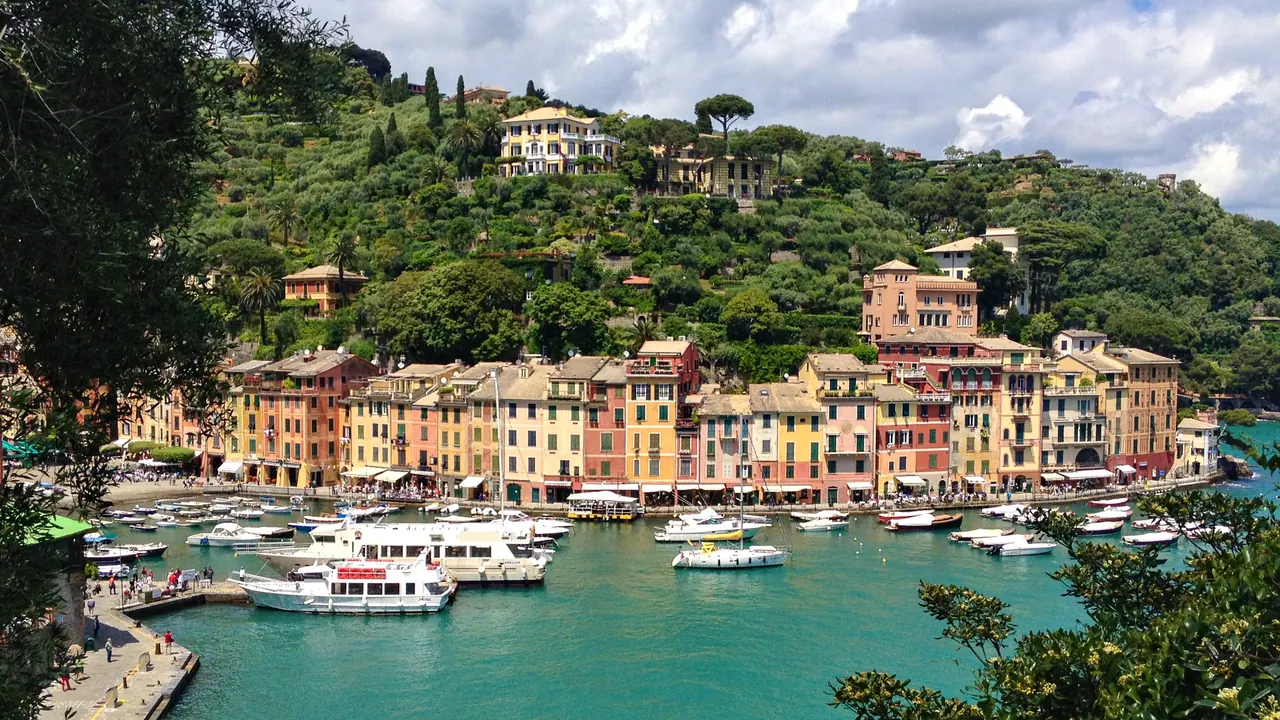
Portofino and its bay from the hillside
- Nature & outdoors77
- Day trips76
- Beaches60
Photo: Michal Osmenda, CC BY 2.0, cropped
Match
38
Every category weighted equally
- Beach & sun42
- Culture & arts34
- Food & nightlife32
- Family trip42
- Outdoors49
- Relax & unwind43
- Shopping & style34
- On a budget35
Portofino in twelve categories
Our verdict on each, scored 0 to 100 against the same fixed benchmark cities, so a score means the same thing on every page.
Beaches & swimming. Scores 60 out of 100.
Food & drink. Scores 36 out of 100.
Culture & sights. Scores 22 out of 100.
Nightlife. Scores 14 out of 100.
Nature & outdoors. Scores 77 out of 100.
Day trips. Scores 76 out of 100.
Good for families. Scores 33 out of 100.
Getting around. Scores 50 out of 100.
Shopping & style. Scores 29 out of 100.
Affordability. Scores 9 out of 100.
Live music & performing arts. Scores 7 out of 100.
Wellness & relaxation. Scores 42 out of 100.
Portofino category by category
Beaches & swimming
60Portofino has no real beach of its own. The harbour is for boats, and swimmers use the rock platforms and ladders along the path towards the lighthouse, where the water is very clear and deep. The nearest sand is at Paraggi, a small, sheltered bay a short walk or bus ride away. Most of it is taken up by paid beach clubs with rows of loungers, and a narrow free strip fills early in summer.
By boat or on foot you can reach the pebble beach below the abbey at San Fruttuoso, plus small beaches around Santa Margherita and Camogli. In August the sea is about 24°C to 25°C, and it is pleasant from June into early October. Swimming is a lovely part of a stay, but the spots are small and get crowded.
Food & drink
36Food here means Ligurian cooking: trofie with basil pesto, pansoti in walnut sauce, fritto misto, anchovies, and focaccia, including the thin, cheese-filled version from nearby Recco. Around the harbour you'll find a small cluster of restaurants with terraces facing the yachts, plus a few bakeries and bars for an aperitivo. You pay a lot for the setting, and the cooking is usually solid rather than memorable.
There's little range beyond that, with no market, street food or casual everyday places of note. Visitors who care about eating tend to go to Santa Margherita, Camogli or the trattorie up in the hills, where the choice is wider and the food more local.
Culture & sights
22The main sight is the village itself: a horseshoe of tall, ochre and terracotta houses around a tiny harbour and a cobbled piazzetta. Above it, the church of San Giorgio overlooks the bay, and further up is Castello Brown, a small fortress that later became a villa, with rooms, gardens and wide views. The path continues to the lighthouse at the tip of the headland.
Around the point is the medieval abbey of San Fruttuoso, set in a cove with no road access. Everything worth seeing takes a day or so, and there are no museums of any real size. Portofino suits people who enjoy setting and atmosphere more than a list of sights.
Nightlife
14Evenings revolve around a long aperitivo and dinner on the harbour. A few elegant bars face the moored yachts and stay busy on summer nights, and people dress up to be seen. After that there isn't much. There are no clubs, few late bars, and outside July and August the village goes quiet early. Anyone looking for a proper night out goes along the coast to Santa Margherita or Rapallo, or into Genoa.
Nature & outdoors
77Portofino sits on a steep headland that is protected as a regional park on land and as a marine reserve offshore. Trails climb through holm oak, pine and Mediterranean scrub to the Semaforo Nuovo viewpoint and the summit area of Monte di Portofino. They then drop to San Fruttuoso and on towards Punta Chiappa and Camogli, with cliffs falling into the sea beside you. Some sections are exposed and have chains. Gentler paths run along the coast to Paraggi and Santa Margherita.
The sea is just as rewarding. The reserve is known for its diving, with red coral walls, seagrass meadows and the bronze Christ of the Abyss statue sunk in the bay at San Fruttuoso. Kayaking and boat trips around the point are easy to arrange. Spring and autumn are the best times to hike, as summer is hot on the exposed slopes.
Day trips
76The Riviera di Levante lines up a run of towns along the coast. Santa Margherita Ligure, Rapallo and fishing-port Camogli are all close by bus or boat, and Sestri Levante, with its two bays, is a short train ride further. Genoa is less than an hour away, with its huge medieval centre, the Renaissance palaces of the Strade Nuove and a lively port.
In summer, ferries run from the harbour to the five villages of the Cinque Terre and to Portovenere, at the far end of the gulf. You can also reach the Cinque Terre by train from Santa Margherita in a little over an hour. Getting out by boat is part of the pleasure. Outside the ferry season it takes more planning, and the trains become the main option.
Good for families
33Portofino is safe and calm, and children usually enjoy the boats, the walk up to the castle and swimming off the rocks. But it's built for adults with money. There are no playgrounds or attractions aimed at children, the little sand there is at Paraggi is mostly in paid beach clubs, and many paths are steep steps that don't work with a pushchair. Families tend to stay in Santa Margherita or Rapallo, where there are more beaches and things to do, and make the day trip to Genoa for its large aquarium.
Getting around
50Within the village everything is a few minutes' walk apart, though the paths up to the church, the castle and the lighthouse are steep. Getting in and out is the hard part. Just one narrow, winding road runs along the coast from Santa Margherita, about 5km away, and parking is very limited. A local bus does that run and connects with trains at Santa Margherita station. From spring to autumn, ferries link the harbour with Santa Margherita, Rapallo, Camogli, San Fruttuoso and points further along the coast. A car is more of a burden than a help, but in summer the buses are crowded and the road gets jammed.
Shopping & style
29Shopping in Portofino means a handful of short lanes behind the harbour and piazzetta. For a village this small there's a surprising number of boutiques from big fashion and jewellery houses, along with shops selling linen, swimwear and resort clothes for people coming off the yachts. Beyond those there are a few places with Ligurian lace, ceramics and jars of pesto or olive oil, and that's all. You can see the lot in under an hour, so it's a stroll to fit around lunch, not a reason to come.
There are no markets, department stores or independent design shops. For everyday shopping, a weekly market or a longer browse, people go to Rapallo, to the arcaded old streets of Chiavari, or into Genoa.
Affordability
9Portofino is one of the most expensive places to stay in Italy. It has few hotels, mostly luxury properties set above the harbour, and in summer they cost as much as the priciest addresses in Europe's major cities. Restaurants and bars on the piazzetta charge heavily for the view, and loungers at Paraggi, boat hire and parking all cost a lot too. Walking, hiking and the local buses are the only cheap things. Many visitors keep costs down by sleeping in Santa Margherita, Rapallo or Camogli and coming over for the day.
Live music & performing arts
7There's very little to attend. The village sometimes hosts summer concerts and small cultural events in the piazzetta or at the castle, and some bars have background music, but there's no theatre or regular venue. Opera, concerts and theatre mean an evening in Genoa, where the Teatro Carlo Felice has a full season.
Wellness & relaxation
42Portofino has no bathing tradition or public spas, so wellness here means the spas, pools and massage rooms of the luxury hotels on the hillside. The restful part is the pace. Early mornings, evenings and the months either side of summer are quiet, and you can spend long lunches looking at the water or walk shaded paths with only birdsong and the sea for company. In the middle of the day in high summer, crowds from the tour boats fill the harbour and break that calm, so the place feels restorative mainly off-season or at the edges of the day.
When should you go?
Pick a month to see what it is like. The climate figures are measured averages, not a forecast.
Portofino in July
Daytime high, °C
Rainfall in the month, mm
The whole year
Shaded against this city’s own year: the deepest cell is its best month for that figure and the palest its weakest.
Where the figures come from
Portofino's temperatures are measured 31 km from the centre, at Genova / Sestri.
Portofino has no rain gauge within 25 km of the centre, so its rainfall comes from a gridded climate dataset read at the city rather than from a gauge further away.
Temperature and rainfall are climate normals, averaged over the years shown. Portofino: 1991-2020 normals, Genova / Sestri (31 km from centre).
Before you go
| Measure | Portofino |
|---|---|
| Official language | Italian |
| Currency | Euro (EUR) |
| Sockets | CFL230 V, 50 Hz |
| Driving side | Right |
| Time zone | UTC+1, UTC+2 in summer |
| Emergency number | 112 |
| Elevation | 20 m |
| Main airport | Genoa Cristoforo Colombo Airport (GOA)32 km from centre25 non-stop destinations |
| Public holidays this year | 13 days |
By the numbers
| Measure | Portofino |
|---|---|
| City population | 355 |
| People per km² | 142 |
| Museums within 10 km | 14 |
| UNESCO World Heritage sites within 50 km | 2 |
| Swim season, months above 21 °C | 4 months |
Compare Portofino with
Every comparison with a written verdict behind it.
- Amalfi
- Annecy
- Antibes
- Avignon
- Bled
- Bologna
- Cannes
- Catania
- Como
- Florence
- Geneva
- Genoa
- Innsbruck
- Interlaken
- La Spezia
- Ljubljana
- Lucerne
- Lyon
- Marseille
- Milan
- Monaco
- Montpellier
- Munich
- Naples
- Nice
- Palermo
- Pisa
- Positano
- Rome
- Rovinj
- Saint-Tropez
- Salzburg
- Siena
- Sorrento
- Strasbourg
- Stuttgart
- Turin
- Venice
- Verona
- Zadar
- Zurich