Germany
Dusseldorf
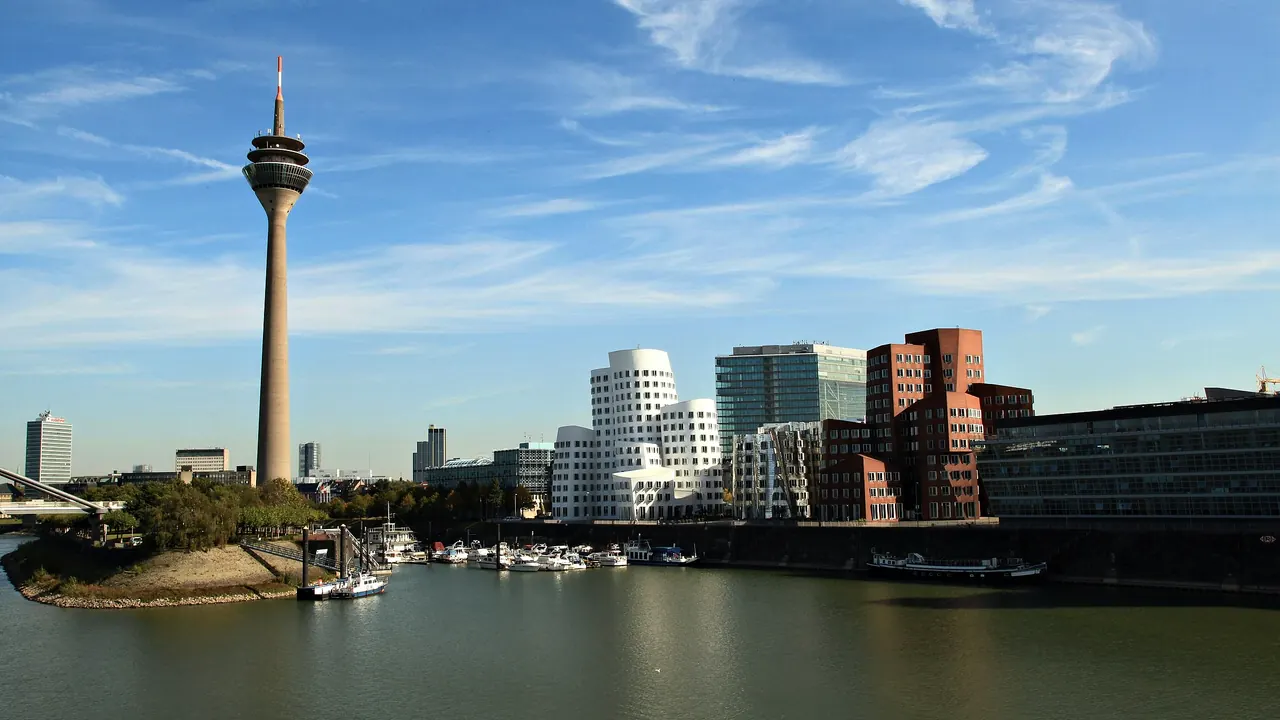
The Rhine tower and the Gehry buildings of the Medienhafen, across the marina
- Day trips80
- Getting around77
- Shopping68
Photo: Frank Vincentz, CC BY-SA 3.0, cropped
Match
56
Every category weighted equally
- Beach & sun50
- Culture & arts62
- Food & nightlife60
- Family trip54
- Outdoors55
- Relax & unwind51
- Shopping & style61
- On a budget55
Dusseldorf in twelve categories
Our verdict on each, scored 0 to 100 against the same fixed benchmark cities, so a score means the same thing on every page.
Beaches & swimming. Scores 12 out of 100.
Food & drink. Scores 62 out of 100.
Culture & sights. Scores 57 out of 100.
Nightlife. Scores 62 out of 100.
Nature & outdoors. Scores 47 out of 100.
Day trips. Scores 80 out of 100.
Good for families. Scores 62 out of 100.
Getting around. Scores 77 out of 100.
Shopping & style. Scores 68 out of 100.
Affordability. Scores 42 out of 100.
Live music & performing arts. Scores 62 out of 100.
Wellness & relaxation. Scores 45 out of 100.
Dusseldorf category by category
Beaches & swimming
12Düsseldorf is an inland city on the Rhine, and the river is not for swimming. The currents and shipping traffic make it dangerous, even though the sandy banks look inviting on a summer evening. For a swim, locals go to Unterbacher See on the south-eastern edge of the city, a lake with lawns and bathing areas, or to the gravel-pit lakes and outdoor pools around the region.
The nearest sea is the Dutch North Sea coast, a long day's travel away and cool even in July. Beach life is not part of a stay here, and travellers who want sand and warm water should plan for it elsewhere.
Food & drink
62Eating in Düsseldorf has two distinct sides. The first is the Altstadt brewhouse tradition: dark, top-fermented Altbier served in small glasses by blue-aproned waiters who keep bringing them until you cover the glass with a beer mat. The food matches it, with sauerbraten, pork knuckle, blood sausage, and the curiously named Halve Hahn, which turns out to be a rye roll with cheese, all sharpened by the city's own spicy brown mustard.
The second is the area around Immermannstrasse, home to one of Europe's largest Japanese communities. It has ramen counters with queues outside, izakaya, Japanese bakeries and grocery stores that serve expatriates as much as visitors. Beyond these, there is a solid tier of fine dining, Rhineland wine bars and Carlsplatz market for snacks and produce. It is a rewarding place to eat, though not one with great breadth.
Culture & sights
57Düsseldorf is above all an art city. The Kunstsammlung Nordrhein-Westfalen splits its collection between K20, with a large group of works by Paul Klee and other classic modern art, and K21 in a former parliament building, where visitors walk on a net slung high under its glass dome. The Kunstpalast covers everything from old masters to glass, and the influence of the city's famous art academy shows up in galleries all over town.
What the city lacks is much old fabric. Wartime bombing means the Altstadt is largely rebuilt, and visits tend to centre on the Rhine promenade, the Rheinturm, Heinrich Heine's birthplace, and the Medienhafen with its leaning Gehry buildings. The finest historic site is Benrath Palace, a pink rococo summer residence in the southern suburbs. The ruins of Barbarossa's imperial palace at Kaiserswerth are also worth the short ride.
Nightlife
62The Altstadt is known as the longest bar in the world: a few hundred pubs, brewhouses and bars packed into a handful of streets between the Rhine and Heinrich-Heine-Allee. On weekend nights the lanes fill with people drinking Altbier standing outside, as much a street party as a pub crawl, and it runs well past midnight. It can get loud, and stag groups are part of the crowd.
For something calmer, try the cocktail bars in Carlstadt and the Medienhafen, or the neighbourhood pubs of Flingern and Unterbilk. There are clubs, but the club scene is modest by big-city standards. The real high point of the year is Carnival, when the whole city goes out in costume for days on end, peaking at Altweiber and Rosenmontag.
Nature & outdoors
47The Rhine shapes the outdoors here. Wide, grassy meadows line its banks, and long, flat cycle paths run along them to Kaiserswerth and beyond, with sheep grazing on the dykes opposite the skyline. On the city's eastern edge, Grafenberg forest and its game park provide shaded walks. Further out, the Neandertal is a wooded valley where the famous fossil was found, now crossed by hiking trails.
Beyond that, the wooded hills of the Bergisches Land begin within half an hour, and the Siebengebirge above the Rhine and the volcanic Eifel are a little further. It is pleasant, gentle country for a day's walking or a cycle ride. But it has no mountains or dramatic scenery, and nobody chooses the city for its outdoors.
Day trips
80Düsseldorf sits in one of the densest urban regions in Europe, and that makes it an excellent base for day trips. Cologne and its cathedral are under half an hour by train. Bonn, Beethoven's birthplace, is a little further up the Rhine, and the UNESCO-listed baroque palaces at Brühl lie between the two. To the east, the Zollverein colliery complex in Essen and other industrial sites of the Ruhr show a different, grittier heritage.
Aachen, with Charlemagne's cathedral and its old spa quarter, is about an hour and a half away. So are Münster, with its gabled arcades, and Dutch Maastricht. Heading south, the castle-lined Middle Rhine gorge around Koblenz makes a fuller day. Fast, frequent trains link almost all of these, so there is little need for a car.
Good for families
62Düsseldorf is an easy city with children: it is safe and orderly, distances are short, and trams take buggies without fuss. The Aquazoo Löbbecke Museum, which combines an aquarium with a natural history museum, is the main indoor attraction. The lift up the Rheinturm and its tilted floor-to-ceiling windows go down well. So does the free game park in Grafenberg forest, where wild boar and deer come close, and the playgrounds and river beaches of the Rhine meadows on a summer day.
For bigger outings, Phantasialand in Brühl and Movie Park Germany are both within about an hour, and the Carnival parades are a riot of sweets thrown into the crowd. The Altstadt gets rowdy at weekend night-time, but that is easy to avoid.
Getting around
77The centre is compact and flat. The Altstadt, Königsallee, the Hofgarten, the Rhine promenade and the Japanese quarter are all within walking distance of one another, and the riverside path makes walking a pleasure. Trams and the underground light rail fill the gaps, and the Medienhafen and the museums are only a short ride away. The airport is linked to the centre by S-Bahn and regional trains in minutes.
The city's transport is part of a large regional network that also serves Cologne and the Ruhr, so one system takes you well beyond the city. The fare zones can be confusing at first. A car is unnecessary and parking in the centre is a chore. Cycling is easy along the river, less so on the busier inner roads.
Shopping & style
68The Königsallee is the centrepiece: a tree-lined boulevard either side of a canal, with luxury flagships, jewellers and upscale arcades along one bank and banks along the other. Fashion has long been part of the city's business through its trade fairs, and it shows in well-dressed crowds and big department stores. For mainstream shopping, Schadowstrasse and the Kö-Bogen complex are close by.
The independent side is smaller but distinctive. Flingern's boutiques and design shops, the Japanese quarter's stationery, homeware and food shops, and Carlsplatz market for delicacies all add character. What it lacks is a real crafts or market tradition, so most visitors come for the Kö and the department stores.
Affordability
42Düsseldorf is a wealthy business city, and its hotel prices reflect that. Rooms are pricey for a city of its size, and during the major trade fairs they can be several times their usual price and hard to find, so it pays to check the fair calendar before booking. Restaurants on and around the Königsallee charge accordingly.
Day to day, it is more manageable. Brewhouse meals and Altbier in the Altstadt are fair value, Japanese noodle bars are good for an inexpensive lunch, public transport is reasonably priced, and several museums offer reduced or free admission at times. Overall it costs what a prosperous Western European city costs.
Live music & performing arts
62For a city of its size, Düsseldorf has a deep and steady programme. The Deutsche Oper am Rhein stages opera and ballet in its house by the Hofgarten. The Tonhalle, a domed former planetarium on the river, is home to the city's symphony orchestra. The Schauspielhaus, with its curving white facade, is one of the leading German-language theatres, though its work is mainly for German speakers.
The city has a long tradition of political cabaret, and touring musicals play in a large hall in the south. In music history, Düsseldorf has a special place as the birthplace of Kraftwerk and an early centre of German electronic music, and there are small jazz and live-music venues in the Altstadt and Flingern. A long-running summer jazz festival brings stages across the old town.
Wellness & relaxation
45Düsseldorf has no thermal springs of its own, but it does share the German sauna habit. Public pools and leisure baths have sauna areas used by locals as a matter of routine, and they are mostly mixed and without swimwear, which surprises some visitors. For a full day of pools and saunas, several large thermal complexes are within about an hour, and the historic spa town of Aachen, with its hot springs, is a little further.
The city's pace is relaxed for a business centre. Long walks along the Rhine meadows, the shaded Hofgarten and Nordpark with its Japanese garden, and lingering cafés make for an easy few days. The Altstadt at weekend nights is the one loud exception.
When should you go?
Pick a month to see what it is like. The climate figures are measured averages, not a forecast.
Dusseldorf in July
Daytime high, °C
Rainfall in the month, mm
The whole year
Shaded against this city’s own year: the deepest cell is its best month for that figure and the palest its weakest.
Temperature and rainfall are climate normals, averaged over the years shown. Dusseldorf: 1991-2020 normals, Düsseldorf (8.3 km from centre).
Before you go
| Measure | Dusseldorf |
|---|---|
| Official language | German |
| Currency | Euro (EUR) |
| Sockets | CF230 V, 50 Hz |
| Driving side | Right |
| Time zone | UTC+1, UTC+2 in summer |
| Emergency number | 112 |
| Elevation | 38 m |
| Main airport | Düsseldorf Airport (DUS)7 km from centre182 non-stop destinations |
| Public holidays this year | 11 days |
By the numbers
| Measure | Dusseldorf |
|---|---|
| City population | 619,444 |
| People per km² | 2,849 |
| Museums within 10 km | 25 |
| UNESCO World Heritage sites within 50 km | 4 |
Compare Dusseldorf with
Every comparison with a written verdict behind it.
- Amsterdam
- Antwerp
- Baden-Baden
- Berlin
- Bern
- Bruges
- Brussels
- Cologne
- Dijon
- Dresden
- Frankfurt
- Ghent
- Hamburg
- Heidelberg
- London
- Lucerne
- Maastricht
- Munich
- Nuremberg
- Paris
- Rotterdam
- Strasbourg
- Stuttgart
- The Hague
- Utrecht
- Zurich