Italy
Salerno
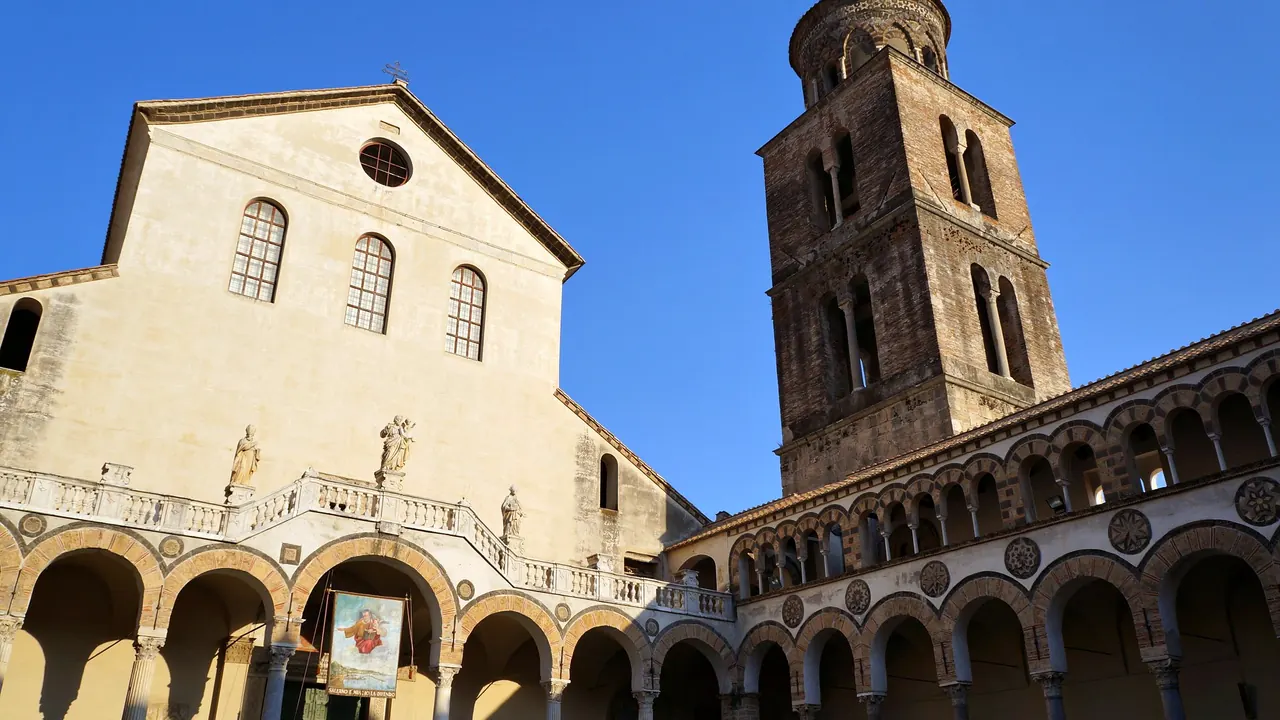
The cathedral and its bell tower
- Day trips93
- Nature & outdoors77
- Food & drink65
Photo: Leandro Neumann Ciuffo, CC BY 2.0, cropped
Match
57
Every category weighted equally
- Beach & sun59
- Culture & arts57
- Food & nightlife55
- Family trip62
- Outdoors65
- Relax & unwind58
- Shopping & style55
- On a budget58
Salerno in twelve categories
Our verdict on each, scored 0 to 100 against the same fixed benchmark cities, so a score means the same thing on every page.
Beaches & swimming. Scores 64 out of 100.
Food & drink. Scores 65 out of 100.
Culture & sights. Scores 48 out of 100.
Nightlife. Scores 40 out of 100.
Nature & outdoors. Scores 77 out of 100.
Day trips. Scores 93 out of 100.
Good for families. Scores 55 out of 100.
Getting around. Scores 65 out of 100.
Shopping & style. Scores 45 out of 100.
Affordability. Scores 60 out of 100.
Live music & performing arts. Scores 42 out of 100.
Wellness & relaxation. Scores 35 out of 100.
Salerno category by category
Beaches & swimming
64Salerno sits right on the sea, and from June to September the Tyrrhenian warms to about 25°C. The city beaches run east of the centre along the seafront. They are mostly grey sand, popular with locals and fine for a quick swim, but the water closest to the port is not the clearest.
The better swimming is a short trip away. To the south, the coast towards Paestum has kilometres of wide sandy beach lined with lidos and pine woods, which suits a whole day by the sea. To the west, ferries and buses reach Vietri, Cetara and the pebbly coves of the Amalfi Coast, where the water is bright and clear. Beach life is a big part of summer here, though most stays combine it with sightseeing.
Food & drink
65Eating in Salerno is Campanian cooking at its most direct. Expect fried seafood and pasta with clams, pizza from wood-fired ovens, and lemons grown on the terraces above the coast. The local specialities come from just outside town. Buffalo mozzarella is made on the plain towards Battipaglia and Paestum and eaten fresh the same day, and colatura, an amber anchovy sauce, comes from the fishing village of Cetara next door.
The old town's lanes are full of trattorias, friggitorie and pastry shops selling sfogliatelle and delizie al limone, and in the evening locals eat on the seafront. Wines come from Campania's own grapes, such as Fiano, Aglianico and Falanghina. There is some fine dining, but the city's strength is everyday food that is honest and good.
Culture & sights
48Salerno's heritage is medieval. Its centrepiece is the cathedral, founded by the Normans in the eleventh century. It has a Romanesque courtyard, bronze doors and a richly decorated crypt that holds the relics of Saint Matthew. Close by, the Giardino della Minerva is a terraced garden of medicinal plants, linked to the Schola Medica Salernitana, Europe's earliest medical school. Above the town, the Lombard-era Arechi Castle looks over the gulf.
The old town is a pleasant warren of stepped lanes, churches and palazzi. There are small diocesan and archaeological museums. One or two days covers it all, and the great ancient sites of the region lie outside the city.
Nightlife
40Going out in Salerno means the old town. On weekend nights and through the summer, the small squares and lanes around Largo Campo and Via dei Mercanti fill with young locals drinking outside wine bars and pubs until late. The seafront promenade carries the evening passeggiata, with gelato and aperitivo.
It is sociable and easy-going, though not a destination for clubbing. Bigger summer clubs operate along the coast, and serious nights out mean heading to Naples.
Nature & outdoors
77Salerno sits where the Amalfi Coast meets the plain of the Sele. Its greatest asset is one of Europe's most dramatic coastlines: limestone cliffs dropping into the sea, terraced lemon groves and villages clinging to ravines. The Lattari mountains behind the coast are crossed by old mule tracks, including the Path of the Gods above Positano and the shaded Valle delle Ferriere above Amalfi.
South of the city, the Cilento national park has wooded hills, the river gorges of the Calore and wild headlands around Palinuro. On the water, boat trips, kayaking and sailing along the coast are the classic summer outings. Spring and autumn are the best seasons for hiking, since summer is hot and crowded on the coastal paths.
Day trips
93Day trips are the main reason to stay in Salerno. The Greek temples of Paestum, among the best preserved anywhere, are about half an hour south by train. Pompeii is a similar distance the other way. In season, ferries cross the gulf to Amalfi in about 35 minutes and continue to Positano, with Ravello's villas and gardens a short bus ride up from Amalfi. Vietri sul Mare, known for its painted ceramics, is just outside the city, and the abbey of Cava de' Tirreni is a few minutes inland.
Naples is about 35 minutes away by fast train, and Herculaneum, the royal palace at Caserta and Sorrento are all easy days out. Further south, the Certosa di Padula, a huge Carthusian monastery, makes a longer outing.
Good for families
55Salerno works well enough with children, mainly because of its long, flat, car-free seafront promenade, with gardens, playgrounds and gelato along the way. The sandy beaches south of the city are shallow and suit younger swimmers. Italians welcome children everywhere, and families stay out late on summer evenings. In winter, the city's famous Christmas light installations, Luci d'Artista, are a big draw for families.
There is no zoo, aquarium or theme park. The old town is all steps and steep lanes, and the coast roads to Amalfi are winding and crowded in summer, which tests carsick children. Pompeii and Paestum can engage older children, but expect heat and little shade.
Getting around
65Central Salerno is easy on foot. The station, the shopping street, the seafront and the old town all lie within a strip you can walk end to end, though the castle sits high above and is best reached by bus. A short metro line and city buses cover the eastern districts, and regional trains run direct to Naples, Pompeii and Paestum.
In the warmer months, ferries are the best way along the Amalfi Coast. The coastal buses are slow and packed in summer, and driving there is stressful with little parking. A car helps for the Cilento, but most visitors never need one.
Shopping & style
45Shopping centres on Corso Vittorio Emanuele, a long pedestrian street of Italian chains and clothing stores. It is busiest at evening passeggiata time. The old town adds a few artisan workshops and food shops. The most distinctive buys come from nearby: hand-painted majolica from Vietri sul Mare, limoncello and lemon products from the coast, and colatura from Cetara. There is little luxury shopping, and Naples is the place for a bigger day out.
Affordability
60Salerno is a working southern Italian city, and its everyday prices show it. Hotels and guesthouses cost much less than in the cliff villages along the coast, so it makes a sensible base for an expensive part of Italy. Pizzerias, trattorias, bakeries and coffee bars charge what locals pay, and regional trains and city buses are cheap.
The costs rise in high summer, when rooms fill up, ferries along the coast add up over several days and a sunbed at a beach lido is a daily expense. The major archaeological sites nearby charge substantial entry fees. In spring, autumn and winter, Salerno is an easy city to stay in on a modest budget.
Live music & performing arts
42The Teatro Verdi, a gilded nineteenth-century opera house modelled on the San Carlo in Naples, is the heart of Salerno's performing arts. It stages a respectable season of opera, concerts and ballet that draws audiences from across the region. In summer, open-air concerts move outdoors, and the Ravello Festival's concerts on the cliff-top terraces above Amalfi are within reach for a special evening. Beyond that the city offers a small programme of theatre and occasional live music, and Naples is the place for more.
Wellness & relaxation
35Salerno has no bathing culture of its own, and in the city spa treatments mean hotel spas. The nearest thermal waters are at Contursi Terme, about an hour inland in the Sele valley, where sulphurous springs feed open-air pools.
The city's restorative side is its rhythm. The long seafront promenade, lined with palms and gardens, is made for slow walks at sunset, lunches stretch on and the upper lanes of the old town are quiet in the morning. It is a working port city with traffic and noise along its main roads, so it suits an unhurried stay more than a dedicated retreat.
When should you go?
Pick a month to see what it is like. The climate figures are measured averages, not a forecast.
Salerno in July
Daytime high, °C
Rainfall in the month, mm
The whole year
Shaded against this city’s own year: the deepest cell is its best month for that figure and the palest its weakest.
Where the figures come from
Salerno's temperatures are measured 71 km from the centre, at Grazzanise.
Salerno has no rain gauge within 25 km of the centre, so its rainfall comes from a gridded climate dataset read at the city rather than from a gauge further away.
Temperature and rainfall are climate normals, averaged over the years shown. Salerno: 1991-2020 normals, Grazzanise (71.3 km from centre).
Before you go
| Measure | Salerno |
|---|---|
| Official language | Italian |
| Currency | Euro (EUR) |
| Sockets | CFL230 V, 50 Hz |
| Driving side | Right |
| Time zone | UTC+1, UTC+2 in summer |
| Emergency number | 112 |
| Elevation | 4 m |
| Main airport | Naples International Airport (NAP)46 km from centre131 non-stop destinations |
| Public holidays this year | 13 days |
By the numbers
| Measure | Salerno |
|---|---|
| City population | 127,186 |
| People per km² | 2,123 |
| Museums within 10 km | 9 |
| UNESCO World Heritage sites within 50 km | 5 |
| Swim season, months above 21 °C | 5 months |
Compare Salerno with
Every comparison with a written verdict behind it.
- Amalfi
- Bologna
- Catania
- Como
- Dubrovnik
- Florence
- Genoa
- Kotor
- La Spezia
- Milan
- Mostar
- Naples
- Palermo
- Pisa
- Portofino
- Positano
- Rome
- Rovinj
- Sarajevo
- Siena
- Sorrento
- Split
- Tirana
- Turin
- Venice
- Verona
- Zadar