Italy
Sorrento
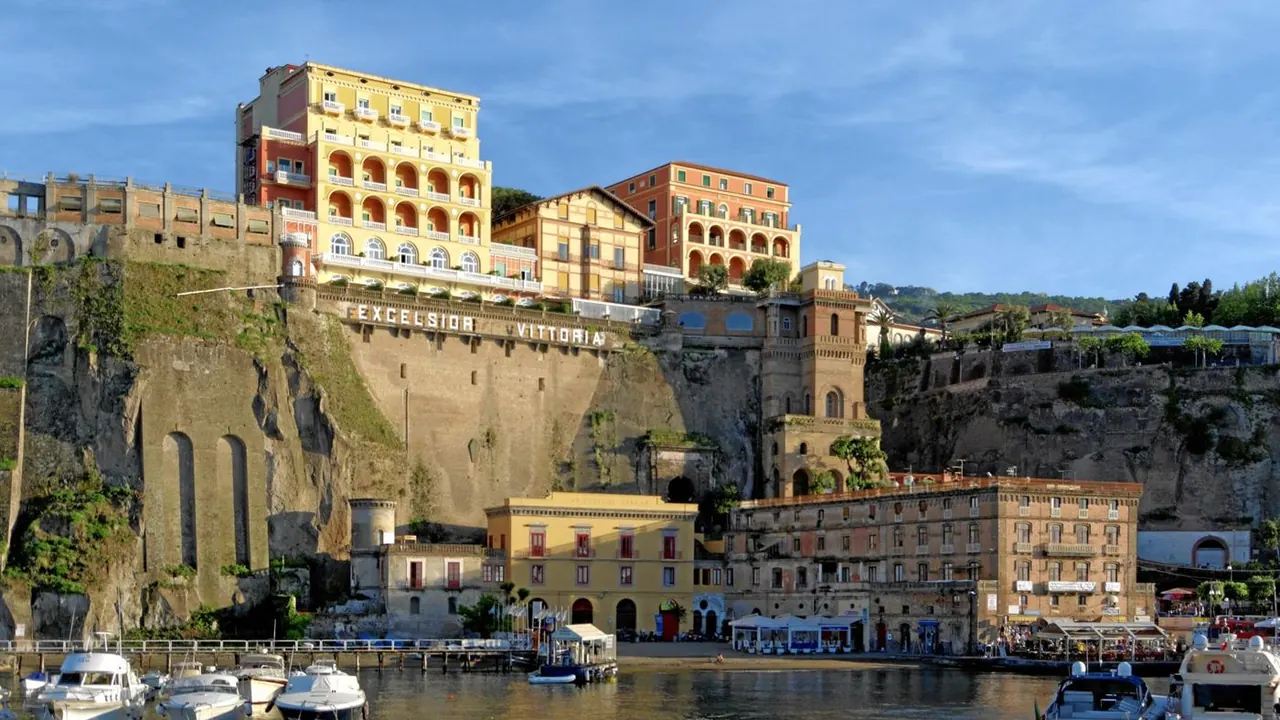
Cliff-top hotels above the harbour
- Day trips95
- Nature & outdoors80
- Beaches60
Photo: Berthold Werner, CC BY-SA 3.0, cropped
Match
49
Every category weighted equally
- Beach & sun53
- Culture & arts47
- Food & nightlife45
- Family trip53
- Outdoors60
- Relax & unwind54
- Shopping & style46
- On a budget47
Sorrento in twelve categories
Our verdict on each, scored 0 to 100 against the same fixed benchmark cities, so a score means the same thing on every page.
Beaches & swimming. Scores 60 out of 100.
Food & drink. Scores 60 out of 100.
Culture & sights. Scores 32 out of 100.
Nightlife. Scores 28 out of 100.
Nature & outdoors. Scores 80 out of 100.
Day trips. Scores 95 out of 100.
Good for families. Scores 42 out of 100.
Getting around. Scores 58 out of 100.
Shopping & style. Scores 38 out of 100.
Affordability. Scores 32 out of 100.
Live music & performing arts. Scores 20 out of 100.
Wellness & relaxation. Scores 48 out of 100.
Sorrento category by category
Beaches & swimming
60Sorrento stands on a tufa cliff above the sea, so swimming here is less about sand than about getting into the water. At Marina Piccola and Marina Grande, the lidos sit on wooden piers built out over the sea, with sunbeds, ladders and clear, deep water below. A lift and a stairway go down from the town. The Bagni della Regina Giovanna, a rocky inlet with Roman ruins on the headland, is a short walk west, and in high summer people sunbathe there on the rocks.
The sea reaches about 25°C in August and stays pleasant into October. For a proper pebble beach, visitors take the bus to Marina del Cantone or a boat to the coves of Capri and the Amalfi side. Space is tight in July and August, and much of the shore belongs to the paid lidos.
Food & drink
60Food here is Campanian cooking at its source. Gnocchi alla sorrentina are baked with tomato and fior di latte. Fish is grilled or cooked all'acqua pazza, and lemons from the terraced groves go into everything from pastry cream to limoncello. Milky mozzarella and provolone del Monaco come from the dairies in the hills, and pizza from the Naples tradition is easy to find.
The centre around Corso Italia and Piazza Tasso has plenty of laminated menus aimed at tour groups. The better meals are in family trattorias on the back lanes, in the fish restaurants at Marina Grande, and in the hill villages of the peninsula, which also hold some of the most celebrated fine dining in southern Italy. The range beyond Italian food is thin.
Culture & sights
32The town's own sights take a day or two at a gentle pace. The old centre is a grid of narrow lanes laid on the Roman street plan. Along them stand the cathedral, the open loggia of the Sedile Dominova and the cloister of San Francesco, which mixes Arab-style arches with medieval columns. The Museo Correale holds Neapolitan paintings, porcelain and furniture in a villa above the sea, and a small museum is given over to the local craft of wood inlay. The Vallone dei Mulini, a deep ravine with a ruined mill below street level, is one of the town's oddest sights. Most of what makes the area famous lies beyond the town.
Nightlife
28Evenings centre on the passeggiata along Corso Italia and around Piazza Tasso, followed by a drink on a terrace over the bay. There are wine bars and cocktail terraces, a few pubs run for British visitors, and piano bars where an older crowd listens to Neapolitan songs. In summer one or two clubs stay open past midnight. For most of the year the town goes quiet early. The trains and ferries back stop running in the evening, so a proper night out in Naples or on Capri means booking a room and staying the night there.
Nature & outdoors
80The town looks out across the Bay of Naples to Vesuvius. Behind it the peninsula is a steep limestone ridge of olive and lemon terraces that ends in sheer coast. Footpaths link the hill villages. The trail to Punta Campanella runs to the tip of the peninsula, where Capri sits close offshore, and the walk down to the bay of Ieranto passes along protected marine coast. The Path of the Gods above Positano, the beech-wooded slopes of Monte Faito with their wide views over both gulfs, and the crater rim of Vesuvius are all within reach.
On the water, you can hire a small boat or join a skippered trip around the grottoes of Capri, and kayaks explore the coves along the coast. Spring and autumn are the best seasons for hiking, and in midsummer the exposed trails get hot.
Day trips
95Few bases put so much within a short ride. The Circumvesuviana railway reaches Pompeii in about half an hour and Herculaneum a little beyond, and you can climb Vesuvius on the same day out. Ferries cross to Capri in well under an hour, and in summer boats also run along the Amalfi Coast to Positano and Amalfi, from where buses climb to Ravello and its villa gardens. Naples, with its historic centre and archaeological museum, is about an hour away by train or a short hydrofoil ride.
Ischia and Procida are a longer ferry crossing, and the Greek temples of Paestum make a full day by road. The coast road is slow and crowded in summer, so going by sea is often the more pleasant choice.
Good for families
42Italian warmth towards children makes Sorrento a friendly place for a family, and the flat, pedestrian-heavy centre is easy with a pushchair. Children usually enjoy the boat trips to Capri, a train ride to Pompeii's ruins and plenty of gelato. There is little made for them, though. The swimming is from piers and rocks into deep water rather than off shallow sand, and many hotels sit on steep lanes outside town with no pavements. Families with young children tend to choose a hotel with a pool, and they take the long bus rides along the coast in small doses.
Getting around
58The centre is small, flat and easy to walk, and you can reach the marinas by lift or by stairs. Getting further afield is where it gets harder. The Circumvesuviana train to Pompeii and Naples is cheap and direct, but it is old, crowded and prone to delays. The buses along the Amalfi road are often full in summer and slowed by traffic on the hairpins, and ferries are often the most comfortable way to reach Capri and the coast. You do not need a car, and with the narrow roads, limited parking and restricted traffic zones it is often more trouble than it is worth. Hotels up in the hills depend on shuttles or taxis.
Shopping & style
38Shopping centres on the lanes of Via San Cesareo and around Corso Italia. Most of it is lemon-themed, from limoncello and soaps to painted ceramics. A few crafts are genuinely local. Sorrento has a long tradition of intarsia, wood inlaid into boxes, trays and furniture, and workshops will make leather sandals to measure while you wait. Linen, coral and cameo jewellery round out the list. Beyond that there is little fashion or design shopping, and serious shoppers head to Naples or the boutiques of Capri.
Affordability
32Sorrento is a resort on one of Italy's most sought-after coasts, and it charges like one in summer. Rooms with a sea view, terrace restaurants, sunbeds on the lidos and private boat trips are all expensive. It is still the more reasonable base for the area. The trains and buses cost little, pizza and family trattorias away from the main squares are fairly priced, and spring and late autumn bring hotel rates down considerably.
Live music & performing arts
20The town's main performances are evening shows of Neapolitan song and tarantella dancing, staged for visitors, and summer chamber concerts in the cloister of San Francesco. Pianists and singers in the hotel bars keep the local repertoire alive, with 'Torna a Surriento' never far away. For opera, theatre or a full concert, go to Naples, where the Teatro di San Carlo is about an hour away.
Wellness & relaxation
48Sorrento is a place to slow down rather than to take the waters. The bigger hotels on the cliffs have spas, pools and terraces over the bay, and the lemon groves and gardens of the old villas set an unhurried tone. The town has no bathhouse tradition of its own. The nearest is on Ischia, about an hour away by ferry, where hot springs feed terraced thermal gardens by the sea. In July and August the centre is crowded and noisy, so spring and autumn suit a restful stay best.
When should you go?
Pick a month to see what it is like. The climate figures are measured averages, not a forecast.
Sorrento in July
Daytime high, °C
Rainfall in the month, mm
The whole year
Shaded against this city’s own year: the deepest cell is its best month for that figure and the palest its weakest.
Where the figures come from
Sorrento has no rain gauge within 25 km of the centre, so its rainfall comes from a gridded climate dataset read at the city rather than from a gauge further away.
Sorrento's sunshine is measured 54 km from the centre, at Grazzanise.
Temperature and rainfall are climate normals, averaged over the years shown. Sorrento: 2005-2025 (sunshine 1991-2020, rainfall 1991-2020) normals, Capri (17 km from centre).
Before you go
| Measure | Sorrento |
|---|---|
| Official language | Italian |
| Currency | Euro (EUR) |
| Sockets | CFL230 V, 50 Hz |
| Driving side | Right |
| Time zone | UTC+1, UTC+2 in summer |
| Emergency number | 112 |
| Elevation | 50 m |
| Main airport | Naples International Airport (NAP)30 km from centre131 non-stop destinations |
| Public holidays this year | 13 days |
By the numbers
| Measure | Sorrento |
|---|---|
| City population | 15,407 |
| People per km² | 1,541 |
| Museums within 10 km | 6 |
| UNESCO World Heritage sites within 50 km | 5 |
| Swim season, months above 21 °C | 5 months |
Compare Sorrento with
Every comparison with a written verdict behind it.